
Last Updated: November 21, 2026
Quick Summary
Slab leak detection is worth it for old homes because under-slab copper and galvanized steel lines are nearing or past their service life, and hidden leaks damage the foundation and everything on it. Age alone does not justify an inspection, but two or more risk factors do.
- Homes built before the 1990s often have copper or galvanized steel lines beneath the concrete.
- Warning signs include a water bill spike, running water sounds, warm floor spots, and damp carpet.
- Plumbers detect slab leaks without demolition using acoustic listening, thermal imaging, and pressure testing.
- A focused inspection usually runs one to three hours depending on home size and lines needing isolation.
- Ask whether technicians work on commission before hiring a leak detection specialist.
Table of Contents
- Why Old Homes Face Higher Slab Leak Risk
- Signs of a Slab Leak You Should Never Ignore
- How Plumbers Detect Slab Leaks Without Tearing Up Your Floor
- What Slab Leak Detection Cost Looks Like Against Waiting
- Slab Leak Insurance Coverage and Who Pays
- Choosing a Leak Detection Specialist You Can Trust
- Book a Slab Leak Inspection Before Small Leaks Become Big Repairs
- Frequently Asked Questions
Why Old Homes Face Higher Slab Leak Risk
Slab leak detection is worth it for old homes because the plumbing under your floor is nearing or past the end of its service life, and a hidden leak there damages the two most expensive things you own: the foundation and everything sitting on it. The question is rarely whether an aging slab system will leak. It is when.
Aging Pipes and Under-Slab Plumbing
Homes built before the 1990s often have copper or galvanized steel lines running beneath the concrete. Both materials corrode from the inside out. Galvanized steel rusts and narrows until it fails. Copper develops pinholes as water chemistry and soil movement wear it down. Once that pipe is buried in concrete, you cannot see the corrosion, and by the time you notice a symptom, water has usually been moving through the slab for weeks or months.
How Slab Leaks Start and Where They Hide
A slab leak is a water leak in the pipes running beneath a home’s concrete foundation. It starts small: a pinhole, a hairline crack at a joint, a worn fitting. The leak then travels along the path of least resistance, which is why water often surfaces far from the actual break. Under-slab plumbing hides beneath flooring, so the first clue is frequently a warm spot, a damp carpet, or a water bill that makes no sense. Most homeowners assume the worst and picture jackhammers. The right detection work usually avoids that.
Signs of a Slab Leak You Should Never Ignore
The warning signs of a slab leak include a water bill spike with no change in usage, the sound of running water when everything is off, warm spots on floors, damp flooring or carpet, water pooling at the baseboards, low water pressure, and a musty odor that will not go away.
Here is the short list we tell homeowners to check:
- A water bill that jumps without explanation
- The sound of running water with every fixture shut off
- Warm or hot spots on a concrete floor
- Damp carpet, buckling flooring, or water at the baseboards
- Low water pressure at one fixture or across the house
- A musty odor or visible mold growth near the floor
- Cracks appearing in the slab or foundation
For a deeper checklist to compare against what you are seeing, our team put together the top signs that you have a slab leak.
How Plumbers Detect Slab Leaks Without Tearing Up Your Floor
Plumbers can detect slab leaks without demolition by using methods such as acoustic listening, thermal imaging, and pressure testing to locate a leak before concrete is cut.
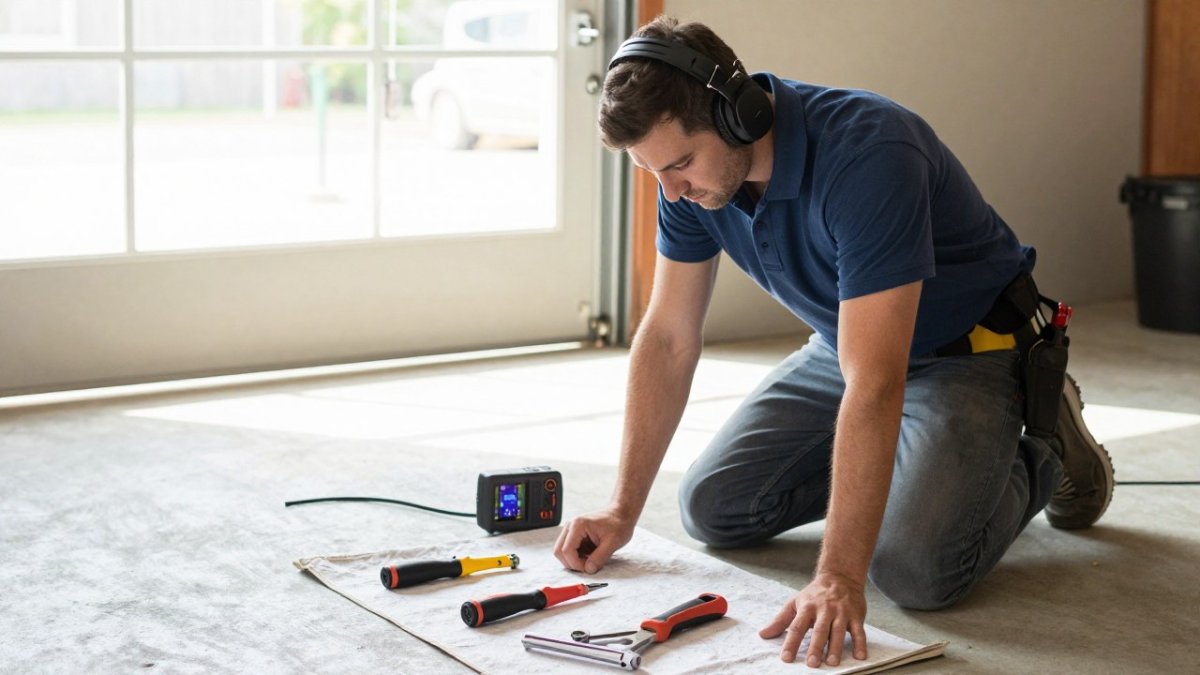
Detection Methods Compared by Accuracy, Disruption, and Cost
Each method answers a different question, and the best inspectors use more than one. Here is how the common methods stack up:
| Method | What It Finds | Accuracy | Disruption | Relative Cost |
|---|---|---|---|---|
| Acoustic listening | Sound of pressurized water escaping a pipe | Good on active, pressurized leaks; weaker on slow drips | None, listening at the floor | Low to moderate |
| Thermal imaging | Temperature differences from warm-water leaks | Strong for hot-water lines; limited on cold lines | None, camera scan of floors | Moderate |
| Pressure testing | Confirms a leak exists and isolates the line | High for confirming presence; not a locator by itself | Requires shutting off and isolating sections | Moderate |
| Tracer gas | Escaping gas from a charged line | High on hard-to-hear lines and under thick slabs | Minimal, gas introduced and tracked | Higher |
| Electronic leak detection | Amplified signal at the leak point | Good as a complement to acoustic | None | Moderate |
What to Expect During an Inspection
An inspection is less disruptive than homeowners expect. Here is the practical walkthrough:
- Preparation. Clear access to the water meter, water heater, and any crawlspace or garage slab. Have a recent water bill handy so the inspector can compare usage.
- Duration. A focused inspection usually runs one to three hours depending on home size and how many lines need isolating.
- Access needs. The inspector will shut water off at times and may need to move furniture off a section of floor to scan it.
- Findings. You should get a verbal summary on site and a written report identifying the leak location, the method used, and recommended repair options.
If you want to see how the professional version of this works, you can book leak detection and skip the guesswork.
What Slab Leak Detection Cost Looks Like Against Waiting
Waiting is an open-ended bill: water damage repairs, flooring replacement, mold remediation, and possibly foundation work, all of which grow the longer the leak runs. That is the comparison most homeowners never get to see before they decide.
The Four Cost Categories Homeowners Actually Pay
Slab leak costs do not arrive as one line item. They arrive in four buckets, and which buckets you pay depends on how early you act:
- Detection. A diagnostic inspection fee, typically a flat charge that may be credited toward the repair if you hire the same company. This is the only cost you control up front.
- Access and pipe repair. Cutting or tunneling to reach the failed line, then repairing, rerouting, or replacing it. Access method drives this number more than pipe length does.
- Resulting water damage. Flooring, baseboards, drywall, carpet, and personal belongings. This is where small leaks become five-figure problems.
- Secondary damage. Mold remediation and, in severe cases, foundation or structural repair. These are the costs that make waiting genuinely expensive.
Detection Versus Waiting: A Side-by-Side
| Situation | What You Pay For | What You Avoid |
|---|---|---|
| Detect early | One diagnostic inspection, then targeted repair | Guesswork, unnecessary concrete cutting, secondary damage |
| Wait for symptoms to worsen | Inspection plus water damage repairs | Nothing, the damage is already done |
| Ignore it entirely | Repairs, flooring, mold, possible structural work | Nothing |
One honest caveat: detection finds the leak, it does not fix it. Once the leak location is confirmed, you still face repair options, from spot repair to pipe rerouting to slab access. Our guide to slab leak repair options for concrete foundations walks through those choices so you can decide with the detection report in hand.
When Proactive Detection Is Worth It in an Older Home
Age alone does not justify an inspection. A combination of risk factors does. Consider proactive detection reasonable when two or more of the following apply:
- Pipe material and age. Galvanized steel lines from the mid-20th century are past their expected service life and fail from the inside out. Early copper can develop pinholes as water chemistry and soil movement wear it down.
- Prior repairs or reroutes. A home that has already had one slab leak is more likely to have another, because the remaining pipe is the same age and exposed to the same conditions.
- Soil and slab conditions. Expansive clay soils, poor drainage, and visible slab cracks all increase the chance that movement has stressed the under-slab lines.
- Unexplained water bills. A bill that climbs without a change in usage is the cheapest early warning you will ever get.
If none of those apply and you have no symptoms, monitoring may be the better call: watch the water bill, listen for running water when fixtures are off, and revisit the question if anything changes. Detection is a tool, not a subscription.
Slab Leak Insurance Coverage and Who Pays
Read your homeowners policy or call your agent before you authorize repairs, and document everything with photos.
Whether a burst pipe or slab leak is covered depends on your specific policy language, so we point homeowners to this explanation of whether a burst pipe is covered by homeowners insurance rather than guess on their behalf.
Choosing a Leak Detection Specialist You Can Trust
Choose a leak detection specialist by verifying the license, asking how they detect leaks, and confirming you get a written estimate before work starts. One question separates good shops from the rest: ask whether the technicians work on commission. Commission-based technicians may have an incentive to find a bigger problem than you have.
A few more checks before you hire:
- Verify the license through your state’s licensing database
- Ask which detection methods they use and whether they carry the equipment
- Get the estimate in writing before any work begins
- Confirm what the workmanship guarantee covers after they leave
For step-by-step instructions on the license check, see how to verify a licensed plumber before you hire. At Protek Plumbing and Drain Specialists, we are licensed, bonded, and insured, and we give transparent estimates before work begins.
Book a Slab Leak Inspection Before Small Leaks Become Big Repairs
A hidden leak under your slab does not fix itself, and every week you wait adds water damage, mold risk, and repair cost. If your home is older and you have noticed even one warning sign, the smart move is a diagnostic inspection now, while the problem is still small. Protek Plumbing and Drain Specialists has over 35 years of experience and offers a 100% workmanship guarantee on every job, with transparent estimates before work begins. Get started with Protek Plumbing and Drain Specialists and find the leak before it finds your foundation.
Frequently Asked Questions
How common are slab leaks in older homes?
Slab leaks are more common in older homes because under-slab copper and galvanized pipes corrode over decades. Homes built before the 1980s are especially prone, since pipe materials and installation methods from that era wear down faster. Soil movement, water chemistry, and poor original installation can speed up the process. If your home is 30 or more years old and you notice warm spots, a water bill spike, or the sound of running water when nothing is on, slab leak detection is worth scheduling early.
How much does slab leak detection cost, and is it worth it?
Slab leak detection cost varies by home size, slab type, and the methods used, so ask for a transparent estimate before work begins. The real comparison is detection against waiting: an undetected leak can drive up water bills, damage flooring, and weaken the foundation, and those repairs usually cost far more than the inspection itself. Early detection also limits concrete cutting and keeps repair options open. Protek Plumbing and Drain Specialists gives transparent estimates before work begins.
Will insurance pay for a slab leak?
Slab leak insurance coverage depends on your policy. Many homeowners policies cover sudden, accidental water damage and the cost of accessing the leak, but often exclude the pipe repair itself and damage from long-term leaks. Review your policy and document everything, including photos and the plumber’s findings. Ask your insurer directly whether they cover slab access and water damage repairs. Knowing your coverage before work starts prevents surprises and helps you plan the repair budget.
How long can a slab leak go undetected?
A slab leak can go undetected for months or even years because the water often escapes under concrete where you cannot see it. Early signs like a water bill spike, warm spots on floors, or a musty odor are easy to dismiss. The longer it runs, the more water loss and structural damage build up, and mold growth becomes more likely. If you suspect a hidden leak, schedule a diagnostic inspection rather than waiting for visible damage.
