
Table of Contents
- What Qualifies as a Plumbing Emergency
- Typical Emergency Plumbing Service Response Times
- Factors That Influence Arrival Times
- How to Shut Off Your Main Water Valve
- Cost of Emergency Plumbing Services
- Pre-Arrival Mitigation Steps
- How to Prepare for Your Plumber’s Arrival
- Conclusion
- Frequently Asked Questions
Last Updated: September 25, 2026
What Qualifies as a Plumbing Emergency
A plumbing emergency is any situation where water damage, sewage backup, or loss of water service poses an immediate threat to your home, health, or property. Not every plumbing problem requires emergency response, knowing the difference saves you money and gets you the right help at the right time.
True emergencies demand immediate attention: burst pipes flooding your basement, sewer backups creating health hazards, complete loss of water pressure, or gas leaks near plumbing fixtures. These situations can cause structural damage, mold growth, or contamination within hours. When Protek Plumbing and Drain Specialists receives these calls, response becomes the priority because every minute counts.
Situations that warrant emergency plumbing response include active water leaks causing visible damage, toilets overflowing repeatedly, sewage backing up into your home, frozen pipes in winter, or water heater failures in cold weather. By contrast, a slow drip under the sink, a running toilet that isn’t overflowing, or a clogged drain that’s not backing up can typically wait for regular business hours.
The key distinction: if water is actively damaging your property, creating a health risk, or you’re without essential water service, it’s an emergency. If the problem is inconvenient but contained, you have time to schedule a regular appointment.
Ignoring potential emergencies can lead to thousands in water damage. Sewer backups expose your family to hazardous bacteria. When in doubt, call for an assessment.
Typical Emergency Plumbing Service Response Times
Emergency plumbing response time varies based on demand, location, and technician availability, but most homeowners can expect arrival within a reasonable window when they contact a professional service.
Protek Plumbing and Drain Specialists typically dispatches emergency calls with an average arrival time of 60-90 minutes for urgent situations. This response time reflects real-world coordination: the time between your call, technician dispatch, travel distance, and on-site arrival. Response times can extend during peak demand periods or for locations at the outer edge of the service radius.
Some companies prioritize speed with guaranteed same-day response, while others operate on a first-come, first-served basis that may push response times longer during busy periods.
Understanding what “response time” actually means matters. It’s the interval from when you call until a technician arrives at your door ready to assess and begin work. It doesn’t include time spent on the phone explaining the problem or waiting for dispatch confirmation. Real emergency plumbing response time is measured from call receipt to vehicle arrival.
Call early in the day if possible. Morning emergencies typically see faster response than evening or weekend calls when technician availability is lower and call volume peaks.
Factors That Influence Arrival Times
Several variables affect how quickly an emergency plumbing technician reaches your home. Understanding these factors helps you set realistic expectations and choose a service provider strategically.
Geographic location and service radius
Distance from the service provider’s dispatch center directly impacts emergency plumbing response time. A technician 10 minutes away arrives faster than one 30 minutes away.
Protek Plumbing and Drain Specialists serves Port Charlotte and Charlotte County, which means response times are optimized for customers within that area. Locations at the edge of the service zone may experience longer arrival windows than those closer to the dispatch center.
Time of day and seasonal demand
When you call dramatically affects emergency plumbing response time. Calls during business hours (8 AM-5 PM on weekdays) typically see faster response because more technicians are active and available for dispatch. Evening and weekend calls compete with higher overall demand, stretching response times.
Seasonal patterns create predictable surges. Winter months bring frozen pipe emergencies and heating-related failures, pushing all emergency services to capacity. Summer sees water heater failures and outdoor plumbing issues spike. Holiday periods often see reduced technician availability while demand remains high, extending response times significantly.
Technician availability and dispatch protocols
How a plumbing service manages its technician roster directly influences emergency plumbing response time. Services that employ technicians across multiple shifts maintain better availability than those relying on on-call rotations. When a technician is already in the field nearby, response is faster than dispatching from a central location.
Protek Plumbing and Drain Specialists operates 24-hour emergency dispatch, meaning your call connects directly to someone authorized to dispatch a technician without intermediary steps.
How to Shut Off Your Main Water Valve
Shutting off your main water valve stops water flow to your entire home, essential during burst pipes, major leaks, or before leaving for extended periods. This is the first action to take during a water emergency while waiting for the emergency plumbing response time window to close and your technician to arrive.
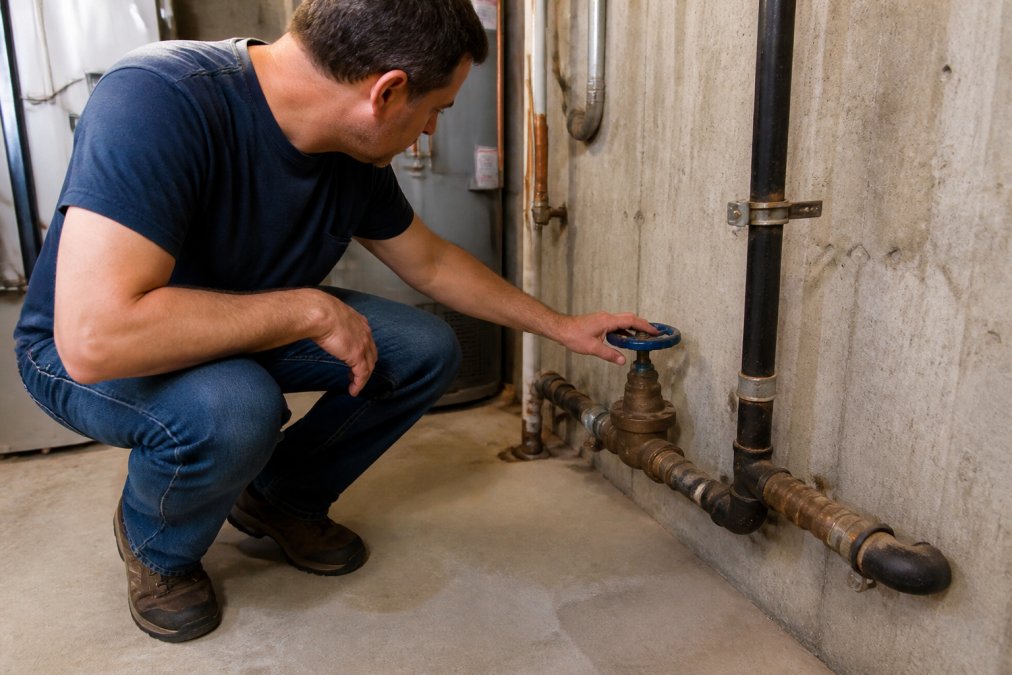
Locate your main water shut-off valve first, before an emergency happens. It’s typically found in the basement, crawl space, utility room, or outside near the foundation where the water line enters your home. In warmer climates, it may be in an above-ground meter box or beneath a removable cover in your yard.
Call Now For A Free Estimate ?
Once located, turn the valve handle clockwise (right) until it stops. Most main valves use a round handle or a lever-style gate valve. Apply steady pressure, don’t force it if it’s stuck, as this can damage the valve. If the valve won’t budge, call a professional rather than risk breaking it.
After shutting off the main valve, open the lowest faucet in your home (usually a basement sink or outdoor hose bib) to release remaining water pressure in the lines. This prevents water from continuing to spray from the damaged area. Leave that faucet open until pressure fully releases.
Know where your main water valve is located BEFORE an emergency. A burst pipe at 2 AM is not the time to search for it. Mark its location clearly or take a photo for reference.
Cost of Emergency Plumbing Services
Emergency plumbing service costs depend on several factors: the nature of the problem, time of service, parts required, and labor duration. Understanding pricing structure helps you evaluate whether a situation truly requires emergency response or can wait for regular rates.
The type of repair affects total cost significantly. A simple shut-off valve repair costs less than excavating a slab leak or replacing burst pipes. Emergency diagnostics (determining what’s wrong) may be charged separately from repair work. Transparent pricing before work begins, a key feature Protek Plumbing and Drain Specialists emphasizes, prevents surprise bills after the technician leaves.
Many homeowners ask whether emergency service is worth the cost. The answer depends on damage prevention. An emergency call to stop a burst pipe can save thousands in water damage, mold remediation, and structural repair. Delaying service to save on emergency fees often costs far more in the long run.
Pre-Arrival Mitigation Steps
While waiting for emergency plumbing response time to elapse and your technician to arrive, take immediate action to minimize damage. These steps reduce water loss, prevent mold growth, and protect your property.
First, shut off the main water valve as described above. This is the single most effective damage-prevention step. If the emergency is isolated to one area (like a burst pipe under a sink), you can shut off the water to just that fixture using the isolation valve beneath the sink, preserving water to the rest of your home.
Move belongings away from the affected area. If water is actively flowing, move furniture, electronics, and valuables to dry areas. Wet drywall, insulation, and flooring begin deteriorating within hours, so removing items prevents total loss.
Open windows and doors to increase air circulation. Mold begins growing within 24-48 hours in moist environments (the EPA). Improving ventilation slows this process. If you have access to a dehumidifier or fans, deploy them immediately to reduce moisture in the air.
Document the damage with photos and video for insurance purposes. Capture the source of the leak, the extent of water spread, and affected items.
Do NOT attempt major repairs yourself during an emergency. Improper fixes can worsen the damage or create safety hazards. Focus on containment and mitigation, let the professional handle the repair.
How to Prepare for Your Plumber’s Arrival
Preparing your home before the emergency plumbing technician arrives simplifies the service call, reduces time on-site, and ensures the technician can access the problem area efficiently.
Conclusion
Emergency plumbing response time typically ranges from 60-90 minutes with Protek Plumbing and Drain Specialists, though actual arrival depends on location, time of call, and current demand. Understanding what constitutes an emergency, knowing where your main water shut-off valve is located, and taking immediate mitigation steps can mean the difference between a contained problem and thousands in water damage.
Frequently Asked Questions
What is considered a fast response time for an emergency plumber?
A fast response time for an emergency plumber typically depends on your location, current call volume, and time of day. Protek Plumbing and Drain Specialists aims for an average arrival time of 60-90 minutes for urgent calls.
How do I know if my plumbing issue is a true emergency?
A plumbing emergency typically involves active water damage, loss of water supply, or sewage backup that poses health or safety risks. Burst pipes, slab leaks, sewer backups, and no-water situations qualify. Dripping faucets, slow drains, or running toilets can usually wait for business hours. If water is actively damaging your home or you cannot shut off the water, call immediately. When in doubt, contact your plumber, they can triage the issue and advise whether emergency dispatch is necessary.
What factors affect how quickly a plumber can reach my home?
Response time depends on your distance from the dispatch center, current technician availability, traffic patterns, time of day, and seasonal demand. Areas farther from service hubs experience longer waits. Evenings, weekends, and winter months see higher call volumes, which can extend arrival times. The complexity of your issue and whether the plumber needs specialized equipment also matter.
Should I shut off my water while waiting for an emergency plumber?
Yes, if you have a burst pipe, active leak, or flooding, shut off your main water valve immediately to prevent further water damage. Locate your main valve (usually near the water meter or where the line enters your home) and turn the handle clockwise until it stops. If you cannot locate it or the valve is stuck, turn off the water at the meter if accessible. For sewer backups or drain clogs, do not shut off water unless instructed by your plumber. Always ask your plumber for guidance when they arrive.