
Table of Contents
- When to Call for Emergency Drain Repair
- Signs of Main Line Clog You Cannot Ignore
- How to Prepare for a Plumber Visit
- Understanding Emergency Plumbing Response Time
- What Happens During Emergency Drain Repair
- How to Book Emergency Drain Repair Service
- DIY vs. Professional Drain Repair
- Preventing Future Drain Emergencies
- Frequently Asked Questions
Last Updated: September 27, 2026
When to Call for Emergency Drain Repair
A backed-up drain isn’t just an inconvenience, it’s a warning sign that something’s wrong with your plumbing system. The question isn’t whether you’ll need emergency drain repair someday; it’s whether you’ll recognize the moment when you do.
Most homeowners wait too long. They assume a slow drain will fix itself or that a plunger will handle it. By the time they call a professional, water is backing up into multiple fixtures, or worse, pooling in the basement. That’s when a manageable problem becomes expensive.
Signs of Main Line Clog
A main line clog affects your entire drainage system. Water can’t flow out of your home properly, so it backs up into fixtures throughout the house. This is different from a single clogged drain in one bathroom.
Watch for these specific warning signs:
- Multiple drains backing up simultaneously (kitchen sink, bathroom, shower, toilet)
- Gurgling sounds coming from drains or toilets when you run water elsewhere
- Sewage smell inside or around your home
- Wet patches or soft spots in your yard
- Toilets that won’t flush properly, even after plunging
- Slow drainage in every fixture, not just one
If you’re seeing any of these, you need professional drain cleaning and inspection right away. A video camera inspection can pinpoint exactly where the blockage is, whether it’s tree roots, accumulated debris, or a collapsed section of pipe.
Water Damage and Backup Warnings
Water damage happens fast. Once sewage or wastewater backs up into your home, it can saturate walls, flooring, and foundations within hours. The longer it sits, the more expensive the restoration becomes.
The warning signs come early. A musty smell in the basement. Discolored patches on walls near floor level. Soft, spongy spots in your carpet or hardwood. These aren’t minor cosmetic issues, they’re evidence that water is already pooling where it shouldn’t be.
If you notice any of these, call immediately. A professional plumber can assess whether you’re dealing with a main line issue, sump pump failure, or something else entirely. The faster you address it, the less structural damage you’ll face.
Signs of Main Line Clog You Cannot Ignore
The difference between an inconvenient clog and an emergency comes down to scope. A single slow drain might wait until tomorrow. Multiple fixtures backing up simultaneously cannot.
A main line clog means the problem isn’t in one branch of your plumbing, it’s in the central line that carries waste out of your entire home. Every drain feeds into it. When it’s blocked, nothing drains properly.
Here’s what demands immediate attention:
- All drains in your home are affected at the same time
- Flushing one toilet causes another to overflow or back up
- Water pools around floor drains in basements or crawl spaces
- Sewage smell is strong enough that neighbors might notice
- You see raw sewage or dark water in your yard
- Landscaping is unusually lush or soggy in one area (a sign of underground leakage)
Tree roots are a common culprit. They seek out moisture and can crack or puncture pipes over time. Once that happens, soil enters the line, debris accumulates, and blockage follows. In older homes, pipes themselves may have collapsed or deteriorated.
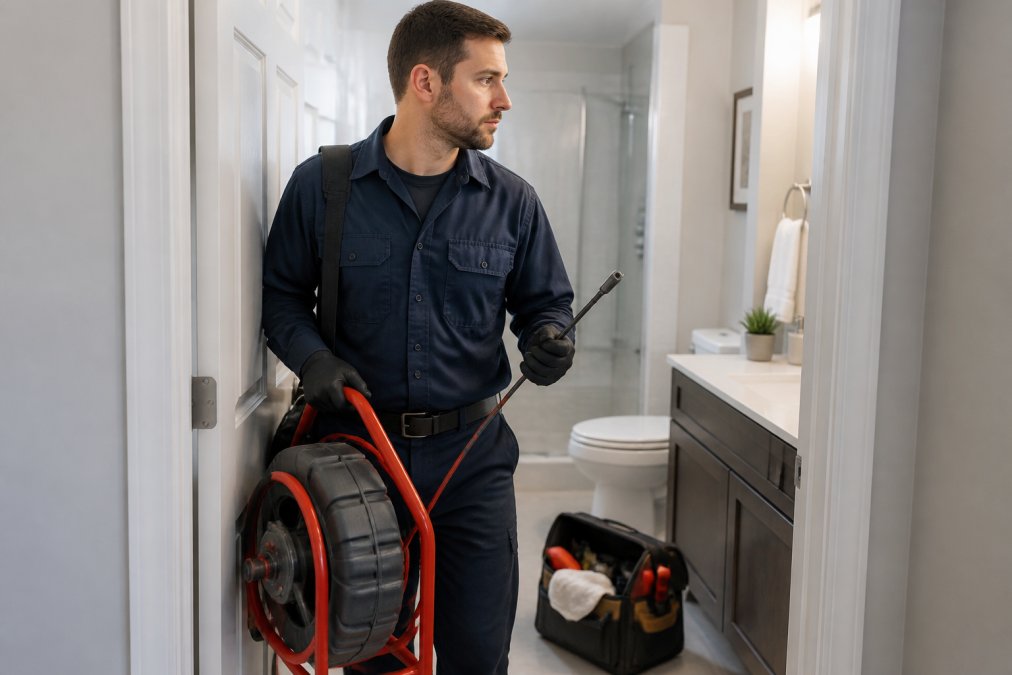
A professional drain inspection using video camera technology shows exactly what’s happening inside the pipe. You’ll see the blockage, understand the cause, and know what repair method makes sense. That clarity is worth the inspection cost alone.
How to Prepare for a Plumber Visit
Getting ready for an emergency plumber saves time and gets you faster results. The more information you can provide upfront, the better equipped the technician is when they arrive.
Information to Have Ready
Before the plumber arrives, write down what you’ve observed:
- When did the problem start? Was it sudden or gradual?
- Which drains are affected? All of them or just some?
- Have you already tried anything (plunger, drain cleaner, etc.)? If so, what?
- Is there sewage smell? Where exactly are you noticing it?
- Have you seen water pooling anywhere outside or in the basement?
- Do you know approximately when your home was built? What material are your pipes (PVC, cast iron, copper)?
- Is this the first time this has happened, or is it recurring?
This information helps the plumber diagnose faster. It also prevents them from wasting time on solutions you’ve already tried.
Have your address clearly visible on your mailbox. If you’re not home, leave a note on the door with your phone number and the best way to access the property. For emergency drain repair service calls, a few minutes of clarity can mean the difference between a quick diagnosis and unnecessary delays.
Clearing Access and Safety
Make sure the plumber can reach your main cleanout or the affected fixtures without obstacles. Move cars from the driveway if they’re blocking access to the garage or foundation. Clear any stored items, boxes, or debris from under sinks or near floor drains.
If you have pets, put them in another room.
Understanding Emergency Plumbing Response Time
When you call for emergency drain repair, response time matters. A backed-up drain isn’t just uncomfortable, it’s a liability. Water damage accelerates quickly, and the longer you wait, the more it costs to fix.
Here’s what affects response time:
- Time of day (evening and weekend calls may have longer waits during peak demand)
- Distance from our service area
- Number of active emergency calls ahead of yours
- Weather conditions affecting travel
- Complexity of the initial assessment
What Happens During Emergency Drain Repair
Understanding the process removes uncertainty. You’ll know what to expect, how long it typically takes, and why the plumber is doing what they’re doing.
Initial Inspection and Diagnosis
The first step is always diagnosis. The plumber will ask you the same questions you prepared answers for, then visually inspect the affected drains and fixtures. They may remove cleanout covers to look directly into the line.
Professional Drain Cleaning Methods
Once the problem is identified, the repair method depends on what’s causing the blockage.
How to Book Emergency Drain Repair Service
When you need emergency drain repair, the booking process should be simple and fast. You shouldn’t have to navigate a complicated phone tree or wait days for an appointment.
What Information You’ll Need
When you call Protek Plumbing and Drain Specialists for emergency drain repair service, have this ready:
- Your address and phone number
- A brief description of the problem (which drains are affected, any sewage smell, water pooling)
- When the problem started
- Any details about your home (age, pipe material if you know it)
- Whether you’ve already tried any DIY solutions
- Your preferred time window or whether you need immediate dispatch
Transparent Estimates and Guarantees
Before any work begins, you’ll receive a written estimate. Protek Plumbing and Drain Specialists provides transparent pricing with no surprises. The estimate includes the diagnosis, the proposed repair method, and the total cost.
DIY vs. Professional Drain Repair
The temptation to fix it yourself is understandable. Drain cleaning supplies are cheap and readily available. But there’s a reason professionals exist.
Preventing Future Drain Emergencies
The best emergency drain repair is the one you never need. Prevention costs far less than emergency response and water damage restoration.
- Using drain screens to catch hair and debris
- Avoiding flushing anything other than toilet paper and human waste
- Never pouring grease or oil down drains (it solidifies as it cools)
- Running hot water periodically to flush mineral buildup
- Having your main line inspected annually if you have trees on your property (roots are a common problem)
Frequently Asked Questions
What counts as a plumbing emergency that requires immediate drain repair?
A plumbing emergency includes sewage backing up into your home, multiple drains clogging simultaneously, water pooling in your yard, burst pipes, or complete loss of water pressure. These situations demand immediate emergency drain repair because they risk water damage, health hazards, and structural harm. If raw sewage is involved or water is actively damaging your property, call for emergency service right away rather than waiting for business hours.
How quickly can a professional plumber respond to an emergency drain repair call?
Response time for urgent calls can vary based on current demand and your location. When you call, ask specifically about estimated arrival so you know what to expect. Emergency services often prioritize calls based on severity, so burst pipes or sewage backup typically receive a faster response than slow drains.
What should I have ready when I call to book emergency drain repair?
Have your address, phone number, and a clear description of the problem ready. Explain what drains are affected, when the issue started, and whether you’ve noticed any water damage or sewage odors. If you know your home’s age or whether you’ve had previous plumbing work, mention that. Let the dispatcher know if this is a residential or commercial property and whether anyone in the home has mobility issues that affect access. This information helps the technician arrive prepared with the right tools and parts.
Can I do anything myself before the plumber arrives for emergency drain repair?
Avoid using any drains in the affected area and do not attempt drain snaking or chemical treatments, as these can worsen the problem or create safety hazards. Stop water from flowing into the clogged drain by turning off water to that fixture if possible. Remove standing water from sinks or tubs with a bucket if safe to do so. If sewage is backing up, stay away from it due to health risks. Document the problem with photos if you can do so safely. These steps protect your home and help the professional diagnose the issue faster.
When a drain emergency strikes, you need a plumber who arrives fast, diagnoses accurately, and fixes the problem right the first time. Protek Plumbing and Drain Specialists has been serving the Charlotte County area for over 35 years with 24-hour emergency response, transparent estimates, and a 100% workmanship guarantee on every job. Don’t wait for water damage to force your hand, call now for a free estimate and get your drainage system back to normal today.