
Table of Contents
- What Affects Water Filtration System Installation Cost
- Types of Residential Water Filters and Installation Complexity
- Labor vs. Equipment Costs in Your Installation
- DIY vs Professional Water Filter Installation
- Water Filtration System Maintenance Requirements and Long-Term Costs
- Permitting, Code Compliance, and Hidden Installation Factors
- Getting an Accurate Quote for Your Water Filtration System
- Frequently Asked Questions
Last Updated: September 18, 2026
What Affects Water Filtration System Installation Cost
The total cost of installing a water filtration system depends on far more than just the equipment price. At Protek Plumbing and Drain Specialists, installations can range dramatically based on factors that homeowners often don’t anticipate until work begins.
System type, plumbing layout, local codes, and DIY versus professional installation all reshape the final bill. Point-of-entry systems cost more upfront than point-of-use filters but offer different long-term value.
Water pressure, pipe diameter, and shut-off valve locations significantly impact cost. Main water line modifications and older plumbing upgrades increase labor expenses. Hard water conditions determine technology choice, reverse osmosis costs more than sediment filters but addresses different contaminants.
| Factor | Impact on Cost | Complexity |
|---|---|---|
| System type (point-of-entry vs. point-of-use) | $500-$3,000+ difference | High |
| Plumbing modifications needed | Adds labor hours significantly | High |
| Local permitting requirements | Varies by jurisdiction | Medium |
| Existing water quality issues | Determines filtration technology | Medium |
| Professional vs. DIY installation | 50-70% cost difference | High |
Types of Residential Water Filters and Installation Complexity
Not all water filtration systems are created equal, and neither are their installation requirements. The complexity of installation directly impacts labor costs and your ability to handle the work yourself.
Point-of-Entry Systems
A point-of-entry system treats water at the main water line before it enters your home, protecting every faucet, shower, and appliance from sediment, chlorine, and other contaminants. Installation requires connecting to your main water line at the water meter or shut-off valve.
Water filtration system installation cost reflects the complexity of working with pressurized lines. Improper installation causes leaks affecting your entire home’s water supply. Professional plumbers handle bypass valve setup, pressure testing, and integration. System capacity must match your home’s flow rate, undersizing reduces pressure, oversizing wastes money.
Point-of-entry systems require a dedicated shut-off valve upstream and a bypass valve that allows maintenance without shutting off water to the entire house. Many older homes lack these components, adding to installation complexity.
Point-of-Use Systems
Point-of-use filters treat water at a specific location, typically under the kitchen sink. They address localized concerns and cost less to install since you’re connecting to a single supply line rather than your main water line.
Installation involves tapping into the cold water supply line, routing water through the filter cartridge, and managing outputs. Some systems require a separate faucet; others work with existing faucets. Lower complexity makes DIY installation feasible for homeowners with basic plumbing knowledge.
Labor vs. Equipment Costs in Your Installation
Equipment typically represents 40-60% of the total water filtration system installation cost. Filter cartridges, housing units, bypass valves, and fittings vary widely by system type and quality. Sediment filters cost far less than reverse osmosis or multi-stage carbon systems.
Labor costs consume the remaining 40-60% and depend on your plumbing’s condition. Point-of-use installations take 2-3 hours; whole-house systems requiring main water line modifications demand 6-12+ hours. Complexity directly extends project duration.
Hidden labor costs emerge when plumbers discover outdated plumbing that doesn’t meet current code, requiring upgrades before filtration system installation can proceed. This is why site assessment is critical, a professional inspection identifies these issues upfront rather than mid-project.
Bypass valves, pressure gauges, and fittings add up quickly on larger installations. Your home’s pipe diameter determines component sizes. Plumbing modifications, pipe rerouting, new shut-off valves, and infrastructure upgrades increase material expenses beyond the filter itself.
DIY vs Professional Water Filter Installation
The choice between handling installation yourself and hiring professionals shapes your water filtration system installation cost significantly. It also determines whether your system functions properly and maintains your home’s water pressure and safety.
DIY installation appeals to cost-conscious homeowners with basic plumbing skills, saving substantial labor costs. However, mistakes become expensive, improper connections leak, incorrect pressure settings damage cartridges, and improper bypass valve installation creates water pressure problems throughout your home.
Professional installation includes site assessment, code compliance verification, pressure testing, and system optimization. Licensed plumbers identify existing plumbing issues and address them before installation, verify system compatibility with your home’s water pressure and flow, and prevent costly mistakes.
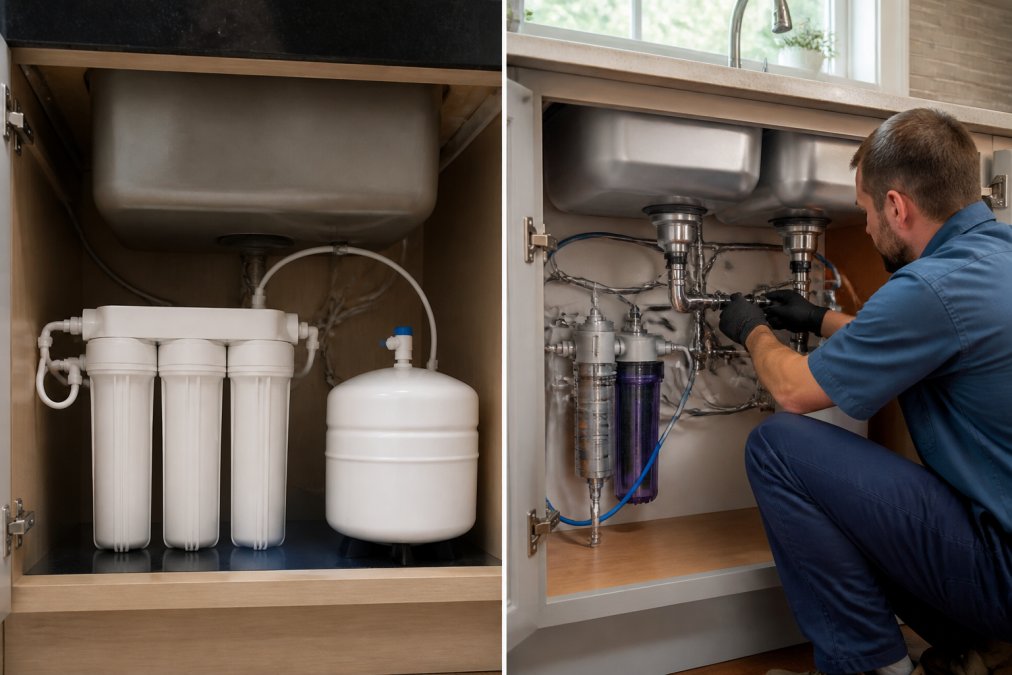
A poorly installed DIY system may need repairs within months. Professional installation includes a workmanship guarantee. For whole-house systems, professional installation is strongly recommended since the stakes are higher when treating your entire home’s water supply.
Point-of-use systems under kitchen sinks are DIY-friendly if you’re comfortable working with water lines. Whole-house systems demand professional expertise to ensure code compliance and proper integration with your main water line.
Water Filtration System Maintenance Requirements and Long-Term Costs
Initial installation is only the first expense. Calculate 5-year cost of ownership including filter replacements, salt, electricity, and maintenance to determine whether a higher-priced system saves money long-term.
Filter Cartridge Replacement Costs
Filter cartridge replacement is the primary recurring cost. Sediment filters need replacement every 3-6 months ($50-$150 per cartridge). Carbon block filters last 6-12 months ($75-$200). Reverse osmosis systems require changes every 6-9 months for pre-filters and annually for the RO membrane ($150-$400 per cycle).
Water Softener Salt and Regeneration Costs
Water softeners require salt regeneration.
Salt-free softener alternatives eliminate this recurring cost but typically cost more upfront. The payback period can vary depending on water hardness severity.
Call Now For A Free Estimate ?
Electricity and Operational Costs
Reverse osmosis systems and some whole-house units consume electricity for pump operation or backwashing.
Backwashing systems use 5-15 gallons per cycle.
Professional Maintenance and Service Calls
Professional maintenance visits verify system pressure and check for leaks.
5-Year Total Cost of Ownership Examples
The higher upfront cost of a salt-free system often results in lower 5-year ownership costs due to eliminated salt expenses and longer filter life. A reverse osmosis system under the sink costs less initially but becomes expensive over time due to frequent cartridge replacement.
Request a maintenance schedule and parts cost list from your installer before committing. Ask specifically about cartridge availability and pricing, some specialty systems have expensive proprietary filters that inflate long-term costs significantly.
When comparing installation quotes, calculate the 5-year total cost of ownership, not just the installation price. A system costing $500 more upfront might save $1,000+ over 5 years through lower maintenance costs and longer cartridge life.
Permitting, Code Compliance, and Hidden Installation Factors
Water quality testing identifies which contaminants you’re dealing with, directly determining system type and installation cost. Testing prevents overspending, a homeowner assuming they need a $3,000 reverse osmosis system might actually need a $1,200 sediment filter.
Water Quality Testing: The Diagnostic Foundation
Water quality testing should precede system selection. Municipal water utilities publish free annual Consumer Confidence Reports identifying regulated contaminants (the EPA). Search your municipality’s name plus “water quality report” or contact your local water department.
Private well testing is essential and often required by local health departments.
Many plumbers offer testing measuring hardness, pH, chlorine, sediment, and dissolved solids. This identifies whether you need softening, carbon filtration, mechanical filtration, or a combination.
How Test Results Determine System Type and Cost
Test results determine system selection: High sediment requires mechanical filtration. Hard water requires softening. High chlorine requires carbon filtration. Lead/arsenic requires reverse osmosis or ion-exchange. Bacterial contamination requires UV treatment. Multiple contaminants require multi-stage systems.
Without testing, contractors often recommend their most profitable systems. Testing provides objective justification and prevents overpaying for unnecessary stages.
Local Permitting and Code Requirements
Many municipalities require permits for whole-house installations, particularly with main water line modifications. The permit process includes inspection to verify code compliance.
Local plumbing codes specify backflow prevention devices, accessible shut-off valves upstream and downstream (older homes may lack these), pressure relief valves, proper drain line configurations, and material specifications.
Site Assessment and Hidden Complexity Factors
Site assessment identifies factors affecting installation cost: Low water pressure (below 40 PSI) requires pressure tanks or booster pumps. High pressure (above 80 PSI) requires regulators. Buried or inaccessible water meters add labor hours. Galvanized steel pipes may require replacement. Older shut-off valves need replacement. Tight spaces increase complexity and cost.
Request a site assessment from at least two plumbers before committing. Different contractors may identify different requirements based on their experience and local code interpretation. A thorough assessment justifies why quotes vary and prevents mid-project surprises.
If a plumber provides a quote without visiting your home or testing your water, that estimate is unreliable. Site assessment and water quality testing are non-negotiable for accurate pricing. Contractors who skip these steps often underestimate and charge change orders mid-project.
Getting an Accurate Quote for Your Water Filtration System
Professional quotes should specify system type, all components, estimated labor hours, and additional work based on site assessment. Red flags include vague descriptions, bundled pricing without breakdown, or quotes significantly lower than others, these indicate underestimation or corner-cutting.
Call Now For A Free Estimate
Frequently Asked Questions
How much does a professional water filtration system installation cost?
Installation costs vary significantly based on system type, home plumbing layout, and local labor rates. Point-of-use systems typically cost less to install than whole-house filtration systems. Labor charges depend on installation complexity, whether plumbing modifications are needed, and your location. Contact Protek Plumbing for a free estimate tailored to your specific installation needs, we provide transparent pricing before any work begins.
Can I install my own water filtration system, or should I hire a professional?
Simple point-of-use filters like under-sink or faucet-mounted systems may be DIY-friendly if you’re comfortable with basic plumbing connections. Whole-house filtration systems require knowledge of main water line access, shut-off valves, bypass valves, and local plumbing codes. Professional installation ensures proper integration with your existing plumbing, correct flow rate management, and compliance with code requirements. Mistakes can damage your plumbing or void warranties.
What factors influence the total cost of a water filtration installation?
Key factors include system type (point-of-entry vs. point-of-use), your home’s pipe diameter and water pressure, whether plumbing modifications are required, site assessment findings, local permitting requirements, and filter cartridge specifications. Well water systems typically cost more than municipal water filtration due to sediment and contaminant removal complexity. Professional assessment identifies these factors upfront to prevent cost surprises.
Is it worth getting a whole-house water filtration system?
A whole-house filtration system protects all water outlets, improving water quality for drinking, cooking, and cleaning. Benefits include chlorine reduction, heavy metal filtration, and protection against sediment and contaminants. Long-term value depends on your water quality issues, maintenance schedule costs, and how long you plan to stay in your home. Professional water quality testing and a site assessment help determine if the investment matches your actual needs.