
Table of Contents
- 7 Warning Signs of a Main Line Clog
- How to Tell If the Clog Is in Your Main Line or a Single Drain
- Sewer Camera Inspection: How Plumbers Find the Exact Blockage
- How to Clear a Main Sewer Line: DIY Steps vs. Calling a Pro
- Sewer Line Cleaning Cost: What Affects the Price
- What to Do Immediately When You Spot These Signs
- Common Mistakes Homeowners Make With a Main Line Clog
- When to Call a Professional Plumber
- Frequently Asked Questions
Last Updated: September 16, 2026
7 Warning Signs of a Main Line Clog
A main line clog is a blockage in the primary sewer pipe carrying all wastewater from your home to the municipal sewer or septic system. Because every drain feeds into this single line, the warning signs show up in multiple fixtures at once. At Protek Plumbing and Drain Specialists, we know catching the signs of a main line clog early is the difference between a routine drain cleaning and a flooded floor.
Multiple Slow-Moving Drains
If one sink drains slowly, that’s a local clog. If the kitchen sink, bathroom sink, and tub all drain slowly at once, the blockage is almost certainly in the main drain. Multiple slow-moving drains are the most common early sign of a main line clog because every fixture shares that single pipe, water still gets through, just slowly, and the problem builds over days or weeks.
Gurgling Noises and Toilet Bubbling
Gurgling happens when air can’t move freely through the plumbing vent because wastewater is backing up behind a blockage. You may hear bubbling in the toilet after running the washing machine, or a gurgle from an unused floor drain. Toilet bubbling is a strong signal that the main line is partially blocked and pressure is building.
Sewage Odors and Water Backing Up
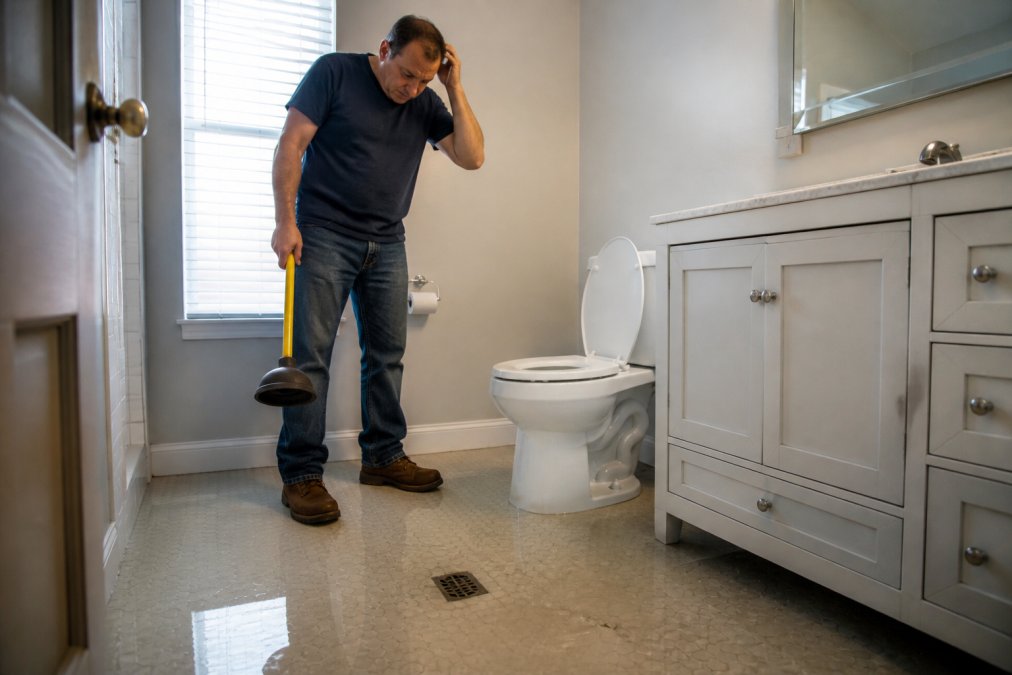
Sewage odors in the home or yard mean wastewater is sitting in the line and decomposing. Water backing up in unexpected fixtures, like a shower drain when you flush the toilet, means the blockage has moved past partial into serious. Backflow at the lowest point in the house is the clearest sign the main sewer line is failing.
How to Tell If the Clog Is in Your Main Line or a Single Drain
The quickest test: run water in several fixtures at once. If only one drain backs up, the clog is local to that fixture’s trap or branch line. If two or more drains slow or back up together, the blockage is in the main line.
A few more tells separate the two:
- A single slow drain usually clears with a plunger or snake.
- A main line clog affects fixtures on different floors and in different rooms.
- Recurring clogs in the same drain often point to tree root intrusion or grease buildup deeper in the line.
Sewer Camera Inspection: How Plumbers Find the Exact Blockage
A sewer camera inspection is the only reliable way to see exactly what’s blocking the line and where. A plumber feeds a waterproof camera through the sewer cleanout and watches a live feed, revealing tree root intrusion, pipe collapse, grease buildup, offset joints, and debris a snake can’t diagnose. Most cameras also emit a locating signal, so the technician can mark the exact spot above the blockage, useful if a repair is needed.
Finding your cleanout before you call anyone
Before booking a plumber, or attempting any DIY diagnosis, locate your sewer cleanout. It’s usually a capped pipe, three to four inches in diameter, near the foundation, in a basement or crawlspace, or near the property line. Some homes have two: one near the house (access to the line running to the street) and one at the curb (lets you work from the other direction).
DIY diagnostic tools vs. professional tools
You can do real diagnosis at home, within limits. How the tools compare:
| Tool | What it does | What it can’t do |
|---|---|---|
| Plunger | Clears a soft clog in a trap or branch line | Reaches the main line; can force sewage into other fixtures |
| Hand snake (manual) | Clears soft clogs within 25 to 50 feet | Cuts roots; navigates offset joints; shows you the cause |
| Drill-powered drum auger | Clears longer soft clogs in the main line | Cuts heavy roots; diagnoses pipe condition |
| Sewer camera (professional) | Shows the exact blockage, its location, and pipe condition | Clears anything, it’s diagnostic only |
| Hydro-jetter (professional) | Scours grease, roots, and scale from the full pipe diameter | Fixes a collapsed or broken pipe |
What the camera footage actually shows you
- Root intrusion: fine hair-like roots at a joint, or a dense root mass. Roots enter at joints and cracks, so their location tells you where the pipe is weakest.
- Grease and scale: a narrowed, coated pipe wall. Common in kitchen-heavy lines.
- Offset or separated joints: the pipe edges no longer line up, which snags debris and roots.
- Bellies: a low spot where the pipe sags and water pools instead of draining.
- Collapse or cracks: broken pipe segments that no amount of cleaning will fix.
A healthy cleanout, when you open it, should show wastewater flowing freely toward the street with no standing water and no strong sewage smell. If you open the cleanout and it’s full to the top, or water doesn’t move, that’s a confirmed main line blockage, and you should stop using water immediately.
Most reputable plumbers include camera footage in the diagnosis. If a company quotes a repair without showing camera evidence, get a second opinion before committing.
How to Clear a Main Sewer Line: DIY Steps vs. Calling a Pro
For a minor, accessible blockage, you can try a few steps. For tree roots, a collapsed pipe, or backflow into the home, call a professional. How the two approaches compare:
| Situation | DIY Approach | Professional Approach |
|---|---|---|
| One slow drain | Plunger or hand snake | Not needed yet |
| Multiple slow drains | Limited; may reach cleanout | Hydro-jetting or cable machine |
| Toilet bubbling | Stop using water | Camera inspection |
| Sewage backflow | Stop immediately | Emergency plumbing call |
| Suspected root intrusion | Not effective | Hydro-jetting plus camera |
Sewer Line Cleaning Cost: What Affects the Price
- Access. A cleanout near the foundation or at the curb is easy to reach. A cleanout under a finished slab or behind a wall adds labor before the cleaning even starts.
- Blockage type. Grease and soft debris clear in under an hour. Roots, scale, and collapsed pipe take longer and usually require hydro-jetting plus a camera.
- Line length and depth. A longer run to the municipal main, or a pipe sitting six feet down, means more equipment time and more labor.
- Pipe material and condition. Older clay and cast-iron laterals are more fragile and more likely to need repair once the camera goes in. PVC is more forgiving.
- Whether the cleaning turns into a repair. This is the big variable. A camera inspection can reveal a crack, offset joint, or root intrusion that turns a $300 cleaning into a multi-thousand-dollar repair.
A few practical ways to keep the bill down:
- Ask for a flat-rate quote, not hourly, so the price doesn’t creep if the job runs long.
- Confirm in writing whether the camera inspection is included and whether you’ll get the footage.
- Get the scope in writing before anyone starts. “Clear the main line” and “clear the main line and camera-verify it” are different jobs at different prices.
- If the line clogs repeatedly, price the repair against repeated cleanings. Two or three cleanings a year often costs more than fixing the root of the problem.
No two main line clogs cost the same. The single biggest price swing comes from whether the camera reveals damage that turns a cleaning into a repair, which is why the inspection is worth insisting on up front.
Protek Plumbing and Drain Specialists provides transparent, flat-rate estimates before work begins, so you know the scope and the number before anyone starts.
What to Do Immediately When You Spot These Signs
Stop using water the moment you suspect a main line clog. Every flush and load of laundry pushes more wastewater into a blocked line and raises the risk of a sewage backup inside the home. Then:
- Shut off water at the main valve if backflow has started.
- Avoid chemical drain cleaners, which can damage pipes and rarely reach a main line blockage.
- Clear the area around the lowest drain to limit water damage.
- Call a licensed plumber with the signs you’ve noticed.
Pouring chemical drain cleaner into a main line clog is a common and costly mistake. The chemicals sit against standing water, can corrode older pipes, and expose you to fumes without clearing the actual blockage. You still end up calling a plumber, now with a weakened pipe.
Common Mistakes Homeowners Make With a Main Line Clog
The biggest mistake is treating a main line clog like a single-drain clog and waiting. Because wastewater keeps flowing into a blocked line, a partial blockage becomes a full backup fast.
Other frequent errors:
- Ignoring gurgling and odors because “the drain still works.”
- Using a plunger on a main line, which can force sewage into other fixtures.
- Assuming a recurring clog is normal when it points to tree root intrusion.
- Skipping the camera inspection and paying for a cleaning that doesn’t fix the cause.
What most guides miss: if the same main line clogs twice within a year, the problem isn’t the clog. It’s the pipe. Tree roots and deteriorating sewer laterals regrow or collapse, and only a camera inspection tells you which one you’re dealing with.
When to Call a Professional Plumber
Call a professional plumber the moment you see multiple slow drains, toilet bubbling, or any sewage backflow. These aren’t wait-and-see problems: a main line clog that backs up into the home creates a health hazard and can damage flooring, drywall, and fixtures.
Frequently Asked Questions
What are the early warning signs of a main line clog?
The earliest signs include multiple slow-moving drains, gurgling sounds from toilets or pipes, and sewage odors near floor drains. You may also notice water backing up in unexpected fixtures like a shower when you flush the toilet. Catching these signs early can prevent a full sewage backup and costly emergency repairs.
How do I know if the clog is in my main line or a single drain?
If only one fixture drains slowly, the clog is likely in that fixture’s branch line. When multiple drains across the home slow down at once, or when using one fixture causes another to back up, the blockage is probably in the main sewer line. A sewer camera inspection confirms the exact location.
Can a main line clog cause sewage to back up into the house?
Yes. When the main sewer line is blocked, wastewater has nowhere to go and will back up through the lowest drain in your home, often a floor drain, shower, or basement toilet. This creates a health hazard and can damage flooring and walls. Stop using water immediately and call a professional plumber.
How long does it take a professional to clear a main sewer line?
Your plumber can give a clearer time estimate after assessing the blockage.
A main line clog rarely fixes itself, and the signs only get worse with time. If you’ve noticed slow drains, gurgling, or odors, don’t wait for a backup to confirm it. Protek Plumbing and Drain Specialists brings licensed, insured technicians, honest upfront pricing, and a workmanship guarantee to every call. Call now for a free estimate and get your sewer line flowing again.