
Last Updated: November 4, 2026
Quick Summary
Signs of water damage behind walls include yellow or brown stains, damp cool spots, peeling paint, bubbling wallpaper, and crumbling drywall. A musty odor, running water sounds when nothing is on, or sagging ceilings and sticking doors also point to hidden moisture. Trust your nose and check with a moisture meter early.
- A fresh leak leaves a soft damp spot, while an old one leaves a crusty ring with a darker center.
- Turn off every fixture and watch the water meter dial; movement means a hidden plumbing leak is running.
- Scan walls in a grid at roughly one moisture meter reading per square foot and record the numbers.
- Stains that grow after a storm and dry between rains point to exterior intrusion, not plumbing.
- Moisture covering more than roughly 10 square feet, or a cavity wet after 48 hours of drying, needs professional drying equipment.
Table of Contents
- Visual Signs of Water Damage Behind Walls
- How to Find the Source of a Water Leak Inside a Wall
- Water Seeping Through Wall When It Rains: What It Means
- Smells, Sounds, and Structural Changes That Point to Hidden Water Damage
- Water Damage on Wall: How to Fix It and When to Call a Pro
- Wall Water Damage Repair Cost: What Affects the Bill
- Schedule a Professional Leak Inspection
- Frequently Asked Questions
Visual Signs of Water Damage Behind Walls
Water damage behind walls is a plumbing leak, condensation problem, or roof intrusion that soaks the materials inside your wall cavity before you ever see a drip.
Here’s the uncomfortable truth most guides skip: by the time a stain shows on the surface, moisture has usually been feeding mold and rotting wood for a while. Your drywall is a sponge.
Stains, Discoloration, and Damp Spots
Look for yellow stains, brown spots, or dark patches spreading across the wall or ceiling. These are the classic first signs of water damage behind walls. A fresh leak leaves a soft, damp spot.
Run your palm along the wall. A damp wall feels cool and slightly slick compared to dry drywall nearby. Pay attention to corners, the base of walls, and the area behind kitchen and bathroom fixtures.
Peeling Paint, Bubbling Wallpaper, and Crumbling Drywall
Paint that peels, bubbles, or blisters is telling you the wall underneath is wet. Wallpaper does the same thing, bubbling away from the surface as moisture pushes through. When you press on it, soft drywall or a warped, buckled section means the paper facing has lost its structure.
Crumbling drywall is the late stage. If the wall gives under light pressure or leaves a chalky residue on your fingers, the material is saturated and needs to come out.
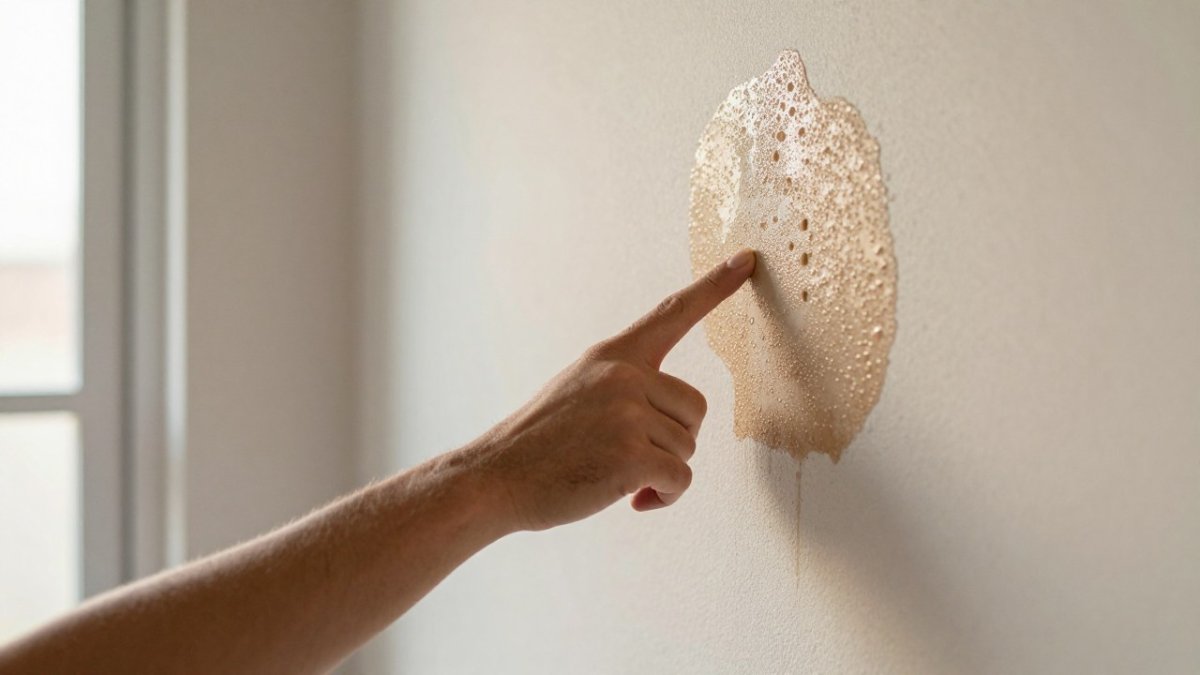
Brown stains and bubbling paint can signal moisture moving through the wall, so tracing the exterior for water behind siding can help reveal where it is entering.
How to Find the Source of a Water Leak Inside a Wall
Finding the source means narrowing down where moisture enters before you open anything up. Work from the most likely culprit outward, not from the biggest stain inward. The goal is to build a short list of suspects you can confirm with a tool or a controlled test, not to guess and start cutting.
Step 1: Rule Out Fixtures and Drains
Shut off fixtures one at a time. Run each sink, shower, and appliance, then stop. A leak that only appears during use points to a supply or drain line. Check the ceiling below bathrooms: stains under a second-floor bath usually trace to a tub overflow, tile grout, or a drain seal. Look at supply lines and shutoff valves for mineral crust and green or white residue, which is the signature of a slow fitting leak.
Step 2: Test the Water Meter
Turn off every fixture and watch the meter dial. Movement means a hidden plumbing leak is running somewhere. This is the single most reliable free test a homeowner can run, because it confirms an active supply-side leak without opening a wall. It will not tell you where the leak is, and it will not catch a drain leak that only runs when water is used.
Step 3: Measure Moisture, Don’t Just Look
A moisture meter is the workhorse tool here. Scan the wall in a grid, roughly one reading per square foot, and mark each reading on a sketch of the wall.
Know what each tool can and cannot confirm:
- Pin-type moisture meters read at the surface and just below it. They confirm dampness but can be fooled by metal studs, foil-backed insulation, or recent paint.
- Pinless meters scan a wider area without pinholes but give relative readings, not exact moisture content.
- Infrared cameras show temperature differences that often track wet areas. They are excellent for finding the shape and extent of a wet zone, but they do not measure moisture, a cold pipe or a draft can look like a leak.
Using at least two tools together, such as an infrared camera to map the wet zone and a moisture meter to confirm the readings, helps separate real moisture from a thermal artifact.
Step 4: Document Before You Disturb Anything
Photograph every stain with a ruler or coin for scale, note the date, and sketch the wall with your meter readings.
Watch out: stop investigating and call a professional if you smell burning, see scorch marks, find water within a foot of an outlet or panel, or the wall feels hot.
If the meter points to a spot you can’t explain, a professional leak detection service can use acoustic listening and thermal imaging to locate the leak without tearing out the whole wall.
Water Seeping Through Wall When It Rains: What It Means
Water that appears only during rain is usually not a plumbing leak but water intrusion from outside, which changes the repair plan.
Rain-driven seepage usually comes from one of four places:
Call Now For A Free Estimate ?
- Roof or flashing failures that let water run down inside the wall cavity
- Cracked exterior caulk or failed window seals
- Missing or damaged weep holes in masonry walls
The pattern tells you a lot. Stains that grow after a storm and dry out between rains point to an exterior path. Understanding leak detection and prevention techniques helps you stop the same intrusion from returning every rainy season.
Smells, Sounds, and Structural Changes That Point to Hidden Water Damage
A musty odor is often the first sign people notice, and the last one they act on. That earthy smell is moisture buildup feeding mildew and mold growth inside the wall cavity.
Listen, too. Running water when nothing is on, a faint drip inside a wall, or a hiss near a fixture all point to an active leak. Then look at the structure:
- Sagging ceilings or ceiling cracks that keep widening
- Wall cracks that weren’t there last season
- Sloping floors, cracked flooring, or buckled floors near the affected wall
These are signs the water has reached the wood framing, not just the drywall. Our guide to the top signs you may have a water leak in your house covers the full checklist if you want to compare what you’re seeing.
Water Damage on Wall: How to Fix It and When to Call a Pro
Small surface damage can be handled yourself. Anything that involves the wall cavity, mold, or structural movement needs a pro. The hard part is knowing which side of that line you’re on, so use the thresholds below rather than a gut feeling.
Escalate Immediately If Any of These Are True
- The leak is active right now. Water you can see moving, dripping, or pooling means shut off the supply at the main and call a plumber. Drying a wall while water is still entering it wastes time and grows mold.
- Water is near electrical systems. Any moisture within a foot of an outlet, switch, panel, or ceiling fixture is an urgent call. Do not touch the wall or the device.
- The damp area is large. A common rule of thumb is that moisture covering more than roughly 10 square feet, or a cavity that stays wet after 48 hours of drying, needs professional drying equipment. Household fans rarely dry a wall cavity.
Health and Indoor Air: When to Limit Exposure
Prolonged dampness and mold growth can affect indoor air quality, and some people, those with asthma, allergies, or compromised immune systems, are more sensitive (the CDC). You do not need to panic, but you should act. Keep the room ventilated, avoid dry-sanding moldy drywall (which sends spores airborne), and wear an N95 respirator if you must be near a moldy area.
What You Can Safely Do Yourself
- Dry the area with fans and a dehumidifier for several days, and re-check with a moisture meter before assuming it’s dry.
- Remove and replace soft drywall only after the leak is fixed and the cavity is confirmed dry.
- Treat surface mildew with a household cleaner rated for mold.
Watch out: painting over a damp stain without fixing the leak traps moisture and guarantees the stain returns. Fix the source first, always.
What Happens After a Hidden Leak Is Confirmed
Once the source is found, the repair follows a predictable sequence, and knowing it helps you judge a contractor’s scope:
- Repair the leak, the pipe, fitting, seal, or exterior path is fixed first. Nothing else starts until this is done.
- Controlled wall opening, a pro cuts a limited access hole at the wet zone rather than demolishing the whole wall.
- Drying, commercial air movers and dehumidifiers run until meter readings return to a normal baseline, which can take several days.
- Material removal, saturated drywall, insulation, and any rotted framing are removed and replaced.
- Verification, a final moisture reading confirms the cavity is dry before the wall is closed and finished.
If a contractor wants to skip the verification step or quotes a repair before the leak is located, that’s a warning sign. The scope should follow the diagnosis, not the other way around.
Wall Water Damage Repair Cost: What Affects the Bill
Repair cost depends on how far the water traveled, not on how big the stain looks. A small surface stain with a quick fix costs far less than a saturated wall cavity with mold and rotted framing.
The main cost drivers:
| Factor | What It Changes | Why It Matters |
|---|---|---|
| Leak location | Access difficulty | Behind tile or slab costs more to reach |
| Wall area affected | Materials and labor | Larger cut-outs mean more drywall and paint |
| Mold present | Remediation scope | Mold removal adds a separate line item |
| Structural damage | Framing repair | Rotted studs or joists raise the total |
| Detection method | Time on site | Hidden leaks need tools to locate |
Protek Plumbing and Drain Specialists gives transparent estimates before work begins, so you know the scope before anyone cuts.
Schedule a Professional Leak Inspection
Guessing costs more than checking. A proper water damage inspection locates the leak, measures how wet the wall cavity is, and tells you what actually needs repair.
If you’ve spotted any of these signs, don’t wait for the stain to grow. Contact Protek Plumbing and Drain Specialists to discuss a professional leak inspection and get a clear answer on where the water is coming from.
Frequently Asked Questions
How can I tell if there is water damage behind my drywall?
Look for brown or yellow stains, bubbling paint, soft or crumbling drywall, and a musty odor. Tap the wall: hollow or squishy sounds suggest moisture behind the surface. A moisture meter can confirm readings above 15 percent, which usually means active water damage behind walls. If you find several signs together, call a licensed plumber rather than waiting for the damage to spread.
Can a plumber detect a leak inside a wall without opening it?
Yes. Plumbers use moisture meters, thermal imaging cameras, and acoustic listening equipment to locate a leak behind a wall without tearing it open. These tools narrow down the source so the repair is targeted. Protek Plumbing and Drain Specialists provides plumbing services in the Port Charlotte area, with transparent estimates before any work begins.
Does insurance cover water damage in walls?
Homeowners insurance coverage for water damage varies by policy, so review your policy language or ask your agent before assuming a hidden leak is covered. Document the damage with photos, keep receipts, and file a claim quickly. Your policy language determines coverage, so review it or ask your agent before assuming a hidden leak is covered.
How long does it take for a wall to dry after water damage?
Drying time for a wet wall cavity depends on the extent of the water and the equipment used. Without proper drying, mold can begin growing within a short period. Drywall that has been soaked may need to be removed and replaced. A moisture meter helps confirm the wall is fully dry before you repaint or patch.
Water behind a wall never fixes itself, and the longer it runs, the more it costs. Protek Plumbing and Drain Specialists brings over 35 years of experience, 24-hour emergency service, and a 100% workmanship guarantee to every job. We arrive fast on urgent calls, hand you a transparent estimate before work starts, and stand behind the repair. Get started with Protek Plumbing and Drain Specialists and stop the leak before it spreads.
