
Last Updated: November 5, 2026
Quick Summary
A residential repiping cost estimate in 2026 is driven by four variables: home size, access, pipe material, and the damage left behind after the walls close. No honest plumber can give you a firm repiping cost over the phone, since anyone who does is guessing. PEX usually costs less than copper in both materials and labor hours.
- A single-story home on a crawlspace is the easiest repipe job; a two-story home on a slab is the hardest.
- PEX needs fewer joints and installs faster, while copper costs more and takes longer to install.
- PEX lasts roughly 25-40 years and copper roughly 50-70 years under normal conditions.
- Drywall patching and painting are often excluded from repiping estimates and billed separately.
- Many policies cover sudden water damage but often exclude the pipe replacement itself when plumbing is worn out.
Table of Contents
- What Drives a Residential Repiping Cost Estimate in 2026
- PEX vs. Copper Repiping Cost: Which Material Fits Your Budget?
- What Is Included in a Repiping Estimate (and What Usually Is Not)
- How Long Does It Take to Repipe a House?
- Homeowners Insurance and Old Pipe Replacement: What Is Covered
- Warning Signs You Need a Repiping Estimate Before Failure
- DIY vs. Professional Inspection: Which Checklist Fits Your Home
- Request a Transparent Repiping Estimate From Protek
- Frequently Asked Questions
What Drives a Residential Repiping Cost Estimate in 2026
A residential repiping cost estimate in 2026 comes down to four variables: home size, access, pipe material, and the damage left behind after the walls close. To see what a whole-home repipe actually involves, start with the service overview. Building every estimate around those four factors explains most of the gap between two quotes for the same house.
Here is the short answer before the details: no honest plumber can give you a firm repiping cost over the phone. Anyone who does is guessing, and you will pay for that guess later.
Home size, stories, and slab versus crawlspace access
Square footage sets the baseline. More fixtures mean more pipe runs, more fittings, and more labor hours.
Access matters just as much. A single-story home on a crawlspace is the easiest job in the trade. A two-story home on a slab is the hardest.
- Crawlspace: pipes are reachable, so labor drops
- Slab foundation: pipe runs sit under concrete, so access costs rise
- Two or more stories: vertical runs add time and wall openings
- Bathroom count: each wet wall adds fixtures and tie-ins
Pipe material, fixture count, and drywall repair
Material choice changes the estimate more than any other single decision. PEX, copper, and galvanized steel each carry different material costs and install times.
Fixture count adds up quietly. Every sink, toilet, shower, and hose bibb is a connection point.
Then comes the part homeowners forget: drywall repair. A repipe means opening walls. Patching and painting are often a separate line item, and that is where surprise charges appear. Ask upfront whether drywall repair is included or billed separately.
PEX vs. Copper Repiping Cost: Which Material Fits Your Budget?
PEX usually costs less than copper, both in materials and in labor hours, because it needs fewer joints and bends around obstacles. Copper lasts longer in many installations and handles heat well, but it costs more and takes longer to install. The real decision, though, is not the price tag on day one, it is how long each material lasts and how it fails. That is the part most estimates leave out.
Here is how the two compare on the factors that drive repiping cost and long-term value:
| Factor | PEX | Copper |
|---|---|---|
| Material cost | Lower | Higher |
| Install time | Faster | Slower |
| Joints required | Fewer | More |
| Heat tolerance | Moderate | High |
| Expected service life | Roughly 25-40 years under normal conditions | Roughly 50-70 years under normal conditions |
| Common failure mode | Fitting failures and UV/chlorine degradation | Pinhole leaks and internal corrosion |
| Best for | Tight budgets, fast turnarounds | Long-term, high-heat lines |
Material-specific lifespan: what to expect and when to plan
A repiping estimate is only useful if you know when the next one is due. Galvanized steel, still present in many pre-1970s homes, is generally the shortest-lived of the three and is often targeted for full replacement.
Lifespan depends on water chemistry and installation quality, so a water-quality test is worth considering before you commit to a material.
How each material fails, and why it matters for your estimate
Copper fails from the inside. Pinhole leaks, internal corrosion, and mineral buildup close the pipe diameter and drop pressure before a leak ever shows. Galvanized steel rusts internally and sheds sediment into the supply.
That failure pattern changes the estimate. A copper repipe in a home with pinhole leaks often means opening more wall to chase corrosion; a PEX install can route around obstacles with fewer joints, which is why labor hours drop.
Code and insurer constraints
Neither material is “best” in a vacuum. For a rental property or a tight budget, PEX often wins. For a homeowner planning to stay decades and wanting maximum durability, copper is worth the premium. But confirm two things before you choose: whether your local code accepts PEX in the application you have in mind, and whether your insurer has a material requirement.
What Is Included in a Repiping Estimate (and What Usually Is Not)
A repiping estimate is generally a written breakdown of the work: pipe material, labor, fixture tie-ins, permit fees, and wall access. What is included varies by contractor, so read the scope line by line.
Usually included:
- New supply lines and fittings
- Labor for the repipe
- Permit fees, in most quotes
- Basic pressure testing
Often NOT included:
- Drywall patching and painting
- Fixture replacement
- Landscape or slab repair
- Water damage cleanup
Ask for any exclusions in writing, since a clear estimate should name what it leaves out.
How Long Does It Take to Repipe a House?
Whole-house repipes can take several days of active work, and the timeline depends on size, access, and material. A smaller single-story home on a crawlspace moves fastest. A larger two-story home on a slab takes longer.
Plan for these stages:
- Permit pull and material delivery
- Tear-out and wall access
- New pipe installation
- Pressure testing and inspection
- Drywall repair and cleanup
Water is often shut off during active work hours. Ask your plumber how overnight water restoration is handled, especially if you have family at home.
Call Now For A Free Estimate ?
Homeowners Insurance and Old Pipe Replacement: What Is Covered
Homeowners insurance and old pipe replacement rarely overlap the way people hope. Many policies cover sudden, accidental water damage, but often exclude the pipe replacement itself when worn-out plumbing is the cause. The gap between those two ideas is where most claim disputes start.
What that means in practice:
- A pipe burst that floods a room: the water damage may be covered
- The corroded pipe that caused it: often your responsibility
- Slab leaks from aging lines: coverage varies by policy
The preventative-maintenance angle most homeowners miss
A repipe done before failure is not just a repair, it is a documented maintenance event, and that documentation can matter at renewal and at claim time. Some insurers may offer maintenance-related discounts or credits. The exact terms vary by carrier and policy, so ask your agent directly rather than assuming.
The practical move is to treat the repipe as a paper trail:
- Keep the contractor’s invoice, permit record, and material specification
- Photograph the old pipe and the new installation before walls close
- Note the install date and expected service life so the next owner inherits a record
- Ask your agent whether the update qualifies for a maintenance credit
Watch out: a discount is not the same as coverage. Updating the plumbing does not automatically extend coverage to the pipe itself, and some carriers exclude repeated water-damage claims regardless of maintenance history.
Documentation that survives a claim
Read your policy or call your agent before work starts. Document the damage with photos. If a slab leak is suspected, slab leak repair is a separate scope from a full repipe, and knowing which one you face changes the claim conversation.
Claims often go more smoothly when the homeowner can show the failure was sudden and the system was maintained. Keeping a simple file of inspection reports, repair receipts, and photos of any prior leaks can help.
Prevention beats claims
The cost of a claim can include the deductible, premium risk at renewal, and disruption of a flooded home.
Warning Signs You Need a Repiping Estimate Before Failure
The clearest warning signs are discolored water, falling water pressure, and repeated leaks in the same lines.
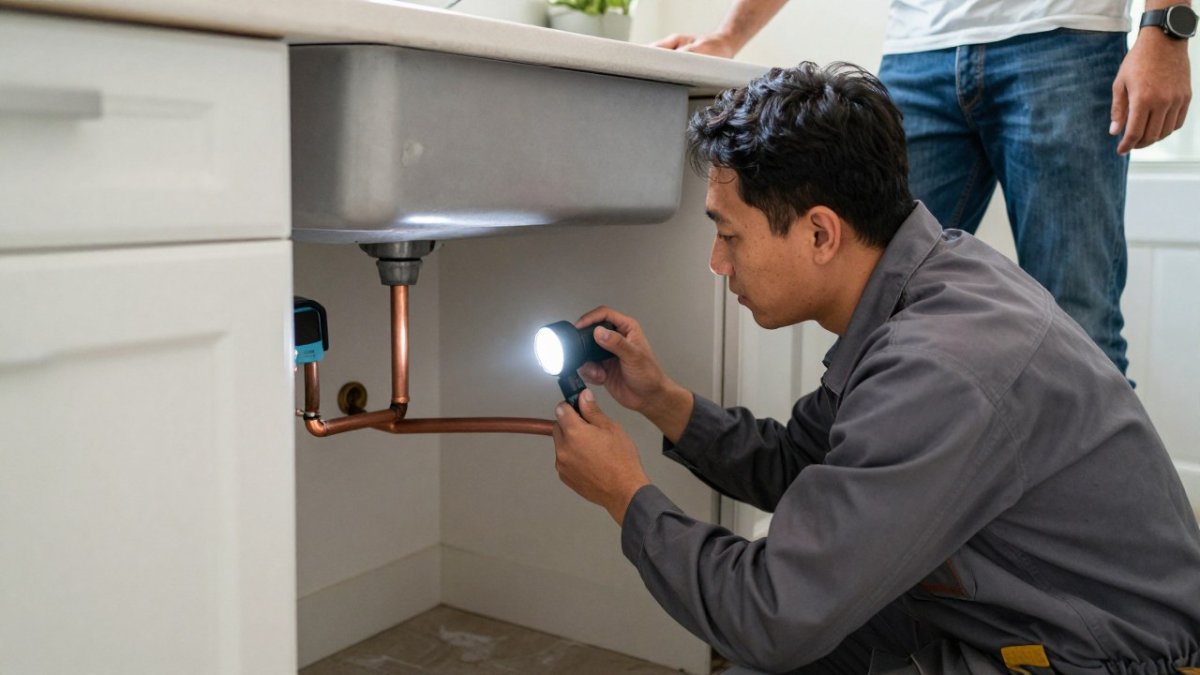
Watch for these signals:
- Brown or rusty water at the tap
- A faucet drip that keeps returning after repair
- Water pressure that drops when two fixtures run
- Pinhole leaks in copper piping
- Visible corrosion or mineral buildup on exposed lines
- Warm spots on the floor, a sign of a slab leak
Any one of these deserves a look. If you are weighing a repair against a full replacement, our team explains why a repipe may be the better call.
DIY vs. Professional Inspection: Which Checklist Fits Your Home
A DIY inspection catches surface clues. A professional inspection finds what is behind the walls. Both have a place, and the right choice depends on what you already suspect.
Your DIY checklist:
- Check water color at every tap
- Test pressure at two fixtures at once
- Look for corrosion on exposed pipes
- Check under sinks for moisture
- Watch for warm floor spots
- Note any recurring leaks
What a pro adds:
- Pressure testing of the full system
- Leak detection equipment for hidden lines
- A material and lifespan assessment
- A written scope you can budget against
If your DIY pass turns up slab leak signs, use a slab leak checklist to narrow it down before you call. For most homes built before the 1990s, a professional plumbing inspection is the smarter first step. It costs less than an emergency call and far less than a catastrophic failure.
Request a Transparent Repiping Estimate From Protek
A repiping estimate should tell you exactly what you are paying for, what it excludes, and when the crew will arrive.
We bring over 35 years of experience to our work. We provide transparent estimates before work begins. We are licensed, bonded, and insured, and every job carries our 100% workmanship guarantee.
If you are ready to move from worry to a real number, request a repiping estimate from our local team. We will walk your home, explain the scope, and put it in writing.
Frequently Asked Questions
Will homeowners insurance cover corroded pipes or repiping?
Most standard homeowners policies cover sudden water damage from a pipe burst but exclude the pipe itself when wear, corrosion, or age caused the failure. That means the repiping cost usually comes out of pocket, while the resulting water damage may be covered subject to your deductible. Document the damage, keep failed pipe sections, and ask your adjuster in writing whether the cause is considered sudden or gradual before you authorize work.
What factors affect a whole-house repiping estimate?
The main factors are home size and layout, number of stories, slab versus crawlspace or attic access, pipe material chosen, fixture count, and how much drywall must be opened and patched. Older homes with galvanized steel often need more labor because fittings seize and walls hide surprises. Ask for the estimate to list each of these separately so you can see what changes the number instead of accepting one lump-sum figure.
Is it cheaper to repipe a house with PEX or copper?
PEX generally costs less than copper on both material and labor because it needs fewer joints and routes through walls with less demolition. Copper lasts long and handles heat well but carries higher material prices and more soldering labor. Neither is automatically right for every home: hot-water runs, local code, and how your walls are built all affect the decision. Get both options priced in writing before you commit.
Can you live in your home during a repiping project?
Many homeowners stay during a repipe, but water is shut off for stretches of each workday and some rooms become unusable while walls are open. Plan for bottled water, a backup plan for showers, and clear access to the work areas. If the home has one bathroom or a slab layout with heavy demolition, a short stay elsewhere may be easier. Ask your plumber for a day-by-day schedule before work starts.
Aging plumbing does not fix itself, and the estimate you avoid today is the emergency you pay for tomorrow. Protek Plumbing and Drain Specialists offers transparent estimates, 24-hour emergency response, and a 100% workmanship guarantee on every repipe. Get started with Protek Plumbing and Drain Specialists and replace guesswork with a clear, written scope for your home.
