
Last Updated: November 7, 2026
Quick Summary
For most homeowners, professional drain cleaning is worth it when a clog keeps returning, several drains slow at once, or the main line may be involved. A trained technician finds the cause and clears the full blockage, and a camera inspection can reveal problems that chemical cleaners cannot.
- Professional service clears the full blockage, not just the top layer that store products often leave behind.
- Hydro jetting removes grease and debris from pipe walls, which helps with repeat clogs.
- Always confirm pipe condition with a camera inspection before any high-pressure jetting.
- Several slow drains at once, gurgling toilets, or sewage odors signal a main line clog that needs prompt attention.
- Clean fixture lines and the main line on separate schedules, adjusted for grease load, pipe age and nearby tree roots.
Table of Contents
- What Professional Drain Cleaning Includes
- The Main Benefits of Professional Drain Cleaning
- Professional Drain Cleaning vs. Chemical Drain Cleaners
- Hydro Jetting vs. Drain Snaking: Choosing the Right Method
- Signs of a Main Line Clog You Should Not Ignore
- How Often to Clean Drains Professionally
- Booking Your Drain Cleaning With Protek
- Frequently Asked Questions
Are Professional Drain Cleaning Services Worth It? For most homeowners, the answer depends on what is clogging the drain, how old the pipes are, and how often the problem comes back. Protek Plumbing and Drain Specialists has spent more than 35 years serving Port Charlotte and Charlotte County, and we see the same question every week: is a professional visit worth the money, or can a bottle of chemical cleaner do the job? This guide answers that directly, so you can decide with clear facts instead of guesswork.
What Professional Drain Cleaning Includes
Professional drain cleaning is more than pouring something down the sink. A trained technician first finds where the blockage sits, then clears it with equipment built for the job. The visit usually covers the trap, the drain line, and in many cases a check of the main sewer line that every fixture in the house feeds into.
A typical service includes:
- A visual check of the drain, often with a camera when the cause is unclear
- Clearing the clog with a drain auger or a high-pressure water tool
- Removing grease, hair, soap scum, and other buildup from the pipe walls
- A short test to confirm water flows freely again
- A plain-language explanation of what caused the problem and how to prevent it
Ask whether the price covers the assessment, not just the cleaning. That detail matters, because a clog that looks simple can point to a larger issue in the line.
The Main Benefits of Professional Drain Cleaning
Professional service can be worth its cost in a few clear ways:
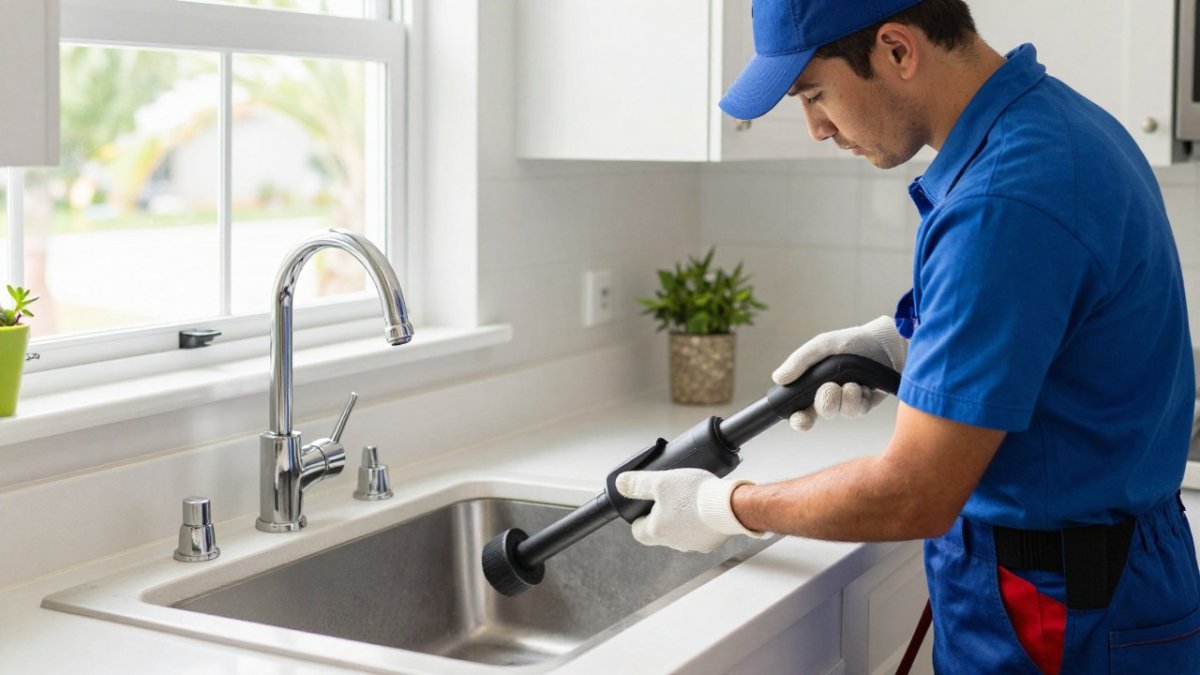
-
It clears the full blockage, not just the top layer. Store products often open a small channel and leave the rest behind.
-
It removes buildup from the pipe walls. Grease and debris stuck to the inside of a line narrow it over time, and a clean pipe drains faster.
-
It finds the real cause. A repeat clog can signal tree roots, a bellied pipe, or a failing sewer line.
-
It can save time and mess. Many standard jobs are completed in one visit, without the wait and cleanup of repeated attempts.
Professional Drain Cleaning vs. Chemical Drain Cleaners
Chemical drain cleaners are cheap and easy to buy, which is why so many people reach for them first.
Chemicals also cannot tell you what is wrong. If the drain stays slow after treatment, you have spent money without learning the cause. A professional visit costs more upfront, but it answers the question and avoids repeat treatments.
Watch out: Never mix chemical drain cleaners with another drain product or with plunging. The reaction can release harmful fumes and splash hot liquid back at you.
Hydro Jetting vs. Drain Snaking: Choosing the Right Method
Two methods handle most professional drain jobs, and the choice between them should follow from what is in the pipe, not from which tool the technician reaches for first. A good technician inspects before deciding, and explains the reasoning before starting work.
Drain snaking uses a flexible steel cable with a cutting head or auger on the end. The cable is fed into the line and rotated to break up or pull back the blockage.
Hydro jetting uses a specialized nozzle on a high-pressure hose. If you are ready to compare options, see hydro jetting service in Port Charlotte. Learn more about how hydro jet drain cleaning works before choosing this method.
Use these criteria to think about which method fits:
- One slow sink or tub, no other symptoms. Snaking the branch line is usually enough. The clog is local and the rest of the system is draining normally.
- Repeat clogs in the same fixture. The line may be coated with buildup that snaking only channels through. Hydro jetting cleans the walls and is often the better long-term fix, after a camera check.
- Multiple fixtures draining slowly, or a main line backup. This points to the main sewer line. A camera inspection comes first, then hydro jetting if the pipe is sound, or snaking if the line is fragile or the clog is a single solid object.
- Grease-heavy kitchen line. Snaking opens a path; hydro jetting removes the grease. For a line that has never been cleaned, jetting is usually the more thorough choice.
- Older or questionable pipe. Cast iron, clay, and Orangeburg lines can be fragile. Snaking is gentler, and jetting should only proceed after a camera confirms the pipe can take the pressure.
- Suspected roots. Snaking can cut through roots but does not remove them from the joint. Hydro jetting can clear them, but the root cause remains, and the line may need repair rather than repeated cleaning.
A camera inspection is the step that makes the choice reliable. It shows the pipe material, the condition of the walls, the location of the clog, and whether roots or a belly are involved.
Watch out: High-pressure jetting on a pipe that is already cracked or corroded can turn a repair into a replacement.
The table below compares the two main methods, drawing on the criteria the article gives for choosing between them.
| Method | Best for | Key difference |
|---|---|---|
| Drain snaking | One slow sink or tub | Cable opens a path; does not clean pipe walls |
| Hydro jetting | Repeat clogs and grease buildup | High-pressure water scours walls and clears clog |
| Drain snaking | Fragile or older pipes | Gentler; cannot remove roots from joints |
| Hydro jetting | Never-cleaned lines | Removes grease, scale and debris together |
| Hydro jetting | Suspected roots | Clears roots, but root cause may need repair |
| Both methods | Any main line job | Camera inspection first confirms pipe condition |
Signs of a Main Line Clog You Should Not Ignore
A clog in one fixture is a nuisance. A clog in the main sewer line affects the whole house. Read more about how a main sewer line clog is handled. Watch for these warning signs:
- Several drains back up or drain slowly at the same time
- Water gurgles in toilets or drains when you run another fixture
- Sewage odors inside the house or near the yard
- Wet spots or unusually green patches of lawn above the line
- Water backing up into a shower or the lowest drain when you flush
If you see more than one of these, call a professional soon. A main line problem can turn into a sewer backup, and waiting usually makes the repair more expensive.
How Often to Clean Drains Professionally
There is no single schedule that fits every home, and any company that quotes one without asking about your plumbing is guessing. Once that interval is tailored to your plumbing, weighing the likely cost of routine cleaning against the disruption of a backup can help you decide what makes sense, and Leftcoast Plumbing offers another perspective on that trade-off.
Use these factors to set your own interval:
- Kitchen grease load. A household that cooks with oil daily and pours pan drippings down the sink will coat the kitchen line faster than one that wipes pans into the trash. Grease cools and sticks to the pipe wall, so the line narrows gradually before it clogs.
- Hair and soap volume. A full bathroom shared by several people, or a household with long-haired occupants, loads the tub and shower trap faster. Drain screens catch some of it, but soap scum still binds to the pipe wall.
- Pipe material and age. Cast iron lines corrode and roughen on the inside, which gives debris more to grab onto. Older clay or Orangeburg sewer lines can shift and bellies form, and those low spots collect solids. Homes with older pipes generally need service more often than homes with newer PVC.
- Trees and landscaping. Mature trees near the sewer line send roots toward the moisture and nutrients in the pipe. Roots enter at joints and hairline cracks, and once inside they grow. A home with large trees over the line should plan on more frequent inspection, not just cleaning.
- Main line history. If the main sewer line has backed up before, the clock resets. A line that clogged once is more likely to clog again, and the interval between cleanings should be shorter than for a line with no history.
- Household size and fixtures. More people, more laundry, and more dishwasher cycles mean more water and solids moving through the system. A large family usually needs service sooner than a single occupant.
A common pattern is to clean the fixture lines on one schedule and the main line on another.
Between visits, everyday habits do most of the work. Keep grease out of the sink and wipe pans into the trash. Avoid flushing wipes, paper towels, and feminine products, even the ones labeled flushable, because they do not break down the way toilet paper does (the EPA).
Watch out: A drain that clogs repeatedly after professional cleaning is not a maintenance problem, it is a symptom.
Booking Your Drain Cleaning With Protek
If you are weighing whether professional drain cleaning is worth it, start with a clear diagnosis. Protek Plumbing and Drain Specialists provides residential and commercial plumbing services in Port Charlotte and Charlotte County.
Call now for a free estimate, and we will help you decide whether a one-time cleaning, hydro jetting, or a full line inspection makes the most sense for your property. You can also review our drain cleaning and sewer cleaning services in Port Charlotte before you book.
Frequently Asked Questions
How much does professional drain cleaning cost?
Pricing depends on the location of the clog, the method needed, and whether a camera inspection is included.
Is professional drain cleaning better than Drano?
For a minor clog in one sink, a chemical product may help.
How long does a drain cleaning take?
Most standard drain cleaning visits finish in one visit.
Frequently Asked Questions
Is professional drain cleaning worth it?
For most homeowners, yes, especially when clogs keep returning or slow drains point to buildup deeper in the line. A professional can clear grease, hair, and debris from the main line and inspect for root intrusion or pipe damage that a home fix will not reach. Chemical products often only push a clog further down. Paying for one visit is usually less than the cost of repeated repairs, water damage, or a backed-up sewer line. Protek offers transparent estimates before any work begins, so you know the cost before the crew starts.
Why do plumbers say not to use drain cleaners?
Many liquid drain cleaners rely on strong chemicals that generate heat as they react with clogs. On older pipes, including the cast iron and galvanized lines common in homes built decades ago, that heat and chemical exposure can weaken joints and seals. Chemicals also may not fully clear the blockage, leaving a partially dissolved mass that can harden or shift later. Plumbers often ask homeowners to avoid repeated chemical use before a professional visit so the technician can see and treat the actual problem safely.
How often should drains be professionally cleaned?
Frequency depends on the household, the drain type, and how much grease, hair, and debris goes down it. Homes with a history of slow drains, large families, or older plumbing may benefit from a professional cleaning every one to two years. Kitchen lines carrying grease often need attention more often than bathroom drains. A plumber can inspect the system and recommend a schedule based on what they find. Ask Protek for a free estimate to set a schedule that fits your home.
When should I call a plumber for a clogged drain?
Call a plumber when a drain stays slow after basic home attempts, when more than one fixture backs up at once, when sewage smells appear, or when water rises in a lower drain such as a shower or floor drain. These signs often point to a main line clog rather than a local blockage. Protek provides 24-hour emergency plumbing service and typically arrives within 60 to 90 minutes for urgent calls, which helps limit water damage and further pipe stress.
