
Table of Contents
- What Repiping an Older Home Involves
- Signs an Older Home Needs Repiping
- Pipe Material Options and Their Costs
- Cost Breakdown: Labor, Materials, and Access
- How Long Does It Take to Repipe a House
- Repiping Estimate Checklist for Homeowners
- Regional and Access-Related Price Variation
- Planning for Occupied Homes and Minimizing Disruption
- Frequently Asked Questions
Last Updated: October 19, 2026
What Repiping an Older Home Involves
Whole-house repiping replaces all or most of the water supply lines in your home, and understanding the cost of repiping older homes helps you budget for this significant investment.
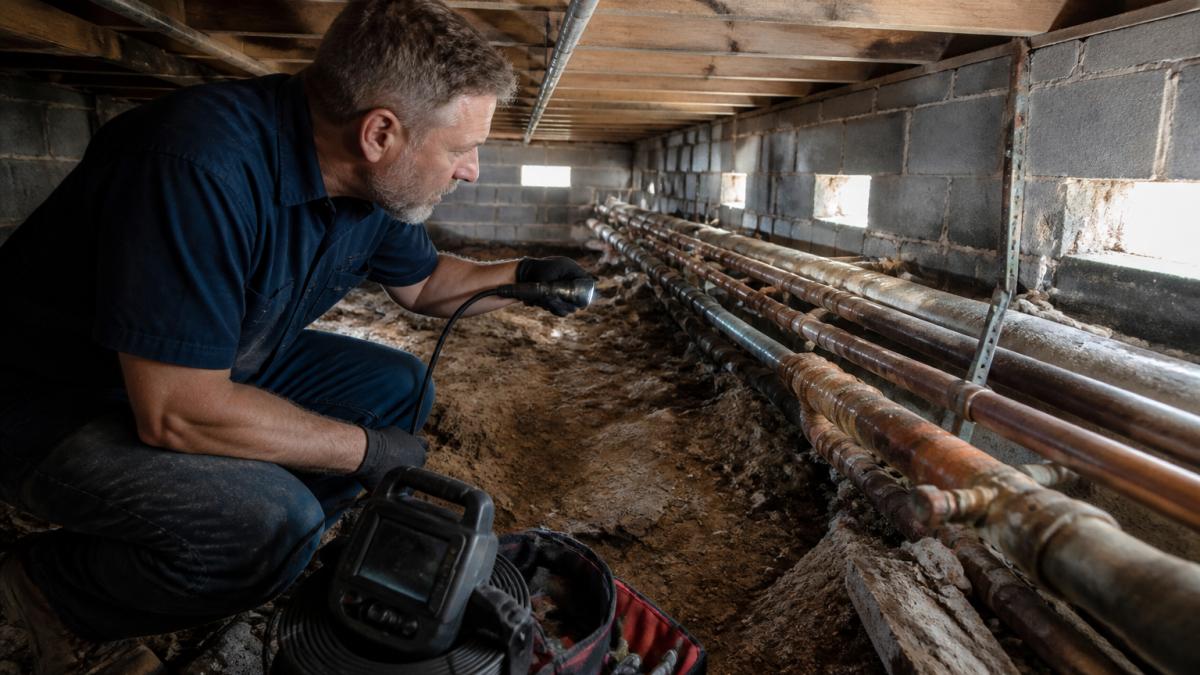
Repiping involves more than swapping pipes. Your contractor must locate existing lines, plan the new layout, and often open walls, ceilings, or crawlspaces to reach them.
At Protek Plumbing and Drain Specialists, we’ve guided homeowners through this process.
Before committing to a full repipe, ask your contractor to inspect only the problem areas first. Sometimes a targeted repair or replacement of the most corroded sections can buy you several more years, and cost significantly less than a whole-house project.
Signs an Older Home Needs Repiping
Older homes often show multiple warning signs that repiping is no longer optional but necessary.
Discolored or rusty water is one of the earliest red flags. Brown, orange, or reddish water, especially after pipes sit unused for hours, means your galvanized steel or copper pipes are corroding from the inside.
Persistent low water pressure throughout the home suggests internal corrosion has narrowed the pipe diameter.
Recurring leaks under the house, in the basement, or inside walls indicate failing pipes. If you’ve had the same line repaired twice in five years, the entire system is likely compromised.
Age itself is a factor. Galvanized steel lasts 40-60 years and copper 50-70.
If your home has lead pipes, do not delay. Lead exposure from drinking water is a serious health concern, especially for young children and pregnant women. Replacing lead pipes is not optional, it’s essential for your family’s safety.
Pipe Material Options and Their Costs
The material you choose affects both upfront cost and long-term durability, with tradeoffs in price, lifespan, and installation complexity.
PEX vs. Copper Repiping Cost
PEX piping has become the most popular choice for repiping over the past decade.
PEX costs less upfront than copper and doesn’t require soldering, so labor savings can be substantial.
Copper piping remains the gold standard for durability and resale value. It lasts 50-70 years or longer, resists corrosion in most water conditions, and is fully recyclable.
For cost-conscious homeowners, PEX offers excellent value. For those prioritizing longevity and resale appeal, copper justifies the higher expense. Many contractors recommend PEX for interior lines and copper for main water lines.
Other Materials: CPVC and Galvanized Steel
CPVC piping (chlorinated polyvinyl chloride) is more rigid than PEX and handles hot water better. It costs slightly more than PEX but less than copper, and it resists corrosion, though it can become brittle in very cold climates. CPVC is often paired with other materials, such as PEX for cold lines and CPVC for hot.
Galvanized steel was the standard for decades but is now rarely used for new repiping. If your home still has galvanized pipes, they’re likely corroded and the reason you’re considering repiping.
Cost Breakdown: Labor, Materials, and Access
Understanding what drives the cost of repiping older homes helps you evaluate estimates and budget realistically.
Material costs vary by pipe type and diameter. PEX costs the least per foot, followed by CPVC, then copper, which costs more but delivers superior longevity.
Labor costs often exceed material costs. Contractors charge for inspection and planning, demolition to access existing pipes, installation, patching and restoration, testing, and final inspection.
Access challenges significantly increase labor. Crawlspaces offer relatively easy access, but pipes running through concrete slabs require drilling or rerouting.
Demolition and restoration account for a substantial portion of the budget.
The single biggest cost driver is access. A home with an easily accessible crawlspace will cost significantly less to repipe than an identical home built on a slab or with pipes running through finished walls.
How Long Does It Take to Repipe a House
Timelines depend on scope, home size, and access. A partial repipe of one bathroom might take 2-3 days, while a full whole-house repiping typically takes 5-10 days of active work.
For a 2,000-square-foot home with standard access, expect about one week of core repiping work. Smaller homes or those with excellent crawlspace access might finish in 4-5 days, while larger homes or complicated layouts could extend to 10-14 days.
Time on-site also depends on crew size and experience. A two-person crew moves slower than a four-person team, but both can deliver quality work. Plumbers experienced with older homes often work faster because they anticipate complications.
Repiping Estimate Checklist for Homeowners
Use this checklist before hiring a contractor to understand what you’re paying for and compare estimates accurately.
Call Now For A Free Estimate ?
Project Scope:
- Is the estimate for whole-house repiping or partial replacement?
- Which pipe materials are included (PEX, copper, CPVC)?
- Does the estimate specify linear footage of new pipe?
- Are all fixtures and shutoff valves included?
- Is water pressure testing and final inspection included?
Labor and Demolition:
- What is the estimated timeline (days on-site)?
- Does the estimate break down labor separately from materials?
- Are demolition costs (opening walls, concrete cutting) itemized?
- Is restoration work (drywall patching, painting) included or separate?
- Does the crew handle debris removal?
Access and Complications:
- Has the contractor inspected the home and identified access challenges?
- Are there separate charges if they discover unexpected problems?
- How will the contractor handle pipes in concrete slabs?
- What’s the plan for accessing pipes in finished areas?
Permits and Inspections:
- Are permit costs included in the estimate?
- Who obtains the permits, you or the contractor?
- Is the final inspection by the local building department included?
- What warranty covers the work?
Payment Terms:
- What is the total project cost?
- Is payment due upfront, in phases, or upon completion?
- What happens if the project runs over budget?
- Is there a written contract specifying all terms?
A thorough estimate should address each of these areas. If a contractor’s estimate is vague or significantly lower than others, ask detailed questions. The lowest price often reflects incomplete scope or inexperience.
Regional and Access-Related Price Variation
Repiping costs vary by region, driven by labor rates, material availability, and local building codes.
Access-related variation matters equally. Homes with basements and crawlspaces cost less to repipe than slab homes, which require concrete cutting or routing pipes through attics and walls.
Regional water chemistry affects material selection and cost. Hard water areas may benefit from PEX or CPVC because copper is more prone to pinhole leaks in aggressive water.
Seasonal factors matter too. Winter projects in cold climates cost more because crews must guard against freezing, and summer heat slows work in hot climates. Spring and fall often offer the best pricing and scheduling flexibility.
Planning for Occupied Homes and Minimizing Disruption
Prepare your family. Let everyone know which days water will be shut off and for how long.
Protect your belongings. Opening walls or ceilings spreads dust and debris.
Plan for access. Contractors need clear pathways to crawlspaces, basements, and attics, so remove boxes and obstacles beforehand.
Coordinate with your contractor. Confirm the schedule, which areas are affected each day, and when water service returns.
At Protek Plumbing and Drain Specialists, we minimize disruption during repiping projects.
Homeowners in older neighborhoods who need transparent guidance on repiping costs and want a contractor experienced with the unique challenges of vintage homes.
| Project Phase | Typical Duration | What’s Included |
|---|---|---|
| Inspection & Planning | 1-2 days | Assessment, material selection, permit prep |
| Demolition & Access | 2-3 days | Opening walls, accessing pipes, setup |
| Installation | 2-4 days | Removing old pipes, installing new lines, connections |
| Testing & Inspection | 1 day | Pressure testing, code inspection, final checks |
| Restoration | 2-5 days | Patching, painting, flooring repair, cleanup |
Repiping an older home is a significant investment, but it’s one of the most important upgrades for water quality, safety, and home value.
Frequently Asked Questions
Why is repiping so expensive?
Repiping costs reflect multiple components: the material itself, labor for removal and installation, wall and flooring repairs, permits, and inspections. Older homes often have pipes embedded in concrete slabs or behind walls, requiring demolition and restoration. The complexity of accessing pipes in crawlspaces or slab foundations significantly increases labor time. Additionally, older plumbing systems may have complications like lead pipes or severely corroded lines that require careful handling and disposal, further raising the total cost of repiping a house.
What type of plumbing do old houses have that’s bad?
Older homes commonly contain galvanized steel, which corrodes from the inside out and restricts water flow. Homes built before 1986 may have lead pipes or lead solder, posing health risks. Copper pipes, while durable, can develop pinhole leaks after 40-50 years due to water chemistry. Cast iron drain lines crack and deteriorate. These materials contribute to low water pressure, discolored water, and plumbing leaks. Identifying which pipe materials your older home has is the first step in evaluating whether whole-house repiping is necessary.
Is it cheaper to repipe a house with PEX or copper?
PEX piping is generally less expensive than copper for both material and labor. PEX requires fewer fittings, is easier to install, and doesn’t need soldering, reducing installation time. Copper carries higher material costs and requires skilled labor for soldering connections. However, the final cost depends on your home’s layout, accessibility, and local contractor rates. When comparing PEX vs. copper repiping cost, consider that copper lasts longer (50+ years) while PEX typically lasts 40-50 years. Request written estimates from contractors for both materials to compare total project costs.
How long does repiping take, and will I lose water access?
How long does it take to repipe a house typically ranges from 3 to 10 days for a whole-house project, depending on home size, accessibility, and pipe material chosen. Smaller homes or partial repiping may take 2-3 days. The contractor will usually shut off water at the main during work, though some phases may allow temporary restoration. Planning for occupied homes requires coordination with your plumber to minimize disruption. Ask your contractor for a detailed timeline and whether they can schedule work around your schedule or work in phases to maintain partial water access.
What should I look for in a repiping estimate?
A thorough repiping estimate checklist should include: itemized material costs, labor hours and rates, demolition and disposal fees, wall and flooring repair costs, permit and inspection fees, cleanup, and warranty details. The estimate should specify which pipes will be replaced, the material type, and whether it covers all fixtures or excludes certain areas. Verify the contractor is licensed and bonded. Compare at least two detailed estimates, avoid contractors who provide only a flat price without breaking down components. Ask about what happens if complications arise during the project.
Do I need to repair walls and ceilings when repiping?
Yes, accessing pipes often requires cutting into drywall, ceilings, and flooring. Repiping estimate checklist items must include drywall repair, painting, and flooring restoration costs. The extent depends on your home’s construction and pipe accessibility. Homes with slab foundations may require concrete cutting and patching. Crawlspace access is typically less invasive. When planning for occupied homes, discuss with your contractor which areas will be affected and the restoration timeline. Some contractors offer phased repiping to minimize disruption and repair work at once rather than spreading it across the project.
What factors affect the cost of repiping an older home most?
Key factors include home square footage, pipe accessibility (slab vs. crawlspace), current pipe material and condition, local labor rates, permit requirements, and whether the home is occupied during work. Homes with severe corrosion or lead pipes may require special disposal, increasing costs. The choice between PEX vs. copper repiping cost also significantly impacts the budget. Regional and access-related price variation means a similar-sized home in different areas may have different total costs. Request a detailed written estimate that addresses these factors so you understand what drives your specific project price.
How can I compare estimates from plumbers for a whole-house repipe?
Request written estimates from at least two licensed, bonded contractors. Ensure each estimate includes the same scope: which pipes are replaced, material type, labor costs, demolition and repair, permits, and warranty. Ask contractors to walk you through their estimate and explain any differences. Verify licensing through your state’s regulatory board. The lowest price isn’t always the best value if it excludes necessary work or uses inexperienced labor. Check references and reviews from previous repiping projects. A transparent estimate with clear itemization helps you make an informed decision and avoid surprises during the project.