
Last Updated: October 25, 2026
Quick Summary
Pipes burst older homes due to freezing water that expands inside pipes, corrosion eating away at pipe walls over decades, and poor insulation leaving pipes vulnerable to temperature swings. Understanding these causes helps you spot problems early and prevent costly water damage.
- Freezing water expands about 9% as a solid, creating enormous pressure that fractures thin or brittle pipes in hours.
- Copper pipes last 50-70 years, galvanized steel 40-50 years, and steel 30-40 years before corrosion causes failure.
- Homes built before modern insulation standards have unheated spaces like attics and crawl spaces where pipes freeze most easily.
- Warning signs include brown or green stains on walls, rusty water, sudden low pressure, and wet spots with no obvious source.
- Whole-house repiping is often the best solution when multiple leaks occur, as patching one burst doesn’t solve underlying corrosion.
Table of Contents
- Why Pipes Burst in Older Homes: The Main Culprits
- Signs of Failing Plumbing Pipes You Should Never Ignore
- Understanding the Average Lifespan of Copper Pipes and Other Materials
- Non-Freezing Causes of Pipe Failure in Older Homes
- How to Fix a Burst Water Pipe: Immediate Steps and Long-Term Solutions
- Whole-House Repiping: When It’s Time to Replace Your Aging Plumbing System
- Get Your Aging Plumbing Inspected and Protected Today
- Frequently Asked Questions
Why Pipes Burst in Older Homes: The Main Culprits
Pipes burst older homes for reasons beyond simple accidents. Aging materials, environmental stress, and decades of wear create a perfect storm for failure.
The main culprits fall into three categories: freezing water that expands inside pipes, corrosion eating away at pipe walls, and poor insulation that leaves pipes vulnerable to temperature swings. Understanding why pipes burst in older homes helps you spot problems early.
Freezing Water and Expansion Damage
When water freezes inside a pipe, it expands, about 9% more as a solid than as a liquid (Water Density).
Damage happens fast: a pipe can go from fine to fractured in hours once freezing water expands.
Pipes in unheated spaces are most at risk, attics, crawl spaces, exterior walls, and garages. If your home was built before modern insulation standards, these areas get dangerously cold.
Pipe Corrosion and Aging Materials
Older homes often have copper, steel, or galvanized steel pipes, materials that corrode over time.
Corrosion weakens pipe walls, making them brittle as well as narrower. When pressure spikes or temperatures drop, a corroded pipe fractures instead of flexing.
The age of your pipes matters enormously. Copper pipes typically last 50-70 years. Steel and galvanized pipes fail sooner, often within 40-50 years.
Poor Insulation and Unheated Spaces
Many older homes were built without adequate pipe insulation.
Air leaks around pipes make it worse: cold air pours in through gaps in walls and foundations, leaving pipes with no protection from temperature swings.
Even pipes inside walls can freeze if the wall isn’t properly insulated.
Signs of Failing Plumbing Pipes You Should Never Ignore
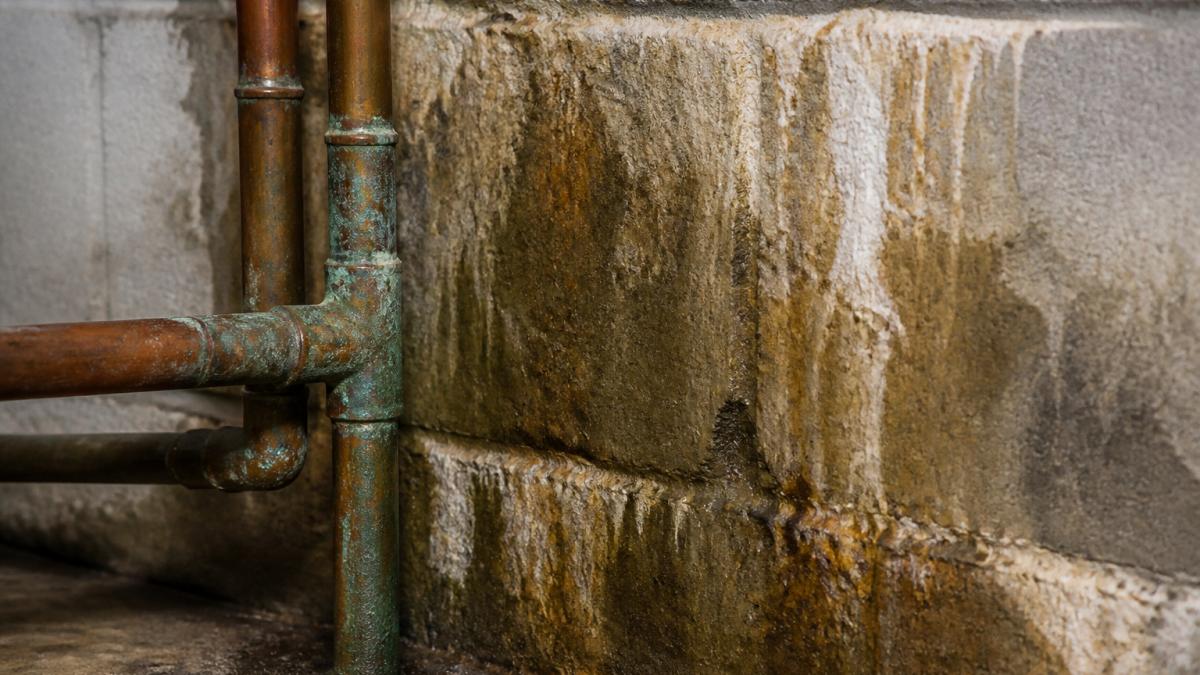
Failing pipes send warning signals before they burst, but in older homes those signals are easy to misread because aging plumbing produces symptoms that overlap with other household issues. Match the symptom to the pipe material and location most likely to cause it.
Symptom-to-Cause Guide for Older Plumbing
| Warning sign | Most likely cause in an older home | Urgency |
|---|---|---|
| Brown, yellow, or green stains on walls or ceilings | Corroded galvanized steel or copper pinhole leak behind drywall | High, shut off water and call a plumber |
| Rusty or brown water from one faucet | Localized corrosion in the branch line serving that fixture | Medium, schedule inspection within days |
| Rusty water from every faucet | System-wide corrosion, often galvanized steel past 40 years | High, plan for repiping evaluation |
| Sudden low pressure at one fixture | Mineral buildup or a failing shutoff valve | Medium |
| Gradually declining pressure everywhere | Scale accumulation or corrosion narrowing the main line | Medium, have pressure tested |
| Wet spots with no obvious source | Slab leak, failed joint, or crack in a buried line | High, may be hidden structural damage |
| Musty smell or mold in crawl space | Slow leak from overhead piping or condensation on cold lines | Medium, inspect and dry immediately |
| Banging or clanging when faucets close | Water hammer stressing older joints and fittings | Medium, install arrestors before a joint fails |
| Slow drains that plunging does not fix | Collapsed or root-invaded drain line, common in pre-1970 cast iron | Medium, camera inspection recommended |
| Greenish crust on exposed copper | Active pinhole leak or failing solder joint | High, corrosion is already through the wall |
What Each Sign Tells You About Pipe Age
The type of failure often points to the era of the plumbing. Greenish patina and pinhole leaks on copper are typical of 1950s-1970s systems at the end of their 50- to 70-year service life. Rust-colored water and thread leaks at fittings signal galvanized steel from the 1940s-1960s. Gray, brittle plastic that cracks at fittings suggests early polybutylene or CPVC from the late 1970s-1990s.
A single warning sign in an older home is rarely isolated. When one section of pipe shows corrosion or a leak, the same conditions usually exist elsewhere in the system. Treat any warning sign as a prompt to inspect the whole system, not just the visible spot.
When a Warning Sign Becomes an Emergency
Some signs mean shut off the main water valve first: active dripping inside a wall or ceiling, water pooling on a floor with no fixture nearby, or a sudden pressure drop with discolored water.
If you notice any of these warning signs, detailed signs of water leaks in your house can help you pinpoint the exact problem. The sooner you act, the less damage you’ll face.
Understanding the Average Lifespan of Copper Pipes and Other Materials
Different pipe materials age at different rates. Knowing what’s in your walls helps you plan for replacement.
Copper pipes last 50-70 years.
Galvanized steel pipes last 40-50 years.
Steel pipes last 30-40 years. They rust faster than galvanized steel and are more brittle when corroded.
PVC pipes (plastic) last 50+ years.
If your home is 40+ years old, your pipes are likely approaching the end of their lifespan.
Non-Freezing Causes of Pipe Failure in Older Homes
Freezing gets the attention, but most pipe failures in older homes happen above 32°F. Corrosion, pressure, soil movement, and incompatible repairs break pipes year-round, each leaving a different signature. Knowing which is at work tells you whether a spot repair will hold or the system needs replacement.
Corrosion From the Inside Out
Corrosion is the leading non-freezing cause in homes built before 1990. Galvanized steel loses its zinc coating over 40 to 50 years, then rusts through from the inside.
A practical test: shut off every fixture, then open the lowest drain valve in the basement. If the water runs rusty for more than a few seconds, corrosion is active somewhere in the system.
Mineral Buildup and Hard Water
Hard water deposits calcium and magnesium scale inside pipes. In a half-inch copper line, just 1/16 inch of scale can cut flow by roughly a third and raise pressure behind the restriction. Visible scale at aerators and showerheads is a signal to have the system pressure-tested and the main line inspected.
High Water Pressure and Water Hammer
Older plumbing was designed for lower street pressure than many systems deliver today. A failed or missing pressure-reducing valve can push 100 psi or more into pipes rated for 60 to 80 psi, causing water hammer, the banging when a faucet closes, that fatigues solder joints and threaded fittings. A gauge on a hose bib tells you if the system runs above 80 psi; if so, a plumber can install or replace a reducing valve before a joint fails.
Call Now For A Free Estimate ?
Soil Movement, Roots, and Slab Stress
Buried lines in older homes are vulnerable to ground movement. Settling foundations, drought-driven soil shrinkage, and tree roots seeking moisture crack slab lines and sewer laterals, and cast iron and early concrete pipes are especially brittle. Watch for wet spots in the yard, sewage odors, and slow drains throughout the house; a camera inspection of the main line confirms root intrusion or a shifted joint before it becomes a full break.
Incompatible Repair Materials
Decades of repairs leave mixed materials in many older systems. Connecting copper directly to galvanized steel creates a galvanic couple that accelerates corrosion at the joint, and wrong solder, missing dielectric isolation, or a mismatched clamp all create weak points. If a home has had multiple plumbers, ask for a material map at the next inspection.
How to Identify What Is in Your Walls
You can often identify pipe material without opening a wall. Check exposed piping at the water heater, under sinks, and in the basement or crawl space. Galvanized steel is gray and magnetic; copper is reddish-brown and non-magnetic; lead is soft, dull gray, and easily scratched; PEX is flexible plastic in red, blue, or white; CPVC is cream-colored rigid plastic; polybutylene is gray or blue-gray flexible plastic, often with metal fittings.
Prioritize repairs by risk, not by convenience. Address active leaks and pressure above 80 psi first, then system-wide corrosion or known lead/polybutylene, then isolated slow drains or cosmetic staining. A risk-ordered plan prevents the emergency call that follows a neglected warning sign.
These non-freezing failures happen year-round. They’re less dramatic than a winter burst but cause just as much damage, and in older homes they’re often why pipes burst older homes the first time temperatures drop.
How to Fix a Burst Water Pipe: Immediate Steps and Long-Term Solutions
A burst pipe is an emergency. Here’s what to do.
Immediate steps:
-
Shut off the main water supply. Find the shutoff valve, usually near the water meter or where the main line enters your home. Turn it clockwise until it stops. This stops water from flooding your home.
-
Turn on faucets to drain remaining water from the lines. This relieves pressure and lets air into the pipes.
-
Document the damage. Take photos of water damage for your insurance claim.
-
Call a professional plumber immediately. A burst pipe requires professional repair. Emergency plumber for urgent burst pipe situations can arrive quickly and assess the damage.
-
Dry out the affected area. Use fans and dehumidifiers to prevent mold growth. Open windows if weather permits.
Long-term solutions:
Temporary patches might hold a few hours, but they won’t last. You need a permanent fix.
A plumber will either repair the burst section or recommend repiping. The choice depends on the pipe’s age and condition. If the burst is in an old, corroded pipe, the rest of the system is probably failing too.
Whole-House Repiping: When It’s Time to Replace Your Aging Plumbing System
When pipes burst in older homes, repiping is often the smartest choice. Patching one burst doesn’t solve the underlying problem, corrosion or age.
Whole-house repiping replaces all the old pipes with new ones.
Signs you need repiping:
- Multiple leaks or bursts in the past few years
- Widespread corrosion visible on pipes
- Discolored water from multiple faucets
Repiping is an investment, but it’s cheaper than repeated emergencies and water damage.
Whole-house repiping services for aging plumbing systems explains the repiping process and helps you decide if it’s right for your home.
Get Your Aging Plumbing Inspected and Protected Today
Pipes burst in older homes because age, corrosion, and freezing water create conditions for failure. You can’t stop time, but you can catch problems early.
A professional inspection identifies weak spots before they become emergencies.
Protek Plumbing and Drain Specialists has 35+ years of experience with older homes in Port Charlotte and Charlotte County.
Don’t wait for a burst. Get your aging plumbing professionally inspected to identify vulnerabilities now.
Frequently Asked Questions
What causes water pipes to burst in cold weather?
When water freezes inside pipes, it expands and creates pressure that the pipe cannot contain, causing fractures or ruptures. Older homes with poor insulation, pipes in exterior walls, and unheated spaces like crawl spaces are especially vulnerable. Even brief temperature drops below freezing can trigger burst pipes if water inside the line stops circulating.
What are the warning signs that old pipes may be failing?
Watch for discolored or rusty water, visible corrosion on copper or steel pipes, slow drains, water stains on walls or ceilings, unusual sounds in the plumbing system, and persistent damp spots in basements or crawl spaces. These signs of failing plumbing pipes often appear months or years before a complete failure, giving you time to plan repairs or whole-house repiping.
Can old pipes burst without freezing?
Yes. Corrosion eats through pipe walls over decades, weakening them until they crack under normal water pressure. Mineral buildup can also clog pipes and create dangerous pressure spikes. Older homes with outdated pipe materials like galvanized steel are especially prone to non-freezing failures. Regular inspections help catch these problems before they become emergencies.
Should I repair a burst pipe or repipe the house?
A single burst can be patched, but if your home is 40+ years old with aging plumbing, whole-house repiping may be more cost-effective long-term. Repeated failures, widespread corrosion, or persistent water quality issues signal that replacement is the better choice. A professional inspection will help you prioritize repairs by risk and determine whether targeted fixes or full repiping makes sense for your situation.
Aging plumbing in older homes is a ticking clock. The longer you wait, the higher the risk of a catastrophic failure. Protek Plumbing and Drain Specialists responds to emergencies 24/7 and handles everything from leak detection to full repiping with licensed, bonded professionals who stand behind their work. Get started with a free inspection and see exactly what your pipes need.
