
Last Updated: October 23, 2026
Quick Summary
Preventing sewer line backups requires consistent action: dispose of grease properly, install drain strainers, keep tree roots away from your line, schedule professional cleaning every 3-5 years, install a backwater valve, redirect stormwater, and understand your maintenance responsibilities.
- Never pour grease down the drain; let it cool and trash it to prevent hardening and blockages.
- Install drain strainers in bathroom sinks, showers, kitchen sinks, and laundry drains, cleaning them weekly.
- Plant trees at least 10 feet from your sewer line and avoid fast-growing species like willows and poplars.
- Schedule professional sewer line cleaning every 3-5 years, or annually if trees are nearby or pipes are older.
- Install a backwater valve on your main sewer line if your home is below street level or prone to flooding.
Table of Contents
- Why Sewer Line Backups Happen: Common Causes
- Signs of a Main Line Clog: What to Watch For
- What Not to Flush Down the Toilet
- 7 Steps to Prevent Sewer Line Backups
- Sewer Line Inspection: When and How to Get One
- Backwater Valve Installation: Protection and Maintenance
- What to Do If a Backup Occurs
- Frequently Asked Questions
Why Sewer Line Backups Happen: Common Causes
A sewer line backup happens when your main line is blocked or damaged, stopping wastewater from draining away, making preventing sewer line backups essential for homeowners.
Older homes face added risks: cast iron and clay pipes deteriorate, ground movement cracks pipes or misaligns joints, and stormwater infiltration during heavy rain overwhelms the system.
Catching problems early is key.
Signs of a Main Line Clog: What to Watch For
A main line clog shows warning signs that differ from a single-fixture backup.
Watch for these indicators: If you notice these signs, learn more about clogged sewer line problems and solutions.
- Multiple drains backing up at the same time (toilets, showers, sinks)
- Slow drainage throughout the entire house
- Gurgling sounds from drains or toilets
If your basement floor drain backs up, the main line is likely blocked, call a professional.
Seasonal issues matter too: heavy rain overwhelms sanitary sewers, winter freezes crack pipes, and spring thaw increases root intrusion.
What Not to Flush Down the Toilet
Most people don’t realize what they’re sending into their sewer line. Every flush matters.
Never flush these items:
- Wipes (even “flushable” ones don’t break down)
- Paper towels and tissues
- Feminine hygiene products
Toilets handle only human waste and toilet paper; everything else accumulates and blocks your line.
Grease is equally destructive: it cools and hardens inside pipes, trapping debris. Scrape dishes into the trash and bin cooled grease.
7 Steps to Prevent Sewer Line Backups
Preventing sewer line backups requires consistent action across multiple areas. These seven steps work together.
1. Dispose of Grease, Fats, and Oils Properly
Grease is your sewer line’s biggest enemy, hardening inside pipes and trapping debris into blockages that worsen over time.
Never pour grease down the drain. Let it cool in a container, then trash it.
This single habit prevents countless backups, many homeowners don’t realize the damage until it’s too late.
Keep a small container next to your stove for grease disposal. Make it a household rule: grease goes in the trash, never down the drain.
2. Install and Maintain Drain Strainers
Drain strainers catch hair, food, and debris before they enter your pipes. They’re cheap insurance against clogs.
Install strainers in:
- Bathroom sinks
- Shower and tub drains
- Kitchen sinks
Clean strainers weekly; removing accumulated hair and debris takes 30 seconds and prevents major problems.
Hair is a leading cause of drain clogs: a single shower deposits significant amounts, which combines with soap residue and debris over months to form blockages.
3. Keep Tree Roots Away from Your Sewer Line
Tree roots seek moisture and can penetrate sewer lines, causing cracks and complete blockages (the EPA). Prevention is far easier than repair.
Plant trees at least 10 feet from your sewer line and avoid fast-growing species like willows and poplars near your lateral. If trees already exist nearby, monitor them closely.
Signs of root intrusion include slow drains throughout your home and sewage backups in spring and early summer when roots actively grow.
Never ignore slow drains during spring. Root intrusion can progress rapidly once it starts. Early detection saves thousands in repair costs.
4. Schedule Regular Sewer Line Cleaning
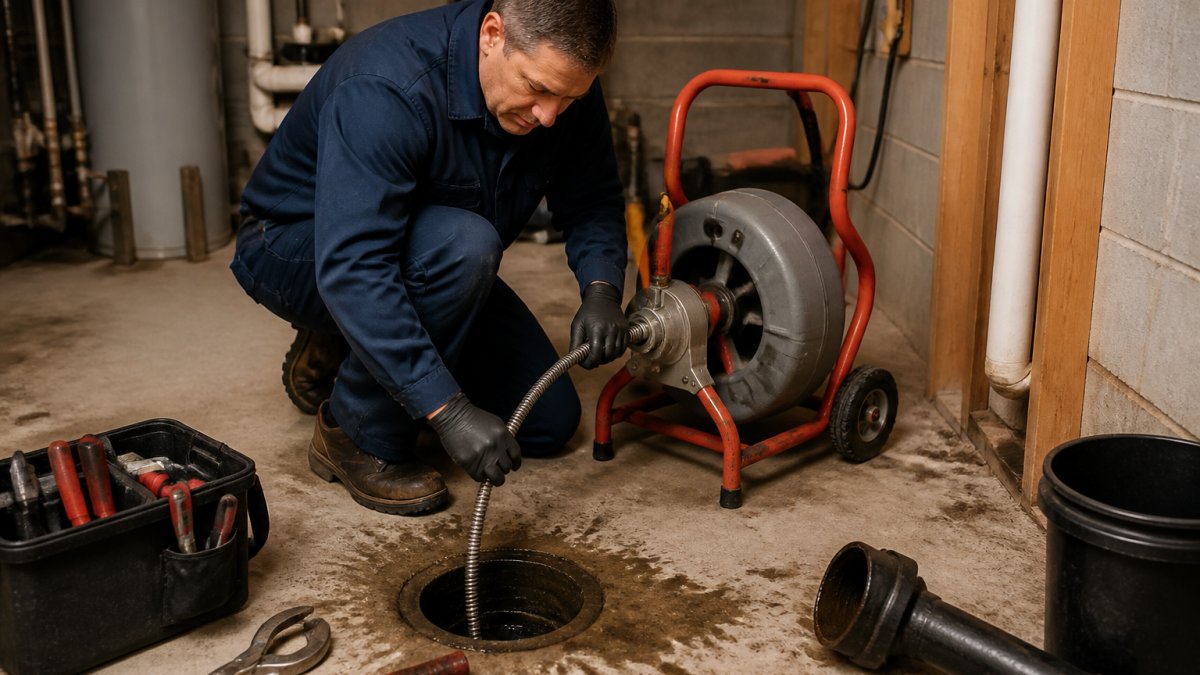
Professional sewer line cleaning removes debris, grease buildup, and minor root intrusions before they become serious problems.
Most homeowners should schedule cleaning every 3-5 years. Older homes with clay or cast iron pipes may need it more often; with trees near your line, annual cleaning is wise.
Professional cleaning uses high-pressure water jets or mechanical augers to clear your line completely, your main sewer line requires specialized equipment.
Protek Plumbing and Drain Specialists can assess your needs; older neighborhoods with aging infrastructure may need more frequent maintenance.
5. Install a Backwater Valve
A backwater valve (or backflow prevention device) prevents sewage from flowing back into your home during a backup, one of the most effective protection measures available.
The valve installs on your main sewer line, typically in the basement or crawl space.
This is essential protection if:
- Your home sits below street level
- You have a basement floor drain
- You live in an area prone to flooding
Installation cost is modest compared to the potential damage: sewage cleanup may create health hazards.
Call Now For A Free Estimate ?
6. Redirect Stormwater Away from Your Sewer
Many older homes have combined sewer systems where stormwater and sewage share the same line (the EPA). Heavy rain overwhelms the system and causes backups.
Reduce stormwater entering your sewer line by:
- Directing downspouts away from your foundation
- Installing a rain barrel to capture runoff
- Grading your yard so water slopes away from your home
Even if you don’t have a combined system, reducing water entering your sewer helps. Less water means less pressure on your line.
7. Know Your Homeowner Versus Utility Responsibilities
Understanding where your responsibility ends and the utility’s begins prevents confusion during a backup.
You own and maintain the sewer lateral (the pipe from your home to the main line).
If the backup originates in your lateral, you pay for repairs.
Contact your local water department to learn your area’s policy.
Your sewer lateral is your responsibility. Maintaining it prevents backups that damage your home and create health risks.
Sewer Line Inspection: When and How to Get One
A professional sewer line inspection uses a camera to see inside your pipe. This reveals blockages, cracks, and other issues before they cause backups. The unique value of an inspection is that it converts guesswork into a maintenance plan: you learn the pipe material, the condition of the joints, and whether roots or grease are already present.
A practical inspection and maintenance schedule
Adjust the cadence upward, more frequent inspections, after any backup, any root cutting, or any pipe repair. A line that has been cleared once is more likely to need attention again than a line that has never failed.
What the inspection should reveal
The inspection process is straightforward. A technician feeds a camera-equipped cable through your line, usually entering at a cleanout. The camera transmits video to a monitor, showing the pipe’s interior condition.
Ask the technician to document and show you:
- Pipe material and diameter, clay, cast iron, orangeburg, PVC, or concrete behave very differently over time.
- Grease or debris buildup, the percentage of the pipe cross-section that is blocked.
- Tree root intrusion, fine hair roots versus structural roots that have cracked the pipe.
Ask for the video file or a link to it. If the camera cannot pass a certain point, that blockage is itself a finding and should be explained.
Who should perform the inspection
Use a licensed plumber or a dedicated sewer inspection service that carries liability insurance and can provide a written report. Utility companies sometimes inspect the main line in the street, but the private lateral from your home to the main is your responsibility in most jurisdictions. Confirm local rules with your water department, because responsibility for the lateral and the main varies by municipality.
Turning results into a plan
Results guide your next steps. Minor grease or debris can be addressed with professional cleaning. Fine roots can be cut and the line monitored. Serious damage, collapsed pipe, severe offset joints, or root intrusion that has cracked the pipe, may require pipe replacement or trenchless relining. Get the recommendation in writing with the footage reference so you can compare bids.
Schedule your inspection for the same season each time. Comparing footage from the same point in the line year over year is far more useful than a one-time look.
Backwater Valve Installation: Protection and Maintenance
A backwater valve is insurance against sewage backing into your home. It is one of the few prevention measures that works automatically during a backup, when you are least able to react. This section covers the device types, installation decisions, testing, and maintenance that determine whether the valve actually protects you.
Types of backwater valves
- Normally open valve: The flapper stays open during normal flow and closes only when flow reverses. This is the common choice for a main building sewer because it does not restrict everyday drainage. It requires periodic cleaning because debris can keep the flapper from seating.
- Normally closed valve: The flapper stays closed and opens only when water flows toward the street. It offers a stronger seal but depends on reliable operation and is more sensitive to debris.
- Gate or manual valve: A hand-operated gate that a homeowner closes during a known risk period, such as a heavy rain forecast. It requires someone to be home and to remember to operate it.
For most homes with a basement floor drain or a history of backups, a normally open valve on the main building sewer is the standard recommendation. Confirm the specific device with your plumber and your local plumbing code, because some jurisdictions restrict certain types.
Installation considerations
A backwater valve must be installed on the building sewer, downstream of all fixtures and floor drains you want to protect, and upstream of the connection to the public main.
Key decisions before installation:
- Location and access. The valve needs to be reachable for inspection and cleaning. A buried valve with no access point defeats the purpose.
- Depth and slope. The device must sit at a workable depth and maintain proper fall to the main.
- Cleanout access. Install or preserve a cleanout near the valve so debris can be removed without disassembling the device.
This is not a DIY project. Professional installation ensures the valve functions correctly, is properly sealed, and meets code. A poorly installed valve can leak, jam open, or create a maintenance problem.
Testing and maintenance
A backwater valve is only protective if it operates freely. A practical maintenance routine:
- Monthly during wet seasons: Lift the access cover if the manufacturer allows and confirm the flapper moves freely and seats cleanly. Remove visible debris.
- Annually: Have a plumber inspect and test the valve, clean the body, and confirm the seal. Combine this with your routine sewer line cleaning so debris does not reach the valve.
- After any backup or nearby main-line work: Recheck the valve. Debris and grit from upstream work can foul the seat.
If the valve is a normally open type, confirm with your plumber how to test it safely. Do not force the flapper or use tools on the mechanism.
When to call a licensed plumber
Call a licensed plumber if the valve is stuck, leaking, visibly damaged, or if you smell sewage near the device. Also call if you are unsure whether the valve is the correct type for your line, or if your insurer or municipality requires documentation of proper installation. A valve that fails open provides no protection, and a valve that fails closed can back up your own drains.
Do not install a backwater valve and assume you are protected. The device must be accessible, tested, and kept clean. An unmaintained valve is a false sense of security.
A backwater valve is most effective when it is the right type, installed with permit and access, tested annually, and paired with routine sewer line cleaning.
What to Do If a Backup Occurs
A sewer backup is an emergency. Raw sewage poses serious health risks and can damage your home (the CDC).
If you experience a backup:
- Stop using all water immediately (toilets, sinks, showers, washing machine) and contact a professional for drain cleaning and sewer cleaning services.
- Don’t attempt to clear the blockage yourself
- Call a professional plumber right away
- Document the damage with photos for insurance
- Ventilate affected areas
- Avoid contact with sewage
Never use chemical drain cleaners.
The backup may be in your lateral or the main line. A professional determines the cause and location.
Sewage damage requires professional cleanup. Don’t attempt to clean affected areas yourself. Health risks are serious.
A sewer line backup can turn into a costly emergency fast.
Frequently Asked Questions
What is the most common cause of sewer line backups?
Tree roots and grease buildup are the leading causes of sewer line backups. Roots penetrate older plastic pipes searching for water, while grease, fats, and oils (FOG) accumulate and harden inside your sewer lateral, restricting flow. Hair, lint, and wipes also contribute to blockages. Regular cleaning and root management reduce backup risk significantly.
How often should I have my sewer line inspected?
A sewer line inspection uses video technology to identify blockages and structural issues before they cause backups.
Does homeowners insurance cover sewer backups?
Standard homeowners insurance typically does not cover sewer backup damage. However, most insurers offer sewer backup coverage as an optional endorsement for an additional premium. Coverage usually applies to sewage that backs up into your home through drains, toilets, or floor drains. Contact your insurance agent to review your policy and add this protection if needed.
Can I prevent tree root intrusion on my own?
You can reduce tree root risk by planting trees away from your sewer line (at least 10 feet) and avoiding trees with aggressive root systems near your lateral. However, if roots have already invaded your pipe, professional removal and root-barrier treatment are necessary. A sewer line inspection reveals whether roots are present, and a licensed plumber can recommend root management solutions or pipe relining to prevent future intrusion.
