
Table of Contents
- Why Commercial Plumbing Maintenance Matters for Your Business
- Building a Commercial Plumbing Maintenance Checklist
- Creating a Commercial Plumbing Preventive Maintenance Schedule
- Preventing Commercial Drain Backups: Detection and Maintenance
- Commercial Plumbing Leak Detection and Moisture Monitoring
- Maintenance Planning by Building Type and Risk Level
- Budgeting and Lifecycle Costs: Making Maintenance a Smart Investment
- When to Call a Professional: Safety and Compliance Boundaries
- Frequently Asked Questions
Last Updated: October 9, 2026
Why Commercial Plumbing Maintenance Matters for Your Business
A commercial plumbing system failure can shut down operations in minutes. Water damage, backed-up drains, and burst pipes don’t just cost money, they cost time, productivity, and customer trust.
The truth is simple: commercial plumbing maintenance keeps your system running and protects your bottom line. Regular inspections catch small problems before they become catastrophic ones.
This guide covers everything you need to know about maintaining commercial plumbing systems in 2026. We’ll walk through inspection checklists, preventive schedules, leak detection, and when to call a professional.
Building a Commercial Plumbing Maintenance Checklist
A solid maintenance checklist is your first line of defense. It keeps inspections consistent, documents what you’ve checked, and creates a paper trail that protects you if problems arise. Your checklist should cover visible pipes, fixtures, water pressure, and connections.
Routine Inspections and Visible Pipe Checks
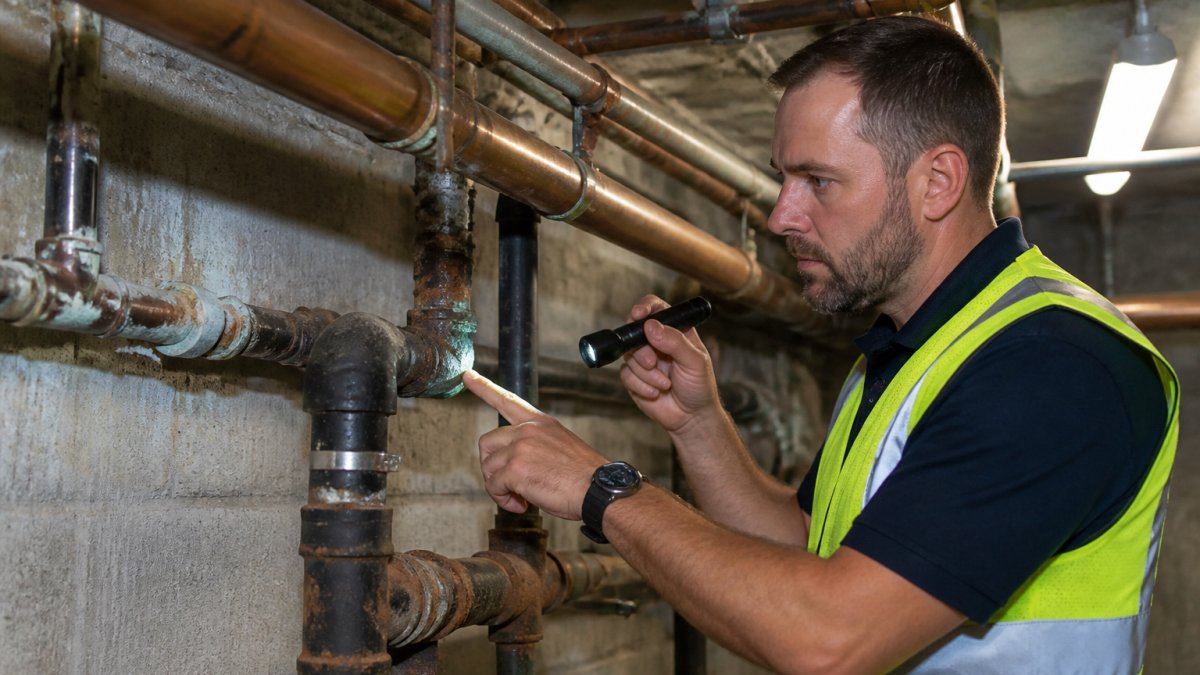
Start with what you can see. Walk through utility rooms, basements, and mechanical spaces monthly. Look for water stains, puddles, or discoloration on walls and ceilings.
Check all exposed pipes for:
- Corrosion (green or white buildup on copper or brass)
- Mineral deposits (white, crusty buildup on fixtures)
- Rust spots or pitting on steel pipes
- Loose connections or fittings
- Visible damage or cracks
Document everything. Take photos of problem areas. Note the date, location, and what you observed.
Fixture, Valve, and Connection Assessment
Faucets, toilets, and valves wear out. Check them quarterly. Turn on every sink, shower, and toilet in your facility. Look for:
- Drips or weak flow
- Discolored water
- Unusual sounds (rattling, banging, whistling)
- Leaks under sinks or around base connections
Valves control water flow and pressure. Locate your main shutoff valve and test it monthly. Make sure it operates smoothly. Check isolation valves on water heaters and supply lines.
Connections, where pipes join fixtures or other pipes, are common failure points. Look for corrosion around connection points. Tighten loose fittings if you’re comfortable doing so. If connections are corroded or leaking, call a professional. Don’t wait.
Water Pressure Testing and Documentation
Water pressure that’s too high damages pipes and fixtures. Too low means poor flow and potential backflow issues.
Normal commercial water pressure is 40-80 PSI. If you’re above 80 PSI, install a pressure regulator. High pressure causes premature failure of water heaters, fixtures, and supply lines.
Document every test result. Keep a log with:
- Date tested
- Pressure reading
- Location tested
- Any issues found
- Action taken
This documentation proves you’re maintaining the system. It protects you legally and helps identify patterns (pressure dropping over time often signals a slow leak).
Creating a Commercial Plumbing Preventive Maintenance Schedule
Consistency matters more than intensity. A simple monthly inspection catches more problems than a deep dive once a year. Build a schedule you can actually follow.
Monthly and Quarterly Tasks
Monthly tasks take 30 minutes:
- Walk through all plumbing areas visually
- Check for water stains or puddles
- Test all faucets and toilets
- Look for corrosion or mineral buildup
- Document findings in a log
Quarterly tasks (every three months):
- Test water pressure and record results
- Inspect water heater for sediment or leaks
- Check under sinks for drips or moisture
- Flush drains with hot water (no chemicals yet)
- Verify main shutoff valve operates
Quarterly drain flushing prevents buildup. Hot water alone clears minor debris. For commercial kitchens or high-use facilities, flush drains more frequently, weekly if you’re running a restaurant.
Annual Deep Inspections and Seasonal Adjustments
Once yearly, do a thorough inspection. This is when you check harder-to-reach areas and test more complex systems. In late fall, prepare for winter:
- Insulate exposed pipes in unheated areas
- Drain outdoor faucets and irrigation lines
- Check sump pumps and backup systems
- Test backflow prevention devices
In spring, after winter stress:
- Inspect pipes for freeze damage
- Check water heater condition
- Test pressure relief valves
- Flush sediment from water heater
Seasonal changes stress plumbing. Freezing temperatures cause expansion and cracking. Spring thaw brings pressure surges. Summer heat increases water usage and strain. Fall is when you prepare for winter. Align your schedule with these seasonal risks.
Preventing Commercial Drain Backups: Detection and Maintenance
Drain backups are expensive and disruptive. A backed-up sewer line can force you to close your business. Prevention is far cheaper than emergency repair.
Clog Prevention and Drain Flushing Protocols
Clogs start small. Hair, grease, soap residue, and paper accumulate. In commercial settings, the volume is higher and the stakes are bigger. Establish drain care rules:
- Never pour grease down drains (it solidifies as it cools)
- Use drain screens to catch hair and debris
- Flush drains weekly with hot water
- For kitchens, wipe grease from dishes before washing
- Don’t flush anything except toilet paper
Monthly drain flushing keeps lines clear. Use boiling water for regular maintenance. For buildup, enzyme-based drain cleaners work better than harsh chemicals (and are safer for your pipes). Avoid store-bought chemical drain cleaners, they damage pipes over time.
If drains slow down, act immediately. A slow drain is a clog forming. Don’t wait for a backup.
Sewer Line Monitoring and Backflow Prevention
Your sewer line is the main drain from your building. If it backs up, sewage backs into your facility. Prevent this by:
- Never planting trees near sewer lines (roots crack pipes)
- Keeping grease out of drains (it builds up in sewer lines)
- Having sewer lines inspected every 2-3 years with a camera
A camera inspection shows cracks, roots, and buildup inside the line. It costs less than emergency repair and tells you exactly what’s happening. If roots are in the line or the pipe is cracked, you know to prepare for repair.
Backflow prevention devices stop contaminated water from flowing backward into your supply. Test these annually. If your facility has a sewer backup history, install a backflow preventer if you don’t have one. It’s insurance against contamination.
Call Now For A Free Estimate ?
Commercial Plumbing Leak Detection and Moisture Monitoring
Leaks hide. A slow leak in a wall can run for months before you notice damage. By then, mold is growing and structural damage is underway. Catch leaks early.
Identifying Hidden Leaks Early
Look for signs:
- Water stains on walls or ceilings (usually brown or yellow)
- Soft spots in drywall or flooring
- Musty odors
- Visible mold or mildew
- Higher-than-normal water bills
A sudden spike in your water bill signals a leak. Compare usage month to month. If usage jumped without explanation, you have a leak somewhere.
For commercial buildings, check water meter readings monthly. A meter that moves when no water is running means water is leaking somewhere. This simple check catches leaks fast.
In older buildings, leaks are common. Pipes corrode and develop pinhole leaks. You can’t see them, but your water bill reveals them.
Water Damage Prevention and Corrosion Control
Corrosion causes leaks. Copper pipes develop pinhole leaks as water chemistry changes. Steel pipes rust. Brass fittings corrode.
Water softening systems reduce mineral buildup that accelerates corrosion. If you have hard water (mineral-heavy), a water softener extends pipe life significantly.
For existing corrosion, monitor it. Take photos to track growth. If corrosion is spreading, plan for pipe replacement before failure.
Moisture control prevents mold and structural damage. After a leak, dry the area completely. Use fans and dehumidifiers.
Maintenance Planning by Building Type and Risk Level
Different facilities have different risks. A restaurant faces different plumbing stress than an office building. Plan maintenance around your specific situation.
High-Usage Commercial Facilities
Restaurants, gyms, hospitals, and schools have heavy plumbing use. Drains run constantly. Water usage is high. These facilities need more frequent maintenance:
- Weekly drain flushing (not just monthly)
- Grease traps must be cleaned on schedule (health code requirement)
- Water heaters need sediment flushing every 6 months
- Pressure testing monthly instead of quarterly
- Professional camera inspections annually
High-usage facilities develop problems faster. Grease accumulates. Sediment builds up. Fixtures wear out. Budget for more maintenance and more frequent professional visits. It’s cheaper than emergency calls.
Older Buildings and Corrosion Management
Buildings over 40 years old often have original plumbing. Galvanized steel pipes corrode from the inside. Copper develops pinhole leaks. Cast iron sewer lines crack. Corrosion is inevitable.
For older buildings:
- Plan for full repiping within the next 5-10 years
- Increase inspection frequency to quarterly
- Monitor water quality (discolored water signals corrosion)
- Have a professional assess remaining pipe life
- Budget for replacement incrementally (replace one section per year)
Waiting for complete failure is expensive. A burst main line can flood your entire facility. Plan ahead. Protek Plumbing and Drain Specialists provides expert commercial plumbing services and can help you develop a phased replacement strategy that fits your budget.
Budgeting and Lifecycle Costs: Making Maintenance a Smart Investment
Preventive maintenance costs money upfront but saves far more in the long run. A $500 inspection that catches a slow leak saves you $5,000 in water damage repair. That’s a 10-to-1 return.
Budget for maintenance as an operational expense, not a surprise cost. Set aside money monthly for:
- Quarterly professional inspections
- Annual water heater service
- Drain cleaning and flushing supplies
- Pipe insulation and minor repairs
- Camera inspections (every 2-3 years)
For older buildings, budget for eventual repiping. A commercial repiping project is significant, but spreading it over 5-10 years makes it manageable. Ignoring it until failure costs more and disrupts operations.
Track spending. Over time, you’ll see patterns. If you’re spending heavily on emergency repairs, shift that money to preventive maintenance.
When to Call a Professional: Safety and Compliance Boundaries
Some plumbing work is DIY-friendly. Most commercial work isn’t. Know your limits.
Call a professional for:
- Anything inside walls or under floors
- Main line repairs or replacement
- Water heater service or replacement
- Backflow prevention testing
- Sewer line issues
- Pressure regulator installation
- Any repair you’re unsure about
Commercial plumbing involves codes and permits. Unpermitted work creates liability. If something goes wrong and it wasn’t done to code, you’re responsible. Professional plumbers carry insurance and know local codes.
Protek Plumbing and Drain Specialists handles commercial plumbing maintenance and repairs for facilities throughout the area. We arrive within 60-90 minutes for urgent calls, provide transparent estimates before work begins, and back every job with our 100% workmanship guarantee.
Frequently Asked Questions
How often should a commercial plumbing system be inspected?
Most commercial properties benefit from routine inspections at least quarterly, with more frequent checks for high-usage facilities like restaurants or healthcare offices. Annual comprehensive inspections should include pressure testing, drain line assessment, and corrosion checks. Seasonal adjustments before high-demand periods prevent emergency failures. Document all inspections to track patterns and plan preventive maintenance before problems escalate.
What should be included in a commercial plumbing maintenance checklist?
A solid commercial plumbing maintenance checklist covers routine inspections of visible pipes and connections, fixture and faucet operation, water pressure testing, drain flushing, backflow prevention testing, water heater sediment removal, corrosion and mineral buildup assessment, and moisture detection. Document findings and maintenance records for compliance. Tailor the checklist to your building type, high-usage facilities need more frequent drain maintenance, while older buildings require extra corrosion monitoring.
How can facility managers prevent commercial drain backups?
Prevent commercial drain backups by establishing regular drain flushing protocols, monitoring sewer lines for blockages, and training staff on what can enter drains. Install strainers in sinks and floor drains to catch debris. Schedule professional drain inspections annually or more often in high-usage areas. Address clogs promptly before they worsen. Backflow prevention testing ensures water flows in the correct direction. These preventive steps reduce emergency repairs and water damage risk significantly.
What are the signs of a hidden commercial plumbing leak?
Hidden leaks often show as unexplained increases in water bills, damp spots on walls or ceilings, musty odors, or visible corrosion around pipes and connections. Monitor water pressure regularly, sudden drops can indicate leaks. Listen for running water sounds in walls or under floors. Professional leak detection equipment pinpoints leaks before they cause water damage. Early detection through moisture monitoring prevents costly structural damage and mold growth, making regular inspections a critical part of commercial plumbing maintenance.
Commercial plumbing maintenance isn’t optional, it’s essential to keeping your business running. A simple checklist, consistent inspections, and a clear maintenance schedule prevent costly emergencies and extend the life of your system. When you need professional help, call Protek Plumbing and Drain Specialists for a free estimate and expert guidance on your facility’s specific needs.