
Table of Contents
- What Affects Commercial Drain Cleaning Service Costs
- Emergency vs. Scheduled Commercial Drain Cleaning Rates
- Commercial Hydro Jetting Cost and Equipment Pricing
- Drain Camera Inspection Cost and Diagnostics
- Commercial Drain Maintenance Schedule and Long-Term Costs
- Common Drain Clog Types and Solution Costs
- Why Low-Cost Quotes Often Lead to Hidden Charges
- Conclusion
- Frequently Asked Questions
Last Updated: September 30, 2026
What Affects Commercial Drain Cleaning Service Costs
Commercial drain cleaning service costs vary widely based on pipe size, grease trap compliance, drainage complexity, and code requirements, factors that residential properties rarely encounter. Understanding these commercial-specific variables helps property managers budget accurately and avoid sticker shock.
Commercial-Specific Cost Variables
Pipe diameter is the first major cost multiplier. Commercial properties use 4-6 inch main lines (some 8-12 inches) versus residential 3-4 inch lines. Larger pipes require more powerful equipment and higher flow rates.
Grease trap compliance is mandatory for food service properties. EPA and state regulations require cleaning every 30-90 days depending on usage. Non-compliance results in fines ($500-$5,000 per violation) and sewage backup liability.
Multi-tenant properties require more extensive diagnostics. A plumber must identify which tenant’s drain is backing up, trace the line to the main, and determine whether the problem is in a branch line or main trunk.
Trenchless repair may require municipal inspections ($100-$300) and timeline delays. Residential properties often avoid these costs.
Accessibility and Infrastructure Age
Commercial drain lines often run under concrete floors or through mechanical spaces with limited access. Accessing lines in active kitchens requires coordinating with staff and scheduling during closed hours. This operational complexity adds 20-40% to service costs compared to straightforward residential access.
Older cast iron pipes require gentler hydro-jetting pressure (2,000-3,000 PSI instead of 4,000 PSI) to avoid damage, extending service time and labor cost.
Severity and Scope Differences
Commercial blockages often affect multiple fixtures simultaneously. A grease blockage in a restaurant’s main line affects the entire kitchen and front-of-house drains. Commercial hydro-jetting jobs typically run 2-3 hours versus 30-60 minutes for residential work, directly increasing labor costs.
Commercial drain backups halt business operations and cost hundreds or thousands in lost revenue per hour. A 2 a.m. emergency drain clearing costs 2-3 times the standard rate. Residential emergency premiums typically run 1.5-2 times standard rates.
Planning for Commercial Drain Costs
This investment prevents emergency calls that cost 3-5 times more and disrupt operations.
Emergency vs. Scheduled Commercial Drain Cleaning Rates
Emergency service carries a significant cost premium due to after-hours surcharges, expedited travel, and technician availability premiums. A main line rooter service scheduled during business hours costs significantly less than the same service at midnight. Scheduled maintenance allows plumbers to plan routes efficiently and complete work during predictable time windows.
Preventative maintenance contracts eliminate most emergency calls. Routine camera inspections and hydro-jetting catch problems before they halt operations. For food service operations, the cost of lost revenue during a shutdown far exceeds the emergency service premium.
Commercial Hydro Jetting Cost and Equipment Pricing
Hydro-jetting uses pressurized water at up to 4,000 PSI to blast away grease, mineral deposits, tree roots, and scale. The technology costs 40-60% more than mechanical snaking because it requires significant specialized equipment investment.
Equipment and Operational Cost Breakdown
A commercial-grade hydro-jetting truck costs $75,000-$150,000 with annual maintenance of $8,000-$12,000, amortized across service calls. Hydro-jetting requires certified operators trained in pressure management, nozzle selection, and safety protocols. Certified technicians command higher labor rates than those trained only in mechanical snaking.
A typical hydro-jetting job uses 500-2,000 gallons of water. In jurisdictions with water metering or sewer discharge fees, this adds $50-$200 to the service cost. Some municipalities classify discharge as industrial wastewater, requiring special permits.
Pricing by Application and Line Complexity
Cast iron pipes require lower pressure (2,000-3,000 PSI), extending service time and cost.
Mechanical Snaking vs. Hydro-Jetting Cost Trade-Off
Roots regrow within 6-18 months; grease reaccumulates within months. Hydro-jetting costs more per service but provides longer-lasting results. Tree roots take 2-3 years to regrow after hydro-jetting versus 6-12 months after mechanical removal. Over five years, preventative hydro-jetting typically costs less than repeated mechanical snaking.
Diagnostic Camera as a Pricing Prerequisite
Call Now For A Free Estimate ?
A camera reveals whether the blockage is grease, roots, or structural damage.
Drain Camera Inspection Cost and Diagnostics
A drain camera inspection provides the diagnostic clarity that prevents expensive guessing. Video camera inspection of your drainage system reveals exactly what’s causing problems, where issues exist, and what solutions will actually work.
This service costs more upfront than simply sending a technician with a drain snake, but the information prevents far more expensive mistakes. Without camera diagnostics, plumbers sometimes recommend excavation or pipe replacement that turns out to be unnecessary once the actual problem is identified.
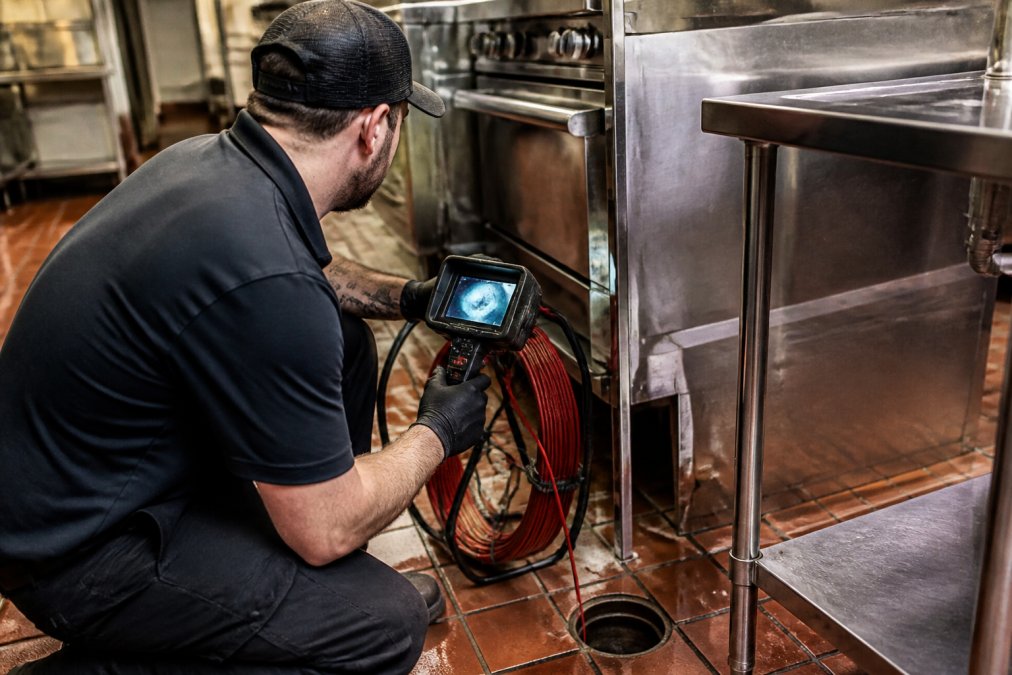
The camera inspection process involves threading a flexible camera down the drain line while monitoring the video feed in real time. The technician can see grease accumulation, tree root intrusion, pipe deterioration, offset joints, and blockage locations with precision. This visual evidence allows for targeted solutions rather than blanket approaches.
Commercial properties dealing with recurring drain problems benefit most from camera inspection. If a line backs up repeatedly, the camera reveals whether the issue stems from grease buildup (solvable with hydro-jetting), tree roots (requiring mechanical removal or trenchless repair), or structural pipe damage (requiring replacement or relining).
Many commercial drain maintenance contracts include periodic camera inspections as part of preventative care. The inspection cost becomes negligible when amortized across a year of service, and the information prevents emergency calls and business disruption.
Commercial Drain Maintenance Schedule and Long-Term Costs
Establishing a regular drain maintenance schedule reduces long-term costs dramatically by preventing emergencies that disrupt operations and require expensive emergency service premiums. A property manager who invests in preventative maintenance typically spends far less annually than one who waits for problems to develop.
The ideal maintenance frequency depends on the property type and usage patterns. A restaurant with heavy grease production requires more frequent grease trap cleaning and main line hydro-flushing than an office building. A manufacturing facility with process water discharge needs different maintenance than a retail space.
Most commercial properties benefit from quarterly or semi-annual drain inspections combined with periodic hydro-jetting. This schedule catches problems before they escalate while spreading service costs predictably across the year. A maintenance contract locks in service rates and ensures technicians prioritize your property’s needs.
The long-term ROI of maintenance contracts becomes clear when you calculate the cost difference. A single emergency sewer backup that halts business operations for even a few hours costs more than an entire year of preventative maintenance. Add the cost of potential structural damage, contamination cleanup, and lost customer confidence, and the business case for maintenance becomes obvious.
Protek Plumbing and Drain Specialists works with commercial property managers to establish maintenance schedules that match their specific operational needs and budget constraints. Our transparent estimates before work begins ensure no surprises when the invoice arrives.
Common Drain Clog Types and Solution Costs
Different clog types require different solutions, and the cost varies significantly based on what’s actually blocking the line. Understanding what you’re dealing with helps you anticipate costs and plan appropriately.
Grease accumulation represents the most common commercial drain problem. Grease hardens as it cools, building up on pipe walls until blockages form. Hydro-jetting dissolves and flushes grease effectively, making it the standard solution. The cost reflects the equipment required and the time needed to clear the entire affected section.
Tree root intrusion affects properties with mature landscaping near drainage lines. Roots seek moisture and gradually penetrate small cracks in pipes, eventually blocking flow completely. Mechanical root removal with a main line rooter works for initial intrusion, but recurring root problems may eventually require trenchless pipe repair or relining to prevent future issues.
Mineral scale buildup in cast iron pipes restricts flow gradually. This problem develops over years as water minerals deposit inside pipes. Hydro-jetting or pipe descaling removes scale, but the long-term solution often involves pipe replacement or internal coating to prevent recurrence.
Foreign object blockages, from debris accidentally entering drains to items flushed inappropriately, require mechanical removal. The cost depends on object location and size. Some objects require excavation to retrieve, while others flush out with hydro-jetting.
Structural pipe damage from settling, corrosion, or age causes drainage problems that cannot be solved by clearing blockages. Trenchless repair technology now allows pipe relining without excavation, reducing costs compared to traditional replacement, but the investment remains significant.
| Clog Type | Primary Solution | Relative Cost | Prevention |
|---|---|---|---|
| Grease buildup | Hydro-jetting | Moderate | Regular grease trap cleaning |
| Tree roots | Mechanical rooter or trenchless repair | Moderate to high | Root barriers, pipe relining |
| Mineral scale | Hydro-jetting or descaling | Moderate | Water treatment systems |
| Foreign objects | Mechanical retrieval or hydro-jetting | Low to moderate | Staff training, drain screens |
| Structural damage | Trenchless relining or replacement | High | Preventative inspections |
Why Low-Cost Quotes Often Lead to Hidden Charges
A suspiciously low quote for commercial drain cleaning service usually signals one of several problems: incomplete diagnosis, inadequate equipment, or a bait-and-switch pricing model that adds charges once work begins.
Some plumbers quote a low service call fee knowing they’ll discover “additional problems” once they arrive and begin work.
Conclusion
Commercial drain cleaning service costs depend on multiple factors: blockage severity, equipment requirements, diagnostic needs, and timing. Understanding these variables helps property managers budget effectively and avoid the emergency service premiums that accompany unexpected failures.
Frequently Asked Questions
How often should commercial drains be cleaned to prevent backups?
Most commercial properties benefit from drain cleaning every 12 months as part of preventative maintenance, though high-use facilities like restaurants may need quarterly service. A professional plumbing diagnostics assessment can determine the right schedule based on your drainage system’s condition, pipe materials, and usage patterns. Regular maintenance prevents costly emergency backups and extends pipe life significantly.
What factors influence the cost of commercial drain cleaning?
Costs depend on drain location and accessibility, pipe diameter and length, severity of the blockage, type of clog (grease, roots, debris), and whether emergency service is needed. Equipment requirements also matter, hydro-jetting costs more than mechanical snaking but handles stubborn buildup better. Service call fees and after-hours surcharges add to the total. Request a transparent estimate before work begins to avoid surprises.
Is hydro jetting more expensive than traditional snaking?
Yes, hydro jetting typically costs more upfront because it uses specialized equipment that delivers high-pressure water to clear and flush the entire line. However, it’s often more effective for grease traps, mineral deposits, and recurring clogs, potentially saving money long-term by preventing repeat service calls. For simple blockages, mechanical snaking may be sufficient and more economical. A professional assessment helps determine which method fits your needs and budget.
What’s included in a standard commercial drain cleaning estimate?
A transparent estimate should include the service call fee, labor costs based on hourly or flat-rate pricing, equipment charges (snaking, hydro-jetting, or camera inspection), and any additional fees for after-hours emergency service. It should specify what the technician will do, what they’ll inspect, and whether a follow-up visit is anticipated. Always request the estimate in writing before work begins, this protects you from bait-and-switch tactics.