
Table of Contents
- What Is Hard Water and Why Filtration Matters
- Water Softener vs Water Filter for Hard Water: Key Differences
- Top Water Filtration Systems for Hard Water
- Whole House vs Point-of-Use Filtration for Hard Water
- Whole House Water Filtration System Installation Cost and Maintenance
- How to Test Your Water Hardness Level
- Frequently Asked Questions
Last Updated: September 28, 2026
What Is Hard Water and Why Filtration Matters
Hard water contains elevated levels of dissolved minerals, primarily calcium and magnesium ions, that create problems throughout your home, which is why finding the best water filtration for hard water is essential. When water hardness exceeds 60 parts per million, you’ll notice scale buildup on faucets, reduced soap effectiveness, and premature appliance failure. The best water filtration for hard water addresses these mineral deposits before they damage your plumbing and fixtures.
Hard water isn’t dangerous to drink, but it’s costly to live with. Scale accumulation in water heaters, dishwashers, and washing machines shortens their lifespan by years. At Protek Plumbing and Drain Specialists, we’ve helped homeowners in Charlotte County eliminate hard water problems through targeted filtration solutions.
The challenge isn’t just removing minerals, it’s choosing between systems that soften water (removing minerals) versus those that filter contaminants (removing sediment, chlorine, and other impurities). Most homes need both approaches working together.
Water Softener vs Water Filter for Hard Water: Key Differences
Water softeners use ion exchange resin to replace calcium and magnesium ions with sodium or potassium, eliminating minerals and preventing scale buildup on pipes, water heaters, and appliances. A traditional softener requires salt replenishment (typically every 4-6 weeks for a family of four) and regular resin cleaning.
Water filters use activated carbon, sediment cartridges, or reverse osmosis membranes to remove chlorine, disinfection byproducts, heavy metals, sediment, and other contaminants. They improve taste, odor, and safety, but they do not reduce water hardness or prevent scale buildup on faucets and appliances.
Why this matters: If your water is hard and you install only a filter, you’ll have cleaner-tasting water but scale will still form on your fixtures and inside your appliances. If you install only a softener, you’ll prevent scale but you won’t remove chlorine taste or heavy metals. Most homes with hard water need both technologies working together: a softener handles mineral removal while a filter addresses contaminant reduction.
Salt-free water conditioners like the Kind Water Systems E-3000 use crystallization to prevent minerals from adhering to surfaces without removing them. They reduce scale formation without salt discharge, making them attractive for septic systems, but calcium and magnesium ions remain in your water. For very high hardness levels (above 180 ppm), salt-free conditioning is often less effective than traditional softening.
Choosing between them:
- Choose a softener if: You have moderate to high water hardness (above 120 ppm) and want to protect appliances from scale damage, or if you notice visible buildup on faucets and showerheads.
- Choose a filter if: Your primary concern is taste, odor, chlorine removal, or contaminant reduction, and your water hardness is mild (below 120 ppm).
- Choose both if: Your water is hard and you also have chlorine taste, sediment, or other contaminant concerns, this is the most common scenario for homeowners seeking comprehensive water quality improvement.
- Choose salt-free conditioning if: You have a septic system and want scale prevention without sodium discharge, or you prefer minimal maintenance over complete hardness removal.
If you’re renting or want to avoid permanent installation, a point-of-use reverse osmosis system paired with a pitcher-based filter gives you both mineral reduction (RO removes dissolved solids, including hardness minerals) and contaminant removal without plumbing modifications.
Top Water Filtration Systems for Hard Water
Protek Plumbing and Drain Specialists, Best for Professional Installation and Support
Our team at Protek Plumbing and Drain Specialists brings over 35 years of experience installing and maintaining water filtration systems across Charlotte County. We handle complete installation, testing, and ongoing maintenance to ensure your water quality stays optimized.
Homeowners who want professional guidance, expert installation, and ongoing support without managing multiple vendors.
PRO+AQUA Elite Well Water Filter Softener Bundle
This integrated system combines water softening with reverse osmosis filtration, ideal for well water with both hardness and contamination concerns.
Pros:
- Addresses both hardness and contamination in one unit
- High-purity drinking water output
- Effective sediment removal for well water
Cons:
- Requires professional installation
- Higher upfront cost than single-function systems
- Regular maintenance needed for optimal performance
Kind Water Systems E-3000
This salt-free water softener conditions minerals to prevent scale formation without the salt replenishment cycle. It includes whole-house sediment and carbon filtration.
Pros:
- No salt or electricity required
- Lower annual maintenance costs (approximately $150-$200)
- Environmentally friendly for septic systems
Cons:
- Does not remove hardness minerals, only prevents scale
- Less effective for extremely high hardness levels
SpringWell CF1
This whole-house filtration system excels at removing chlorine, chloramines, and disinfection byproducts while maintaining strong water pressure and improving taste and odor.
Pros:
- Excellent chlorine and chemical odor removal
- Maintains strong water pressure
- Long-lasting filter media
Cons:
- Does not address water hardness
- Requires separate softening system for scale prevention
Aquasana Claryum 3-Stage Max Flow
This under-sink system uses a three-stage process targeting lead, mercury, pesticides, and other contaminants with NSF certification backing the claims.
Pros:
- Compact under-sink footprint
- High-quality contaminant reduction with NSF certification
- Easy filter cartridge replacement
Cons:
- Limited to a single faucet
- Does not address whole-house hardness
3M Aqua-Pure AP904
This heavy-duty whole-house system handles high-flow applications with stainless steel construction and Sanitary Quick Change design for easy filter replacement.
Call Now For A Free Estimate ?
Pros:
- Very durable stainless steel construction
- Handles high water volume without pressure loss
- Easy filter replacement process
Cons:
- High annual cost for replacement cartridges
- Does not address water hardness
AquaTru Carafe
This countertop reverse osmosis system requires no plumbing installation and produces purified water with IAPMO certification.
Renters and homeowners who want high-purity water without permanent plumbing modifications.
Pros:
- Portable with no installation required
- Highly effective at removing dissolved solids
- Includes TDS monitoring
Cons:
- Requires manual refilling
- Limited to drinking and cooking water only
- Slower filtration rate than plumbed systems
APEC Water Systems RO-90
This premium under-sink reverse osmosis system uses a five-stage process to remove up to 99% of contaminants with high-quality, long-lasting components.
Pros:
- Highly reliable and durable components
- Excellent water purity results
- Includes lead-free designer faucet
Cons:
- Requires professional or advanced DIY installation
- Higher initial cost than budget alternatives
Whole House vs Point-of-Use Filtration for Hard Water
Whole-house filtration makes sense if appliance protection is your priority. Scale prevention extends appliance lifespan and provides filtered water throughout your home.
Whole House Water Filtration System Installation Cost and Maintenance
The true cost of ownership includes installation, filter replacements, salt replenishment (for softeners), and repairs over the system’s lifespan, often exceeding the initial purchase price.
-
Cartridge-based whole-house filters: Replacement cartridges cost $50-$150 each, replaced every 6-12 months. A family of four with moderately hard water should budget $100-$300 annually.
-
Water softeners: A family of four typically needs 40-50 pounds of salt every 4-6 weeks, costing $200-$400 annually. Some softeners require annual resin cleaning or occasional resin replacement (every 10-15 years), adding $100-$300 in those years.
-
Reverse osmosis systems: Under-sink RO systems require filter cartridge replacement every 6-12 months (sediment pre-filter, carbon filter, and RO membrane). Replacement cartridge sets cost $80-$200 depending on quality, bringing annual costs to $80-$200. Whole-house RO systems are more expensive to maintain, with annual filter and membrane replacement costs of $300-$600.
-
Salt-free water conditioners: These systems have the lowest annual maintenance costs, typically $150-$200 annually for filter cartridge replacement, with no salt replenishment required. This makes them attractive for homeowners prioritizing low maintenance, though they sacrifice the complete hardness removal that traditional softeners provide.
Five-year cost of ownership example:
When budgeting for a water filtration system, calculate the total cost of ownership over 5-10 years, not just the purchase price. A system with a lower upfront cost but expensive replacement cartridges may cost significantly more over time than a higher-priced system with inexpensive maintenance.
How to Test Your Water Hardness Level
Testing your water hardness is the first step toward choosing the right filtration system. Most homeowners can perform a basic test using an inexpensive kit from any hardware store.
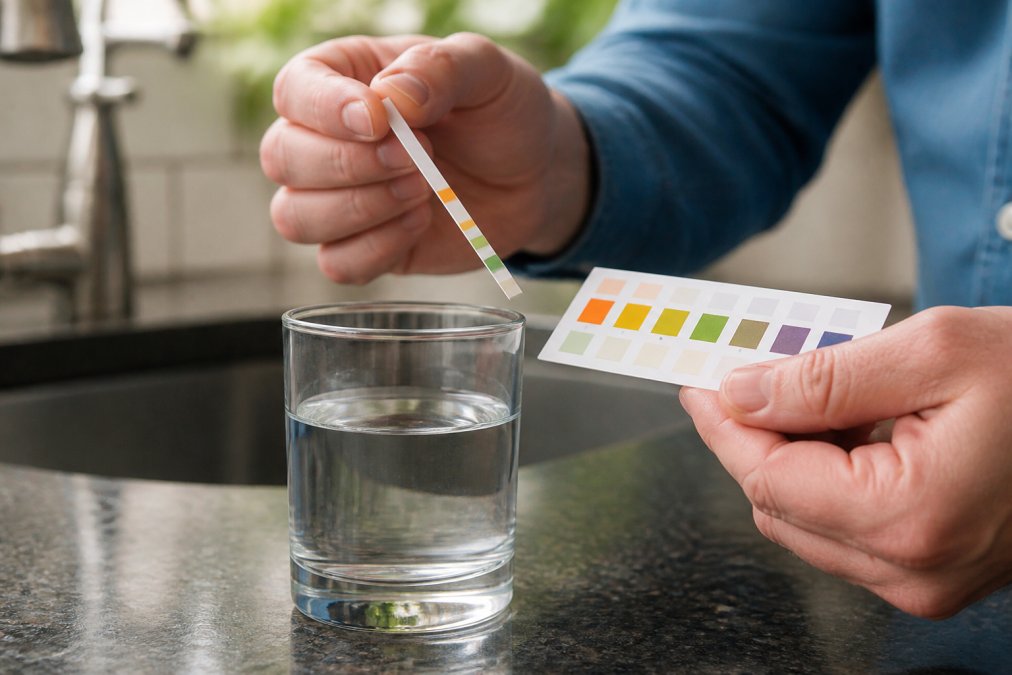
DIY Testing Process:
- Collect a water sample from a cold-water tap (hot water can skew results)
- Use a test strip kit by dipping the strip into the sample and comparing the color to the reference chart
- Note the parts per million (ppm) reading, this tells you hardness level
- Interpret the results: 0-60 ppm is soft, 61-120 ppm is moderately hard, 121-180 ppm is hard, above 180 ppm is very hard
Frequently Asked Questions
What is the difference between a water filter and a water softener?
A water filter removes contaminants like sediment, chlorine, and heavy metals through physical or chemical processes. A water softener uses ion exchange resin to remove calcium and magnesium ions that cause hardness. Filters improve taste and safety; softeners prevent scale buildup in pipes and appliances. Many hard water solutions combine both technologies for comprehensive treatment.
Can a standard water filter remove hardness minerals?
Standard carbon or sediment filters cannot remove dissolved hardness minerals like calcium carbonate and magnesium ions. You need either a water softener with ion exchange resin or a reverse osmosis system to address mineral hardness. Point-of-use filters may reduce some contaminants but won’t eliminate the scale-causing minerals that damage appliances and plumbing.
Is a whole house water filtration system better than point-of-use filters for hard water?
Whole house systems treat all water throughout your home, protecting appliances and plumbing from scale buildup and reducing hardness at every tap. Point-of-use filters like under-sink or pitcher systems treat only water at that specific location. For hard water, whole house filtration is more effective at preventing appliance damage and limescale, though point-of-use options work for drinking water only if budget is limited.
How do I know what water hardness level my home has?
Test your water using a hardness test kit available at hardware stores, which measures parts per million (ppm) of dissolved solids. Water below 60 ppm is soft; 60-120 ppm is moderately hard; above 180 ppm is very hard. You can also contact your local water utility for a free water quality report, or hire a professional to conduct a comprehensive analysis.
Hard water doesn’t require expensive solutions, it requires the right solution for your water chemistry. Protek Plumbing and Drain Specialists eliminates the guesswork by testing your water, recommending a system matched to your needs, and handling professional installation with our 100% workmanship guarantee. Call now for a free water quality assessment and transparent estimate.