
Table of Contents
- Signs of a Commercial Sewer Backup
- Common Causes of Commercial Sewer Line Backups
- Emergency Response: Immediate Actions After a Backup
- Commercial Sewer Line Maintenance Schedule
- Hydro-Jetting for Commercial Sewer Lines
- Backwater Valve Installation for Commercial Properties
- Professional Sewer Line Repair and Inspection
- Preventative Maintenance to Avoid Future Backups
- Frequently Asked Questions
Last Updated: September 20, 2026
Signs of a Commercial Sewer Backup
A commercial sewer backup often goes unnoticed until it’s catastrophic. Early warning signs, slow drains, faint odors, are subtle, but catching them before sewage overflows can save thousands in cleanup and downtime.
Slow drainage across multiple fixtures simultaneously indicates a main sewer line problem, not a localized issue. Gurgling sounds from drains, especially after high-volume use, are another common sign.
Sewage odors near floor drains, cleanout points, or landscaped areas are red flags. Standing water in basements, parking lots, or landscaping after rain indicates the line can’t handle normal flow.
Unusually lush or dying grass patches indicate a sewer lateral leak. In commercial settings, pest activity, rats and insects attracted to sewage, is another warning sign.
The most urgent sign is actual sewage backing up into your building. This can appear as raw sewage in toilets, showers, sinks, or floor drains. When this happens, stop using all water fixtures immediately and contact a professional. A backup of this magnitude poses serious health and safety risks to occupants.
Common Causes of Commercial Sewer Line Backups
Understanding what causes a commercial sewer line backup helps prevent future incidents. Most result from physical blockages, structural failures, or external intrusion.
Tree Root Intrusion
Tree roots are among the most common culprits in sewer line failure. Attracted to moisture and nutrients in wastewater, roots exploit small cracks in older pipes and eventually strangle the pipe’s interior.
Root intrusion happens gradually, starting with partial blockage and progressing to complete obstruction. Expanding roots can crack or collapse pipe sections.
Root intrusion is particularly problematic in older facilities. Tree proximity to the line matters more than size; even smaller trees cause damage if roots reach the pipe.
Prevention requires knowing your sewer line location and avoiding tree planting above it. Root barriers and professional camera inspections reveal intrusion before complete blockage occurs.
Grease Trap Overflow and Blockages
Commercial kitchens generate grease that accumulates in sewer lines. Improper grease trap maintenance allows buildup; solidified grease forms stubborn deposits that restrict flow.
Grease combined with paper, food particles, and mineral deposits hardens into concrete-like blockages that progress rapidly in high-volume food preparation settings.
Grease trap maintenance is non-negotiable for food service facilities. Professional cleaning every 30 to 90 days removes accumulated grease before it enters the main line.
Restaurants, hospitals, hotels, and institutional kitchens face highest risk. Without consistent maintenance, backups become inevitable.
Pipe Deterioration and Structural Damage
Older sewer lines deteriorate over decades. Cast iron pipes corrode from inside out; concrete pipes crack as soil settles; clay pipes become brittle and collapse.
Structural damage results from external pressure, heavy vehicles, soil subsidence, or construction. Once pipes crack or collapse, sewage leaks and backflow becomes likely.
Sewer camera inspection reveals internal corrosion, cracks, and collapses before they cause backups. Many facility managers don’t know their line condition until a backup occurs.
Properties in areas with unstable soil, frequent ground movement, or heavy traffic above the sewer line face higher risk. Regular inspections help identify deteriorating sections before they fail completely.
Emergency Response: Immediate Actions After a Backup
When a commercial sewer line backup occurs, the first few hours are critical. Your response determines whether the situation worsens or stabilizes.
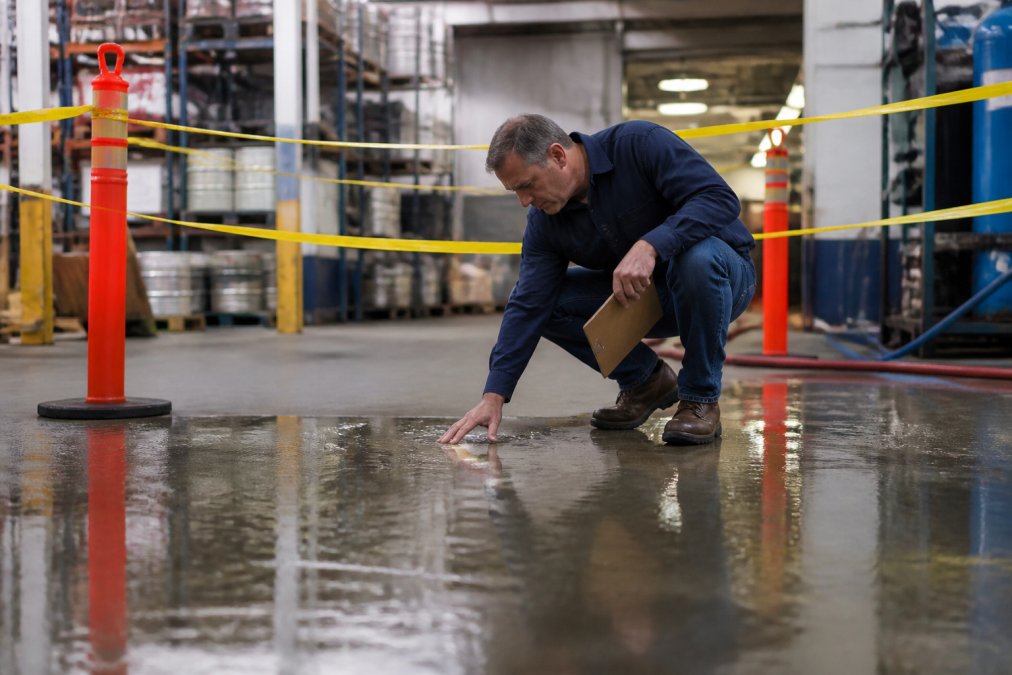
Stop using all water fixtures immediately. Post signage directing occupants to use facilities elsewhere or on upper floors if lower-level backup is occurring.
Contact a professional sewer service immediately. A licensed plumber determines whether the backup is in your lateral line or the municipal main line, which affects liability and costs.
Document the incident with photos and notes about timing, affected fixtures, and visible sewage. This supports insurance claims and aids diagnosis.
Evacuate the affected area if sewage is visible inside the building. Sewage contains harmful pathogens and biohazards (the CDC). Restrict access until a professional confirms it’s safe. If the backup involves significant contamination, contact a biohazard remediation service like SERVPRO for emergency sewage cleanup and restoration to handle decontamination safely.
For facilities with grease traps, check the trap immediately if you suspect a blockage. If the trap is full, it’s likely the culprit. However, don’t attempt to pump it yourself, hire a professional grease trap service to avoid spreading contamination.
Commercial Sewer Line Maintenance Schedule
Preventative maintenance is far more cost-effective than emergency repairs. A structured maintenance schedule catches problems before they become backups.
Annual sewer camera inspections cost less than emergency cleanup and reveal conditions needing attention. Schedule before peak usage seasons.
Food service facilities should schedule grease trap pumping every 30 to 90 days depending on usage. Regular maintenance prevents blockages.
Call Now For A Free Estimate ?
Drain cleaning every 18 to 24 months removes early-stage buildup. This is especially important for aging pipes or known tree root issues.
Test backwater prevention valves annually. A faulty valve provides false confidence and won’t prevent backup during municipal main line overflow.
Document all maintenance activities. Keep records of inspections, cleaning dates, and any issues identified. This documentation supports warranty claims, helps track recurring problems, and provides baseline data for future inspections.
At Protek Plumbing and Drain Specialists, we help commercial property managers establish maintenance schedules tailored to their specific facility type and age. With over 35 years of experience serving the Port Charlotte and Charlotte County area, our team understands the unique challenges of commercial sewer systems.
Hydro-Jetting for Commercial Sewer Lines
Hydro-jetting uses high-pressure water to remove stubborn deposits and clean the entire pipe interior, unlike mechanical snaking which only pushes through blockages.
Pressurized water (4,000-8,000 PSI) removes grease buildup, mineral deposits, root fragments, and debris, flushing everything downstream.
Hydro-jetting is particularly effective for grease blockages, liquefying and removing hardened grease completely. For recurring grease issues, it prevents backups more reliably than mechanical cleaning.
Professional assessment ensures pipes can handle the pressure. Camera inspection before and after confirms effectiveness and identifies damage.
Hydro-jetting also cleans the pipe walls, removing biofilm and scale that accumulate over time. This restoration of pipe capacity can improve drainage system performance throughout the building. For commercial facilities with aging infrastructure, hydro-jetting combined with regular maintenance extends pipe life significantly.
Backwater Valve Installation for Commercial Properties
A backwater valve installation for commercial properties is one of the most effective preventative measures against backups. These valves allow sewage to flow out of your building but prevent it from flowing back in when the municipal main line backs up.
Backwater valves come in two types: check valves and gate valves. Check valves use a flapper mechanism that opens during normal flow and closes automatically when backpressure is detected. Gate valves require manual operation, you close them when a backup is imminent. Check valves are more common because they don’t require operator intervention.
Installation location is critical. The valve should be placed at the lowest point where your sewer lateral connects to the municipal main line, typically in a cleanout access point. For buildings with multiple sewer lines or complex drainage systems, you may need multiple valves.
A properly installed valve prevents sewage from backing into your building even during municipal main line overflows. However, the valve must be maintained. Debris can prevent the flapper from closing properly, rendering the valve useless. Annual testing ensures the valve operates correctly.
One limitation: if your building has floor drains, basement fixtures, or low-level bathrooms, a backwater valve at the main cleanout won’t protect those areas if they’re below the valve’s installation point. In these cases, additional check valves on individual drains or sump pump systems may be necessary.
Installation costs vary based on your facility’s configuration, but the investment typically pays for itself after a single prevented backup.
Professional Sewer Line Repair and Inspection
When a backup requires repair, you have two main options: traditional excavation or trenchless repair methods. The choice depends on pipe condition, location, and budget.
Camera inspection is the diagnostic foundation. A waterproof camera is inserted into the sewer line, providing video footage of internal conditions. The inspector identifies cracks, collapses, root intrusion, and blockages. This information determines the best repair approach and prevents unnecessary work.
Traditional excavation involves digging to expose the damaged section, removing it, and installing new pipe. This method is necessary when pipes are severely collapsed or when multiple sections need replacement. The disadvantage is significant disruption, excavation damages landscaping, parking areas, and can affect building access during repairs.
Trenchless repair methods minimize disruption. Pipe lining involves inserting a flexible tube coated with resin into the damaged pipe. The resin hardens, creating a new pipe interior within the old pipe. This method works well for cracks and corrosion but not for complete collapses.
Pipe bursting is another trenchless option. A tool fractures the old pipe while simultaneously pulling new pipe into place. This method requires access points at both ends of the damaged section but avoids extensive excavation.
For commercial facilities, trenchless methods are often preferred because they minimize downtime.
Preventative Maintenance to Avoid Future Backups
The most effective strategy is preventing backups before they happen. This requires understanding your facility’s specific risk factors and addressing them systematically.
Frequently Asked Questions
What are the most common causes of commercial sewer line backups?
Commercial sewer backups typically result from tree root intrusion into aging pipes, grease and debris accumulation in drain lines, structural pipe damage from age or ground movement, and inadequate maintenance of sanitary sewer systems. Facilities with older infrastructure face higher risk. Regular camera inspections can identify problems before they cause backups.
How often should commercial sewer lines be inspected to prevent backups?
Most facilities benefit from annual sewer scope inspections, particularly those over 20 years old or with recurring drainage issues. Properties in areas with aggressive tree growth or those handling high-volume wastewater should consider twice-yearly inspections. Early detection of pipe blockage, cracks, or root intrusion prevents costly emergency repairs and operational disruption.
What is the difference between hydro-jetting and traditional drain cleaning for commercial sewer lines?
Hydro-jetting uses high-pressure water streams to scour pipe walls and remove stubborn grease, scale, and debris buildup. Traditional mechanical cleaning may only punch through blockages without fully clearing the line. Hydro-jetting is more effective for preventative maintenance and handles the heavy-duty demands of commercial sewer lines, though it requires professional equipment and expertise.
How does a backwater valve protect commercial properties from sewer backups?
A backwater valve (or backflow prevention valve) allows wastewater to flow out of your building but automatically closes if sewage tries to flow backward into the facility. This is critical during main sewer line backups when municipal systems overflow. Installation requires professional assessment of your drainage configuration and plumbing code compliance.