
Table of Contents
- Why Steel Plumbing Fails and When Replacement Becomes Necessary
- Steel Plumbing Alternatives: Material Comparison
- PEX vs. Copper Pipes for Repiping: Which Performs Better
- Repiping vs. Pipe Repair: When Full Replacement Makes Sense
- Epoxy Pipe Lining vs. Repiping: A Less Invasive Option
- Cost to Replace Galvanized Plumbing: What Affects Your Project Price
- Planning Your Repiping Project: Partial vs. Whole-House Replacement
- Frequently Asked Questions
Last Updated: October 12, 2026
Why Steel Plumbing Fails and When Replacement Becomes Necessary
Galvanized steel pipes fail predictably: corrosion eats interior walls, scale restricts flow, and leaks multiply.
Galvanized steel lasts 40-60 years. You’ll notice low pressure first, then discolored water, then pinhole leaks that multiply into full-scale failures.
The real cost isn’t today’s leak but the next one. Patching failures costs money repeatedly; full replacement costs more upfront but stops the cycle.
Steel Plumbing Alternatives: Material Comparison
Before comparing materials, confirm what you have. Galvanized steel is the usual culprit in older homes and is easy to confuse with other metals. A few field checks separate them:
- Magnet test. A magnet sticks to galvanized steel and to black steel. It will not stick to copper, PEX, or PVC.
- Scratch test. Scratch an inconspicuous spot. Galvanized steel shows a dull silver-gray under a zinc coating. Copper shows reddish-orange. Brass shows yellow-gold.
- Fitting style. Galvanized steel uses threaded fittings. Copper uses soldered or press fittings. PEX uses crimp, clamp, or expansion fittings. PVC uses solvent-welded (glued) fittings.
- Interior condition. Cut or scope a section. Worn galvanized steel shows heavy scale, tuberculation (rough mineral nodules), and rust-colored interior walls, that buildup, not the metal, chokes flow and pressure.
Once confirmed, three materials dominate the replacement decision: PEX, copper, and, in limited roles, PVC. Each interacts differently with your water chemistry, existing plumbing, fittings, and local code.
PEX: Flexibility and Affordability
PEX (cross-linked polyethylene) is flexible plastic tubing and the most common choice for residential repiping. Its flexibility means fewer fittings and fewer leak-prone connection points.
PEX resists freezing better than rigid materials and does not corrode, avoiding the scale and rust that plagued your galvanized steel system.
Two limitations matter: PEX cannot be exposed to sunlight, and it requires specific fittings and tools (crimp, clamp, or expansion), so a licensed professional should handle the work.
Copper: Durability and Heat Tolerance
Copper has been the plumbing standard for generations.
Copper’s heat tolerance makes it preferred where high-demand hot water or temperature stability matters. M-grade copper is thinner and cheaper; L-grade is more durable.
One compatibility note: copper and galvanized steel should never be directly connected, the dissimilar metals create a galvanic reaction that accelerates corrosion at the joint.
PVC: Common and Code-Approved
PVC (polyvinyl chloride) is a rigid plastic pipe used primarily for drain, waste, and vent lines. It is inexpensive and widely available.
PVC is durable and corrosion-resistant but less flexible than PEX and needs more fittings.
Before choosing PVC for a supply repipe, confirm local code with your plumber. CPVC handles hot water better and is approved for supply lines in many jurisdictions, but it is more brittle than PEX and can crack under stress.
Matching Material to Your Water and Your Home
Material choice is not one-size-fits-all. Aggressive or low-pH water can attack copper, while high-chloride water can stress certain metals.
Existing plumbing matters too. If galvanized steel remains, transitions to copper need dielectric protection and transitions to PEX need the correct brass or plastic adapter.
Fittings and code matter: every material has approved fitting systems, and local code may restrict materials for supply versus drain use.
Lifecycle Cost, Not Just Sticker Price
Initial material cost is only part of the picture. Consider the full lifecycle:
- Installation. PEX is fastest to install, lowering labor. Copper is slower and more labor-intensive. PVC is inexpensive but rarely used for supply.
- Expected service life. Copper at 50+ years; galvanized steel at 40-60 years.
- Repair and maintenance. PEX repairs are simple and low-cost; copper repairs require soldering or press tools and cost more. Both are far less maintenance-prone than the steel you are replacing.
- Resale and insurance. Some insurers and buyers view copper as premium. PEX is widely accepted and code-approved in most jurisdictions.
For many homeowners, the honest comparison is either material versus continuing to patch a failing steel system. Both dramatically outperform galvanized steel; the real difference emerges over decades, since PEX may need replacement in 25-30 years while copper can last 50+.
| Material | Flexibility | Heat Tolerance | Corrosion Resistance | Typical Lifespan | Installation Speed |
|---|---|---|---|---|---|
| PEX | High | Moderate | Excellent | 25-30 years | Fast |
| Copper | Low | Excellent | Excellent | 50+ years | Moderate |
| PVC / CPVC | Low | Low (PVC) / Moderate (CPVC) | Excellent | 25-50 years | Moderate |
| Galvanized Steel | None | Poor | Poor | 40-60 years | Slow |
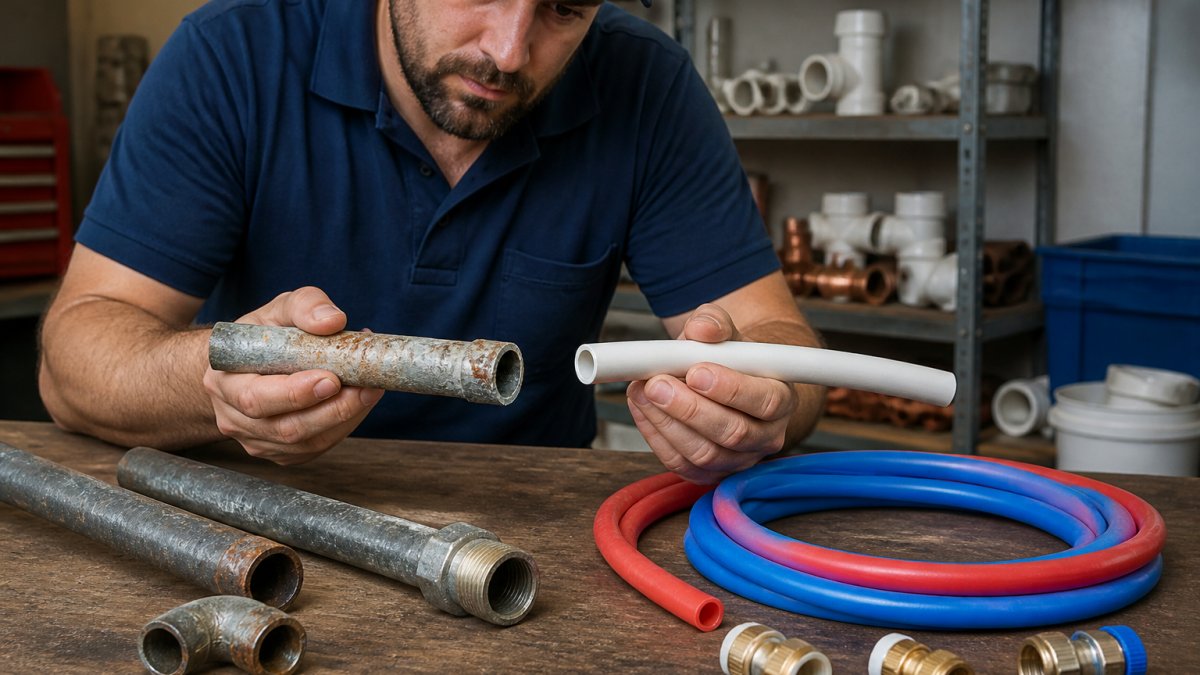
PEX vs. Copper Pipes for Repiping: Which Performs Better
The choice between PEX and copper comes down to cost and installation speed versus longevity and heat tolerance.
PEX wins on affordability and installation ease: flexible tubing navigates tight spaces without extra fittings, and shorter labor time reduces project cost. For homeowners on a budget or worried about disruption, PEX delivers faster completion.
Copper wins on proven durability and performance under extreme conditions.
| Material | Flexibility | Heat Tolerance | Corrosion Resistance | Typical Lifespan | Installation Speed |
|---|---|---|---|---|---|
| PEX | High | Moderate | Excellent | 25-30 years | Fast |
| Copper | Low | Excellent | Excellent | 50+ years | Moderate |
| Galvanized Steel | None | Poor | Poor | 40-60 years | Slow |
Repiping vs. Pipe Repair: When Full Replacement Makes Sense
Pipe repair addresses a single problem: the leak in front of you. Repiping replaces the entire water supply system.
If you have one leak in a 50-year-old galvanized steel system, repair might be tempting.
Repiping makes sense when:
- Your home has multiple leaks within a 12-month period
- You’re experiencing persistent low water pressure
- Your water shows signs of rust or discoloration
- Your galvanized steel pipes are 40+ years old
- You’re planning a major renovation and walls are already open
Repair makes sense only when:
- The leak is isolated to a single section
- Your system is relatively young (under 30 years)
- You’ve had no previous failures
For most homes with aging steel plumbing, repiping is the long-term answer. Repair is expensive in the aggregate because you’ll repeat it multiple times.
Call Now For A Free Estimate ?
Repeated repairs on failing galvanized steel create a false economy. You pay labor costs multiple times instead of once. Each repair also risks further damage to walls or ceilings. Budget for repiping rather than committing to an endless cycle of patches.
Epoxy Pipe Lining vs. Repiping: A Less Invasive Option
Epoxy lining works best when the pipe structure is intact but the interior has corroded or scaled.
The advantage is minimal wall disruption and faster completion, no tearing open walls or excavating large sections of your home.
The limitation is equally important: epoxy lining is temporary.
Epoxy lining suits homes where the pipe structure is sound but the interior is compromised.
Ask your plumber to scope your pipes before deciding between epoxy lining and full repiping. A camera inspection reveals whether the pipe structure is intact or if full replacement is necessary. This determines whether lining is viable or if you need to replace.
Cost to Replace Galvanized Plumbing: What Affects Your Project Price
Repiping cost varies widely, and any single number without context is misleading. Five factors shape the final bill: home size, material choice, accessibility, scope, and local labor rates.
Home Size and Fixture Count
Larger homes require more pipe and labor. Fixture count matters just as much: each bathroom, kitchen, laundry, and outdoor spigot adds branch lines and connections. A home with three full bathrooms and a kitchen costs more to repipe than a same-square-footage home with one bathroom.
Material Choice
Material choice affects both material and labor cost. PEX is generally least expensive per linear foot and fastest to install, lowering labor hours. Copper costs more per linear foot and takes longer to install.
The honest framing: PEX lowers upfront cost; copper raises it but extends service life. Over a 50-year horizon, cost-per-year-of-service can narrow the gap considerably.
Accessibility and Construction Type
Accessibility is often the biggest swing factor. Pipes in an open basement or crawl space are straightforward; pipes buried in walls, under a slab, or in tight attics require more labor, cutting, and restoration. Slab-on-grade homes are typically most expensive because supply lines may run under concrete, while two-story homes with stacked bathrooms are usually easier than sprawling single-story layouts.
Scope: Partial vs. Whole-House
Scope drives the total more than any other decision. A partial repipe addresses only failing sections, say, the kitchen and one bathroom, while a whole-house repipe replaces every supply line.
Partial repiping costs less upfront but carries a hidden cost: if remaining galvanized steel keeps failing, you may pay for a second project within a few years.
Local Labor Rates and Permits
Labor rates vary by market, and repiping typically requires a permit and inspection. Ask whether the estimate includes permits, inspection, and restoration (drywall patching and painting), since low bids often exclude them.
What a Fair Estimate Should Include
When comparing estimates, compare what’s inside them, not just the bottom line. A complete estimate should specify:
- The material and grade (for example, PEX type and fitting system, or copper grade)
- The scope (which lines are being replaced)
- Permit and inspection responsibility
- Wall, ceiling, and floor access and restoration
- Water shutoff and temporary water arrangements
- Warranty terms on both material and workmanship
A low bid that omits restoration, permits, or a workmanship warranty isn’t actually lower, it just moves cost to a later line item.
Lifecycle Cost, Not Just Upfront Price
The most useful comparison is cost over the life of the system, not the day-one invoice. Consider:
- Upfront cost. PEX is typically lowest; copper is higher.
- Expected service life. Copper at 50+ years.
- Repair frequency. Both modern materials require far less repair than galvanized steel, which fails repeatedly in its later years.
- Resale and insurance. A documented repipe with a modern material can be a selling point, and some insurers view updated plumbing favorably.
For an accurate estimate, contact a licensed plumber who can assess your situation. Protek Plumbing and Drain Specialists provides transparent estimates before work begins, with no hidden costs or surprise bills.
Repiping cost depends on home size, material choice, accessibility, scope, and local labor rates. Get multiple estimates and compare what each includes, permits, restoration, and warranty. The cheapest estimate is not the best value if it cuts corners on materials or workmanship.
Planning Your Repiping Project: Partial vs. Whole-House Replacement
Deciding between partial and whole-house repiping is a strategic choice. Partial repiping addresses specific failing sections.
Partial repiping costs less upfront.
The risk is that you’re treating symptoms, not the underlying problem. If galvanized steel is failing in one area, it’s likely failing throughout.
Whole-house repiping is more expensive initially but eliminates future uncertainty.
Aging plumbing creates stress and expense.
Protek Plumbing and Drain Specialists provides transparent estimates, explain your material options clearly, and deliver professional installation with a 100% workmanship guarantee. Whether you need urgent repairs or are planning a strategic whole-house repipe, our team is ready to help. Contact Protek Plumbing and Drain Specialists for a free repiping estimate and let’s get your plumbing system fixed today.
Frequently Asked Questions
What is the best alternative to steel pipes for repiping?
PEX and copper are the most common steel plumbing alternatives. PEX offers flexibility and lower installation costs, making it ideal for budget-conscious homeowners. Copper provides superior heat tolerance and longevity, justifying its higher cost for those prioritizing durability. Your choice depends on your home’s water temperature needs, budget, and long-term maintenance preferences. A licensed plumber can assess your specific situation and recommend the best option.
Should you replace steel plumbing with PEX or copper?
Both are viable steel plumbing alternatives, each with distinct advantages. PEX is freeze-resistant and easier to install, reducing labor costs. Copper resists corrosion better and handles high temperatures reliably. If your home experiences freezing temperatures or you prioritize cost efficiency, PEX is typically the better choice. If you need maximum durability and can accommodate higher material costs, copper delivers long-term value. Consult a professional to evaluate your home’s specific conditions.
Can you replace steel pipes without opening walls?
Epoxy pipe lining offers a non-invasive option when your existing steel pipes are structurally intact. This method coats the interior of existing pipes rather than replacing them, minimizing wall disruption. However, if pipes are severely corroded, leaking, or have scale buildup, full repiping with new material may be necessary, which typically requires wall access. A professional inspection determines whether your pipes qualify for lining or require complete replacement.
How long do PEX and copper pipes last compared to steel?
Steel plumbing typically lasts 40-50 years before corrosion and scale buildup cause failure. Copper pipes resist corrosion and can last 50-70+ years with proper maintenance. Copper’s superior longevity justifies its higher upfront cost for homeowners planning long-term occupancy. PEX offers excellent value for those seeking a balance between cost and durability.