
Quick Summary
A plumbing guarantee promises that the work done will hold up for a set period. It usually covers the labor and parts used in a specific repair, not the whole plumbing system, so read the terms before assuming a leak or clog is covered.
- Check whether a failure traces back to the company’s work or to normal wear and tear.
- Coverage usually splits into labor, parts, and workmanship, and each can have a different window.
- Parts often carry a longer manufacturer warranty than the installer’s labor guarantee.
- Most guarantees cover the repair itself, not water damage to floors, walls, or cabinets.
- Get the labor window, parts window, and exclusions confirmed in writing on the invoice.
Table of Contents
- What a Plumbing Guarantee Actually Promises
- Plumbing Warranty Coverage: Parts and Labor Explained
- Plumbing Warranty Exclusions to Check Before You Sign
- How Long Is a Plumber’s Warranty?
- How to Make a Claim Under a Plumbing Guarantee
- Pre-Existing Conditions, Code Upgrades, and Access Costs
- Booking Your Next Repair With Protek
- Frequently Asked Questions
What a Plumbing Guarantee Actually Promises
A plumbing guarantee is a promise that the work done will hold up for a set period.
A workmanship guarantee generally covers the quality of the repair itself. If a repair fails because of how the work was done, the provider should return and fix it.
The key question is simple: did the problem come from the work, or from something else? A new supply line that bursts because it was installed wrong is a workmanship issue.
Plumbing Warranty Coverage: Parts and Labor Explained
Most plumbing coverage breaks into three moving parts, and each one behaves differently when you file a claim:
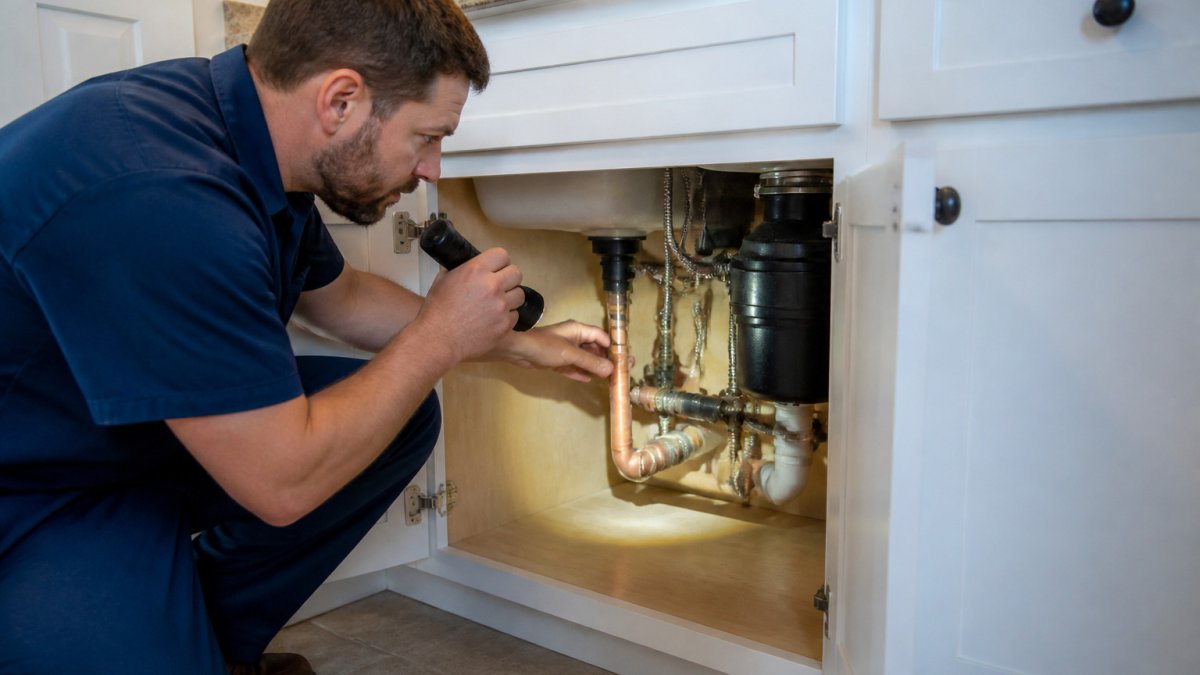
- Labor: The plumber’s time to diagnose, access, and repair the problem. Labor is usually the first thing a workmanship guarantee covers and the first thing it stops covering when the clock runs out.
- Parts: The pipes, fittings, valves, and fixtures used in the repair. Parts often carry a separate manufacturer warranty that runs longer than the installer’s labor guarantee, which is why a failed faucet cartridge can be a covered part even when the labor to replace it is not.
- Workmanship: The quality of the installation or repair itself. This is the installer’s promise, not the manufacturer’s, and it is the piece most homeowners forget to ask about in writing.
A workmanship guarantee typically covers labor for a set window. Parts may be covered by the manufacturer. Some companies bundle both; others cover only the labor they performed. The practical question is not “is plumbing covered?” but “which of these three buckets does my specific failure fall into?”
An Itemized Coverage Checklist
Use this checklist to compare a guarantee’s language against the actual failure. Treat it as a screening tool rather than a legal interpretation of any one contract.
Pipes and water lines
- Supply lines inside the walls or under the slab, when the failure is tied to the installer’s work
- Repairs to a line the company just replaced, if the same joint or fitting fails
- Shutoff valves and supply stops the company installed
Drains, waste, and sewer lines
- A drain the company just cleared, if the same clog returns within the guarantee window
- Interior drain lines the company repaired or replaced
- Sewer line work only if the contract explicitly names it, many guarantees exclude the main line to the street
Fixtures and valves
- Faucets, showerheads, and valves: the fixture body is often a manufacturer warranty item; the installation labor is the company’s guarantee
- Toilets and toilet components: a running fill valve or a leaking wax ring after a company install is a workmanship question; a tank that cracks years later is usually wear and tear
- Angle stops and escutcheons the company supplied
Water heaters and equipment
- Tank and parts coverage usually follows the manufacturer’s warranty, which can run several years
- Labor to swap a failed unit is a separate line item and often has a shorter window
- Sump pumps and similar components: check whether the guarantee covers the pump, the pit, or only the discharge line
Interior versus exterior
- Interior plumbing is the usual focus of a workmanship guarantee
- Exterior hose bibs, irrigation lines, and the service line from the meter to the house are commonly excluded or capped, confirm before you authorize work
Parts and Labor Coverage on Common Repairs
Coverage often depends on the type of repair. Common examples include:
- Drain cleaning: Labor is usually covered if the same clog returns because of the cleaning. Parts rarely apply, and a clog caused by flushed wipes or grease is typically excluded.
- Leak repair: Labor and the replacement fittings used in the fix are typically covered, provided the leak traces back to the repair and not to a pre-existing condition elsewhere on the line.
- Fixture replacement: The fixture itself often carries a manufacturer warranty, while installation labor carries the company guarantee. Keep both documents, they have different claim phone numbers.
- Water heater repair: Parts may have their own warranty, and labor depends on the company’s policy. Ask whether a failed unit is replaced or repaired, and who pays for the haul-away.
Always ask which parts and which labor are covered, and for how long. Get the answer in writing on the invoice, not just in a phone call.
Before you sign, ask the company to circle the labor window, the parts window, and the exclusions on the written guarantee. A guarantee you can read in one sitting is easier to enforce than a brochure.
Most plumbing coverage breaks into three parts, and each one behaves differently when you file a claim.
| Coverage part | What it covers | Typical behavior |
|---|---|---|
| Labor | Plumber’s time to diagnose and repair | Usually first covered, first to expire |
| Parts | Pipes, fittings, valves, fixtures used in repair | Often carries a longer manufacturer warranty |
| Workmanship | Quality of the installation or repair | The installer’s promise, often overlooked |
Plumbing Warranty Exclusions to Check Before You Sign
Exclusions are where most surprises happen. Before you rely on a guarantee, look for these common limits:
- Damage caused by freezing or misuse
- Clogs caused by items flushed or poured down the drain
- Normal wear and tear on older components
- Work done by someone other than the company that issued the guarantee
- Failures in parts the company did not install
- Damage from ongoing leaks that were never reported
A common mistake is assuming a guarantee covers water damage to floors or walls. Many guarantees cover the repair itself, not the cost of fixing what the leak damaged.
How Long Is a Plumber’s Warranty?
Plumbing warranties vary widely. Some workmanship guarantees last 30 to 90 days. Others last a year or more on certain repairs. Parts warranties may run longer, depending on the manufacturer.
Call Now For A Free Estimate ?
Check the written terms for three things: the start date, the end date, and whether the clock resets after a repair. Keep your invoice, since it usually shows the date of service and what was covered.
How to Make a Claim Under a Plumbing Guarantee
A guarantee only pays out if you follow the claim sequence the contract requires. The most common reason a valid claim gets denied is not the failure itself, it is work the homeowner authorized before calling the company that issued the guarantee. Here is the sequence that protects the claim.
Step 1: Stop the damage first
If water is actively leaking, shut off the supply at the nearest fixture stop or the main valve. For a water heater, shut off the gas or breaker as well. Emergency mitigation, shutting off water, containing the leak, moving belongings, is separate from the guarantee itself. Most guarantees cover the repair, not the water damage to floors, drywall, or cabinets; that damage is usually a homeowners insurance question. Document the mitigation with photos before you clean up.
Do not authorize a second plumber to open the wall or replace the failed part before the original company inspects it. Many guarantees exclude work performed by anyone other than the issuing company, and an unauthorized repair can void the claim entirely.
Step 2: Document the failure
Take dated photos and a short video of the leak or backup. Note the date and time you first noticed it, and whether the failure is in the same spot the company just worked on. If a drain is backing up, note what was in use at the time, a guarantee that covers a returning clog may exclude one caused by flushed wipes or grease.
Step 3: Pull your paperwork
Find the original invoice and the written guarantee. You need three things from them: the date of service, the scope of work performed, and the guarantee window. If the invoice does not state a window, ask the company to confirm it in writing before the visit.
Step 4: Call the company and open a claim
Describe the failure in terms of the original work: “The supply line you replaced on [date] is leaking at the same fitting.” Ask for a warranty visit and confirm whether a diagnostic or trip fee applies. Many companies waive the fee when the failure is covered and charge it when the failure turns out to be excluded, get that policy in writing before the technician arrives.
Step 5: Understand the cost mechanics
Even a covered claim can have out-of-pocket costs. Ask about:
- Service or diagnostic fees: A flat trip charge that may or may not be credited toward the repair.
- Coverage caps: A per-repair or per-year dollar limit above which you pay the difference.
- Access costs: Cutting and patching drywall, tile, or concrete to reach the pipe is often excluded even when the pipe repair is covered.
- Code upgrades: Bringing the repair up to current code can be billed to you even when the original work is under guarantee.
Step 6: Keep a paper trail
Save every text, email, invoice, and receipt. If the company disputes the claim, a dated photo and the original invoice are usually enough to resolve it. If it does not, your state’s consumer protection office or licensing board is the next stop, plumbing contractors are licensed at the state level, and licensing boards take workmanship complaints seriously.
The claim sequence matters as much as the guarantee itself: stop the damage, document it, call the issuing company before authorizing any other work, and confirm fees and caps in writing. A guarantee you followed correctly is far easier to enforce than one you discovered after the fact.
Pre-Existing Conditions, Code Upgrades, and Access Costs
Some costs fall outside a standard guarantee. These often include:
- Pre-existing conditions: Problems that were already there before the repair.
- Code upgrades: Work needed to meet current building rules.
- Access costs: Cutting drywall, tile, or concrete to reach the pipe.
Older homes are most likely to run into these issues. Ask for an estimate that separates the repair from access and code costs before work begins. You can review slab leak repair and estimates to see how these costs are typically presented. Protek Plumbing and Drain Specialists provides transparent estimates before work begins.
Booking Your Next Repair With Protek
A plumbing guarantee is only as useful as the work behind it. Before you book, ask what is covered, for how long, and what is excluded. Get the answers in writing.
If you have a drain problem, a leak, or a repipe question, call Protek Plumbing and Drain Specialists for a free estimate. We serve Port Charlotte and Charlotte County, and we stand behind our workmanship on every job.
Frequently Asked Questions
What does a plumbing warranty cover?
A plumbing warranty usually covers the cost of repairing or replacing failed components caused by workmanship or normal mechanical failure, typically including both parts and labor for the work the plumber performed. Coverage is defined in the written agreement, so read the list of covered items and the time period carefully. Ask the provider to confirm in writing whether parts, labor, and any follow-up visits are included before you approve the job.
How long is a plumber’s warranty?
Plumbing workmanship warranties commonly run from 90 days to one year, though some contractors offer longer terms for specific repairs or installations. The length should appear on your invoice or work order. Shorter warranties may apply to parts alone, while labor may carry a separate timeframe, so confirm both before the job starts.
Does a plumbing guarantee cover parts and labor?
Many plumbing guarantees cover both parts and labor for the repaired area, but this varies by provider. Some cover only the specific fix, not related damage or other failures in the system. Ask whether a return visit to correct a defect is billed, and whether any service fee applies to warranty calls.
What plumbing problems are usually excluded from a guarantee?
Exclusions typically include damage from freezing, misuse, improper DIY repairs, abrasive cleaners, root intrusion in drain lines, and normal wear and tear on fixtures. Code upgrades required by permit inspectors, pre-existing conditions found during the job, and hidden damage behind walls or under slabs are often excluded or billed separately. Request a written list of exclusions before you sign.
